House Rewiring in Thibodaux, LA
House rewiring in Thibodaux to improve safety, reliability, and code compliance. Contact Martin's Heating & Air for expert service and fast scheduling.
Is Your Home's Electrical System Failing to Keep Up with Demand?
Constant breaker trips, flickering lights, and outdated two-prong outlets are not just minor annoyances; they are significant warning signs that your property in Thibodaux requires immediate electrical modernization to prevent fire hazards. Contact us online today to schedule a safety inspection and rewiring estimate.
Homeowners often ignore the silent degradation of wires hidden behind walls until an appliance fails or a burning smell permeates the room. If you are struggling with inconsistent power or outdated wiring in your home, you are likely facing risks that need immediate professional attention. Martin's Heating & Air Conditioning provides the expertise required to bring your home up to modern safety standards.
- Rapid response and detailed quotes provided within the day to address your safety concerns.
- Complete house rewiring services complying with local Thibodaux codes and safety regulations.
- Guaranteed work with robust warranties for all electrical installations and panel upgrades.
Fully licensed and insured, ensuring all projects meet or exceed local standards for safety and performance.
Comprehensive House Rewiring Services and Scope of Work
Rewiring a home is a major renovation project that involves replacing the electrical infrastructure of your property. This service is not merely about changing a few outlets or swapping a light fixture; it involves the systematic removal or bypassing of old, dangerous wiring and the installation of modern, grounded copper wiring. Homeowners in this region often contend with aging housing stock where the electrical systems were never designed to handle modern loads like central air conditioning, high-end appliances, and electric vehicle chargers.
When you authorize a whole-house rewire, the scope includes a full assessment of your current electrical load and future needs. The service covers the replacement of the electrical panel if the current amperage is insufficient—typically moving from 60 or 100 amps to a standard 200-amp service. This ensures that your system can handle the high humidity and heavy AC usage common in Louisiana summers without overheating.
The project also includes the installation of new receptacles, switches, and fixtures. Ground Fault Circuit Interrupters (GFCIs) are installed in wet areas like kitchens, bathrooms, and outdoor spaces, while Arc Fault Circuit Interrupters (AFCIs) are installed in bedrooms and living areas to detect dangerous arcing that causes fires. Every circuit is mapped, labeled, and tested to ensure balanced load distribution. This eliminates the "spaghetti" wiring often found in older attics and crawlspaces, replacing it with organized, code-compliant runs.
The Electrical Installation and Replacement Process
Understanding the workflow of a house rewire helps homeowners prepare for the project. A professional approach ensures that disruptions are minimized and that the safety of the structural components of the home is maintained throughout the installation.
Initial Assessment and Circuit Mapping
First, the team conducts a thorough walkthrough to identify all existing circuits and device locations. This phase determines the path of new wires and identifies areas where wall access will be necessary. A load calculation is performed to determine the correct wire gauge and panel size.
Preparation and Site Protection
Before any physical work begins, the work area is prepped to protect furniture and flooring. Power is shut off to specific circuits as they are worked on, though temporary power solutions are often established so the home remains habitable during the process if the family is staying on-site.
Removal of Old Wiring
Next, dangerous wiring types such as knob-and-tube or aluminum wiring are disconnected. In some cases, old wires are physically removed; in others, they are cut back, rendered inert, and abandoned in place if removing them would cause excessive structural damage.
Running New Cabling
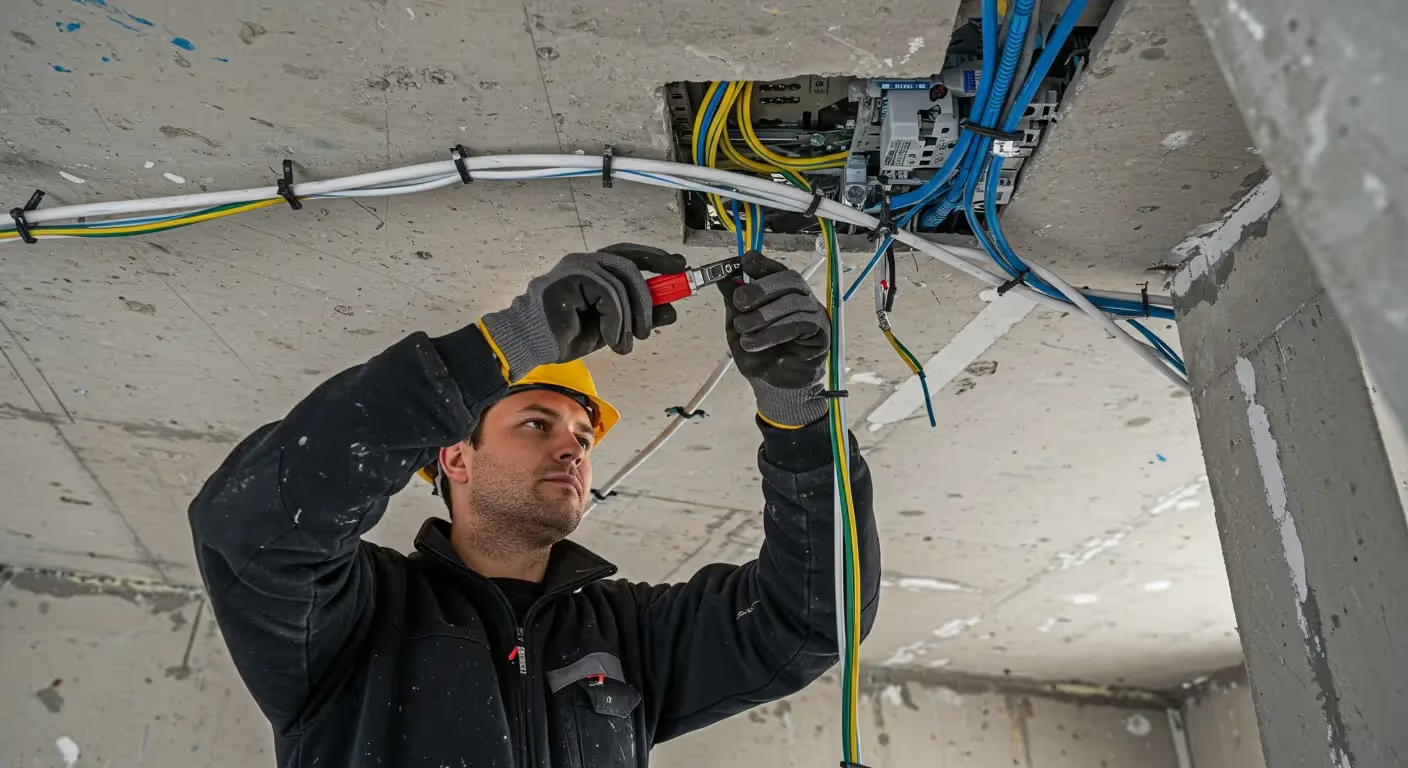
Technicians fish new non-metallic (NM) cable, commonly known as Romex, through walls, ceilings, and floor joists. This step requires precision to avoid damaging plumbing or HVAC ducts. Holes are drilled through studs, and wires are pulled from the main panel location to each device box.
Device Installation and Termination
Once the wiring is in place, new device boxes are installed where necessary. Switches, outlets, and light fixtures are connected (terminated) to the new copper wiring. This is where the visible transformation happens, as old, yellowed outlets are replaced with fresh, modern hardware.
Panel Upgrade and Connection
The new circuits are routed into the main service panel. Martin's Heating & Air Conditioning technicians organize the wires, stripping and connecting them to the appropriate breakers. The panel is grounded to the main water pipe or a dedicated grounding rod driven into the earth, a critical step for protecting electronics from surges.
Testing and Inspection
Finally, every circuit is energized and tested for continuity, polarity, and proper grounding. A rigorous inspection is performed to ensure compliance with the National Electrical Code (NEC) and local parish regulations. Drywall patches are applied where access holes were made, preparing the walls for paint.
When to Choose Complete Replacement Over Repair
Deciding between repairing a specific circuit or investing in a whole-house rewire is a significant financial consideration. However, certain conditions make full replacement the only viable option for safety and insurability.
Presence of Cloth-Insulated or Knob-and-Tube Wiring
If your home was built before the 1950s and still utilizes knob-and-tube wiring, repair is rarely an option. This wiring lacks a ground wire and the insulation becomes brittle over time, crumbling away and leaving live wires exposed. Insurance carriers frequently refuse to cover homes with this type of wiring due to the extreme fire risk.
Aluminum Wiring Issues
Homes built in the 1960s and 70s often contain aluminum wiring. Aluminum expands and contracts with heat more than copper, leading to loose connections, arcing, and fires. While "pigtailing" (adding copper connectors) is a temporary repair, full replacement is the permanent solution that restores the property’s value and safety.
Ungrounded Two-Prong Outlets
If the majority of your outlets are two-prong, it indicates the absence of a grounding system. Using adapters for three-prong appliances bypasses safety mechanisms and puts your electronics at risk. Rewiring provides a true ground path, essential for computers, TVs, and modern appliances.
Major Renovations or Additions
When you plan to remodel a kitchen or add a room, current electrical codes require that the affected areas meet modern standards. Often, the existing panel cannot support the new load, or the old wiring cannot be extended safely. In these scenarios, upgrading the wiring prevents bottling-necking your power supply.
Navigating Local Requirements and Environmental Factors
Operating in Thibodaux presents specific challenges regarding climate and regulation that standard electrical work might not address. The high annual rainfall and humidity levels in this region degrade electrical components faster than in drier climates. Moisture ingress into service panels or outdoor receptacles is a common failure point.
Code Compliance and Permitting
Electrical work in this area is strictly regulated. Permits must be pulled before work begins, and inspections are required by the local building department upon completion. Professional electricians handle this administrative burden, ensuring that the work passes inspection the first time. This is crucial when selling a home, as unpermitted electrical work can derail a real estate transaction.
Hurricane Preparedness and Generator Integration
Given the susceptibility to hurricanes and resulting power outages, rewiring projects often include provisions for generator integration. This involves installing a manual transfer switch or an interlock kit at the main panel. This setup allows homeowners to safely power essential circuits during a storm without the risk of "backfeeding" power onto the grid, which endangers utility workers.
Humidity and Corrosion Protection
Wiring and panels used in this region must be rated for the environment. Outdoor disconnects and main service entrances must use NEMA 3R rated enclosures to prevent rain entry. Inside the home, proper sealing of penetrations prevents warm, humid air from entering wall cavities and condensing on electrical boxes, which causes corrosion and short circuits.
Technical Safety and Modern Load Demands
The electrical grid inside an older home was designed for a different era—one without multiple televisions, gaming consoles, air fryers, and electric vehicles. Overloading these old circuits causes wires to heat up inside the walls. Modern rewiring utilizes wire gauges appropriate for 15-amp and 20-amp circuits, ensuring that the wire itself does not become the fuse.
Arc Fault Protection
Modern codes require Arc Fault Circuit Interrupters (AFCIs) for most living areas. Unlike standard breakers that trip only on overload, AFCIs detect dangerous electrical arcs (sparks) that can occur in damaged cords or loose connections. This technology is a massive leap forward in residential fire prevention.
Tamper-Resistant Receptacles
For households with children, modern rewiring includes tamper-resistant outlets. These have internal shutters that prevent foreign objects from being inserted into the slots, offering passive protection against electrical shock without the need for plastic plugs.
Dedicated Circuits for Heavy Appliances
Old wiring often shared circuits between multiple high-draw appliances. A microwave and a toaster oven on the same circuit will trip an old breaker instantly. A rewire allows for dedicated circuits (also known as "home runs") for heavy users like refrigerators, microwaves, and window AC units, ensuring stable power delivery.
Securing Your Home’s Electrical Future
Investing in a house rewire is an investment in the longevity and safety of your property. It eliminates the constant worry of electrical fires, increases the resale value of the home, and provides the clean, stable power necessary for modern life. Avoiding this necessary upgrade often costs more in the long run through damaged electronics, emergency repairs, and higher insurance premiums — view current promotions today.
Professional execution ensures that the complex network of wires behind your walls functions invisibly and safely. By adhering to strict safety protocols and leveraging deep knowledge of regional electrical challenges, the risks associated with amateur electrical work are eliminated.
For a comprehensive assessment of your wiring and a clear path toward a safer electrical system, trust Martin's Heating & Air Conditioning to deliver reliable results.
Ensure your home is safe and code-compliant. Schedule your professional electrical inspection today.
Talk to a Local HVAC Expert
.avif)