Is Your Heater Blowing Cold Air or Making Strange Noises?
When your heating system fails or operates inefficiently, the comfort of your home is compromised, and utility bills can skyrocket unnecessarily. Secure your appointment today by calling our office or applying for financing to restore your home's warmth immediately. Martin's Heating & Air Conditioning provides thorough inspections and tune-ups to ensure your system runs safely and efficiently when the temperatures drop.
- Immediate response times for emergency heating failures and standard maintenance calls.
- Certified and experienced technicians ensure optimal repair, calibration, and maintenance.
- Transparent pricing structures with no hidden fees or surprise costs.
Fully licensed and insured for your peace of mind.
Comprehensive Heating Tune-Ups for Peak Performance
Heating maintenance is often misunderstood as a simple cleaning service, but it is a rigorous technical inspection designed to prevent catastrophic failures. In Thibodaux, where high humidity persists even during cooler months, heating systems face unique stress factors including corrosion and electrical oxidation. A professional maintenance visit focuses on the mechanical, electrical, and safety components of your unit to ensure it operates within manufacturer specifications.
What happens during a maintenance visit is a systematic evaluation of your entire heating infrastructure. This includes gas furnaces, electric heaters, and heat pumps. The goal is not just to make the system run, but to make it run at the efficiency level it was designed for. Over time, components shift, bolts loosen, and electrical connections degrade. Without intervention, these minor issues compound into expensive repairs or complete system replacement.
Our technicians perform a multi-point inspection that covers the following critical areas:
- Safety Controls and Limits: We test the high-limit switch, which prevents the furnace from overheating. If this fails, your unit could become a fire hazard. We also inspect the thermocouple or flame sensor to ensure the gas valve closes if a pilot light or flame goes out.
- Combustion Analysis: For gas units, we check the burner assembly for rust and proper ignition. We inspect the heat exchanger for cracks, which is vital for preventing carbon monoxide leaks into your living space.
- Electrical Components: We measure voltage and amperage on all motors. We test capacitors to ensure they are holding the correct charge; a weak capacitor can cause blower motors and compressors to burn out prematurely.
- Airflow and Filtration: We inspect the blower assembly for dust buildup, which restricts airflow and forces the system to work harder. We also check and replace standard air filters to maintain proper static pressure within the ductwork.
- Thermostat Calibration: We verify that your thermostat is reading temperatures accurately and communicating correctly with the control board.
How the Maintenance Process Works
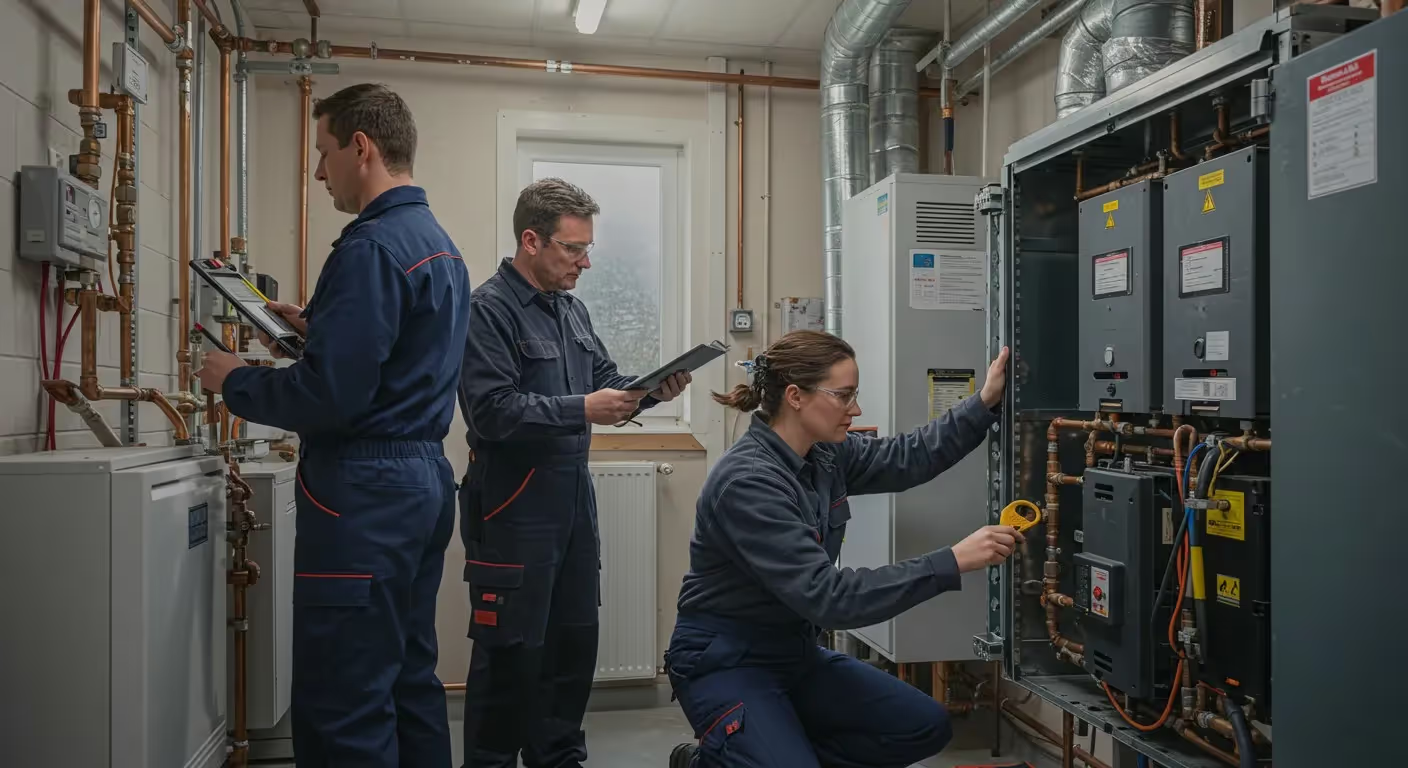
We believe in a structured, predictable process that respects your time and your property. Understanding exactly what occurs from the moment you request service to the final handshake ensures there is no confusion regarding the scope of work. We do not use guesswork; we follow a specific protocol derived from industry standards and manufacturer requirements.
- Scheduling and Arrival: First, you book a specific time slot that fits your schedule. Our dispatch team confirms the appointment, and a technician arrives promptly with a fully stocked truck. We respect your property by wearing shoe covers and using drop cloths where necessary to keep your floors clean.
- Initial System Diagnostic: Next, the technician performs a test run of the system to listen for unusual noises like rattling, banging, or squealing. We check the temperature differential (Delta T) between the supply and return air to gauge the system's current heating capacity. This baseline data helps us identify immediate performance gaps.
- Deep Cleaning and Adjustment: Then, we proceed with the physical work. This involves shutting off power to the unit to safely clean internal components. We tighten all electrical connections, lubricate moving parts like motor bearings to reduce friction, and clean the flame sensor or heating elements. We also clear drain lines for high-efficiency condensing furnaces or heat pumps to prevent water damage.
- Final Testing and Reporting: Finally, we restart the system and observe a full heating cycle. We measure the amperage again to confirm the system is running more efficiently than when we arrived. You receive a detailed report outlining what was done, the current health of your system, and any recommendations for proactive repairs if worn parts were detected.
Deciding Between Routine Maintenance, Repair, or Replacement
Homeowners often struggle to determine if a system simply needs a tune-up, a significant repair, or if it is time to invest in a new unit. Making the right decision depends on the age of the unit, the frequency of breakdowns, and the cost of operation. While maintenance can extend the life of a system, there is a mathematical point of diminishing returns.
We utilize industry-standard metrics to help you make an objective decision. One common method is the "$5,000 Rule." You multiply the age of the equipment by the estimated repair cost. If the total exceeds $5,000, replacement is generally the smarter financial move. If it is lower, repair and maintenance are usually sufficient.
Consider these factors when evaluating your heating system:
- System Age: Most furnaces and heat pumps have a lifespan of 12 to 15 years. If your unit is approaching this range and requires frequent maintenance to stay operational, internal wear and tear may be irreversible.
- Rising Energy Bills: If your usage hasn't changed but your energy bills are creeping up, your system is losing efficiency. Maintenance helps, but if the SEER or AFUE rating is significantly lower than modern standards, a new system will pay for itself in savings over time.
- Uneven Heating: If some rooms are hot while others remain cold despite a tune-up, the issue may lie in the ductwork design or a failing blower motor that is no longer strong enough to distribute air effectively.
- Frequency of Repairs: If you have called for repairs more than twice in the last two years, you are likely pouring money into a dying system. Regular maintenance prevents repairs, but it cannot fix a system that has reached the end of its mechanical life — invest in a new unit.
Addressing Local Climate Challenges and Safety Standards
The climate in Thibodaux and the surrounding areas presents specific challenges for heating systems. Unlike northern climates where dry heat is common, our region deals with high humidity year-round. This moisture content in the air can lead to faster oxidation of electrical contacts and rusting of steel components within the furnace or air handler.
Furthermore, our winters are characterized by wet, chilly conditions rather than dry freezes. This makes heat pumps a popular choice, but they must be maintained properly to handle the "defrost cycle" effectively. If a heat pump's defrost board or reversing valve fails, the unit will freeze up, leaving you without heat and potentially damaging the compressor.
Compliance with local safety codes and permit regulations is non-negotiable.
- Gas Safety: For homes utilizing natural gas or propane, adherence to local building codes regarding ventilation and flue piping is critical to prevent carbon monoxide buildup. Our technicians are trained to identify code violations that could pose health risks.
- Electrical Standards: Heating systems draw significant power. ensuring that your breaker panel, wire gauge, and disconnect boxes meet current electrical codes is part of our safety check. This is particularly important in older homes where electrical systems may not have been upgraded to handle modern HVAC loads.
- Humidity Control: Properly maintaining your heating system assists in controlling indoor humidity. A well-tuned system helps circulate air effectively, preventing the stagnant, damp feeling that can occur in Louisiana homes during the winter months. Martin's Heating & Air Conditioning ensures your system combats these local environmental factors effectively.
Why Homeowners Trust Us for Seasonal Heating Care
Choosing a service provider is about finding a partner who values technical accuracy over sales tactics. We focus on the bottom line: keeping your family warm and safe. Our approach is rooted in diagnostic precision. We do not recommend parts you do not need, and we explain every finding clearly so you remain in control of your home’s maintenance.
We distinguish our service through technical competency and respect for your property. Our team stays updated on the latest HVAC technologies, from variable-speed motors to smart thermostat integration. Whether you have an aging gas furnace or a modern high-efficiency heat pump, we have the tools and training to maintain it correctly.
- Detailed Documentation: You receive a clear account of the voltage readings, pressure levels, and safety checks performed.
- No Cleanup Required: We leave your utility closet, attic, or basement as clean as we found it.
- Proactive Communication: We notify you when we are on the way and follow up to ensure the system is performing as expected.
Your heating system is a significant investment. Protect it with professional maintenance that prioritizes longevity and efficiency.
Call Us Now!
Schedule your comprehensive heating maintenance today to ensure reliable warmth all winter long.
Talk to a Local HVAC Expert
.avif)