
Experiencing Inefficient Home Cooling?
Struggling with the humid subtropical climate of Thibodaux? When your system fails to keep up with the heat or leaves your home feeling sticky and uncomfortable, you need a solution that restores balance immediately. Contact us today for a comprehensive assessment or ask about our financing options to get your system replaced without delay.
Our heat pump installation solutions promise efficient home cooling and tailored installations for year-round comfort. We understand that homeowners in this region require equipment capable of handling extreme humidity shifts and heavy rainfall. Whether your current unit has completely broken down or is simply costing you too much in monthly utilities, we provide a direct path to a new, high-performance system.
- Rapid Installation: Heat pump setup completed efficiently to minimize downtime in your home.
- Enhanced Comfort: Custom solutions designed to manage high humidity levels and temperature extremes specific to Louisiana.
- Energy-Efficient: Modern units that significantly reduce your utility bills and lower your environmental impact.
All installations are fully certified, with extended warranties and flexible financing options available.
What You Can Expect From a Professional Installation
Replacing a heat pump is a significant investment in your home’s infrastructure. Unlike a simple appliance swap, a heat pump installation involves integrating complex electrical, mechanical, and airflow systems. When you schedule a replacement service in Thibodaux, you are purchasing a complete turnkey solution designed to function correctly from the moment it is powered on.
The scope of work generally begins with a detailed evaluation of your existing infrastructure. This ensures that the new unit matches your home’s specific thermal profile. An oversized unit will short-cycle, failing to remove humidity, while an undersized unit will run continuously without reaching the set temperature. The service includes the safe removal and disposal of your old equipment, ensuring all refrigerant is recovered according to EPA regulations.
Your installation package typically includes:
- Site Preparation and Protection: Technicians prepare the work area to protect your flooring and landscaping. This involves laying down drop cloths and ensuring a clear path to the installation site.
- Ductwork Inspection: Existing ducts are checked for leaks or disconnects. Even the most efficient heat pump will underperform if the air distribution system is compromised.
- Electrical and Thermostat Integration: The new unit is hardwired into your home’s electrical panel, and a compatible thermostat—often a smart model—is installed to maximize control over the system.
- Condensate Drain Management: Proper drainage is critical in our humid climate. Technicians install new drain lines to prevent water damage and mold growth.
- System Testing and Commissioning: The unit is not just turned on; it is calibrated. Airflow is measured, and refrigerant levels are adjusted to manufacturer specifications.
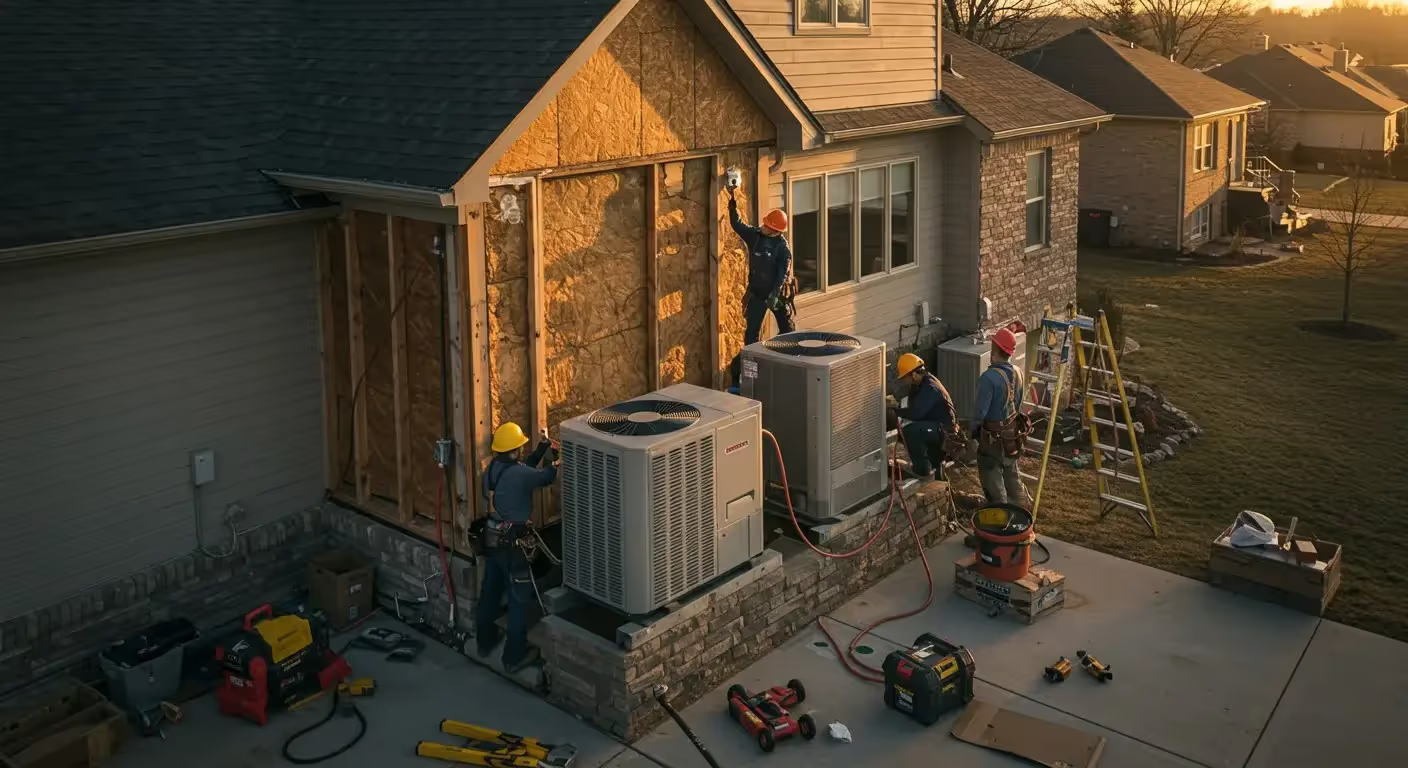
Our Detailed Installation and Replacement Process
We utilize a systematic approach to heat pump replacement to ensuring consistency and quality. This process is designed to uncover potential issues before they become problems and to guarantee that your new system operates at peak efficiency. Martin's Heating & Air Conditioning follows strict protocols to ensure every step meets local building codes and industry standards.
Load Calculation and System Sizing
Before any equipment is ordered, a proper load calculation is performed. This goes beyond just looking at the square footage of your home. Factors such as window orientation, insulation levels, ceiling height, and heat-generating appliances are analyzed. This calculation determines the exact BTU capacity required to cool and heat your home efficiently.
Equipment Removal and Safety Checks
The removal of the old unit requires careful handling of high-voltage electricity and pressurized refrigerant.
- Power is disconnected at the main panel to ensure safety.
- Refrigerant is pumped down or recovered into specialized tanks to prevent atmospheric venting.
- The old air handler and outdoor condenser are disconnected and removed from the property.
- The mounting pad is inspected for stability and leveling; if the existing pad is cracked or unlevel, it is replaced to prevent vibration and noise.
Installation of Indoor and Outdoor Units
The installation phase involves setting the new equipment and connecting the vital "lifelines" of the system.
- The indoor air handler or coil is positioned and sealed to the supply and return plenums to prevent air leakage.
- The outdoor condenser is placed on the pad, ensuring proper clearance from walls and vegetation for optimal airflow.
- Refrigerant lines (the copper tubing connecting the two units) are brazed using nitrogen purging. This step prevents oxidation inside the pipes, which can clog the sensitive valves in modern heat pumps.
Electrical and Control Wiring
Modern heat pumps communicate differently than older models.
- High-voltage wiring is connected to the disconnect box and the unit, ensuring wire gauges meet the amperage requirements of the new system.
- Low-voltage control wiring is run to the thermostat and between the indoor and outdoor units.
- Configuration settings on the control board are adjusted to match your specific airflow needs.
Vacuum, Charge, and Startup
This is the most critical technical step in the process.
- A vacuum pump is used to remove all air and moisture from the refrigerant lines. Moisture left in the lines can freeze and create acid that destroys the compressor.
- Once a deep vacuum is achieved and held to verify no leaks exist, the refrigerant is released into the system.
- The system is started, and technicians measure superheat and subcooling to fine-tune the charge for maximum efficiency.
Deciding Between Repair and Replacement
Determining whether to sink more money into an aging system or invest in a new one is a common dilemma. While repairs are often cheaper upfront, they can be more expensive in the long run if the system is near the end of its life.
The 50% Rule
A general guideline used in the industry is the 50% rule. If the cost of the repair approaches 50% of the value of the system (or the cost of a new system), replacement is usually the better financial decision. This is especially true if the unit is out of warranty, as you are paying for both parts and labor.
Age and R-22 Refrigerant
Heat pumps typically last between 10 and 15 years. If your system is over 12 years old, it likely uses R-22 (Freon) refrigerant, which has been phased out. Repairs involving R-22 are exorbitantly expensive due to scarcity. Newer systems use R-410A or A2L refrigerants, which are more efficient and environmentally friendly. Replacing an R-22 unit eliminates the risk of future expensive refrigerant costs.
Frequency of Breakdowns
If you have required repairs more than twice in the last two years, your system is becoming unreliable. Frequent breakdowns often indicate that major components, like the compressor, are wearing out. Continuing to repair a failing system is often throwing good money after bad.
Comfort and Humidity Control
As units age, they lose their ability to compress refrigerant effectively, which reduces their capacity to dehumidify the air. In a humid area like Thibodaux, this results in a clammy, uncomfortable home even when the thermostat reads the correct temperature. If your current heat pump runs constantly but fails to lower humidity, it is likely time for a replacement.
Energy Bills
Heat pump technology has advanced rapidly. A system installed 15 years ago likely has a SEER (Seasonal Energy Efficiency Ratio) rating of 10 or 12. Modern standards require a minimum of SEER2 14.3 in the South, with many units exceeding SEER 20. Upgrading to a high-efficiency unit can lower cooling costs by 20% to 40%, offsetting the monthly cost of a financed installation.
Navigating Local Requirements and Climate Factors
Installing a heat pump in Thibodaux requires specific attention to the local environment and regulatory landscape. The humid subtropical climate presents unique challenges that generic installation practices may miss.
Combatting High Humidity
Humidity levels here frequently exceed 70%, which places a heavy latent load on HVAC equipment. Standard single-stage heat pumps run at full capacity and then shut off, often cooling the air too quickly without removing enough moisture.
- Variable Speed Technology: We often recommend variable-speed or two-stage heat pumps for this region. These units can run at lower speeds for longer periods.
- Extended Run Times: Longer run times allow the system to pull more moisture out of the air, creating a drier, cooler, and more comfortable indoor environment without overcooling the space.
Electrical and Building Permits
Heat pump replacements involve significant electrical work and must comply with local building codes.
- Permitting: Proper permits ensure that the installation meets safety standards regarding wire sizing, breaker ratings, and disconnect placement.
- Inspections: Third-party inspections protect the homeowner by verifying that the contractor performed the work correctly and safely.
- Refrigerant Handling: Technicians must hold EPA Section 608 certification to handle refrigerants legally and safely.
Hurricane Preparedness
Living in the Gulf Coast region means preparing for hurricane season.
- Tie-Downs: Outdoor units must be properly secured to the concrete pad using hurricane straps or clips to prevent them from becoming projectiles or tipping over during high winds.
- Elevation: In flood-prone zones, elevating the outdoor unit on a stand or taller pad can protect the compressor and electrical components from rising water.
Why Professional Installation Matters
The longevity and efficiency of your heat pump are determined more by the quality of the installation than the brand of the equipment. A top-tier unit installed poorly will fail sooner and run less efficiently than a mid-range unit installed perfectly.
Technical Expertise
Modern systems utilize advanced electronics and proprietary communication protocols. Installation requires technicians who are trained on specific manufacturer guidelines. This includes setting dip switches for airflow profiles, configuring smart thermostats, and ensuring the static pressure in the ductwork matches the blower's capacity.
Warranty Preservation
Manufacturers offer robust warranties—often 10 years on parts—but these warranties are contingent on professional installation. If a system is installed by an unlicensed contractor or without proper documentation, the manufacturer may void the warranty. Professional installers register the equipment on your behalf to ensure you are fully protected.
Post-Installation Support
A professional service provider offers support long after the truck leaves your driveway. This includes planned maintenance agreements to keep the warranty active and emergency services if issues arise. You gain a partner in home comfort rather than just a one-time transaction.
Secure Your Comfort Today
Delaying a necessary replacement often leads to a total system failure at the worst possible time—usually during a heatwave. Proactive replacement puts you in control of the schedule, the budget, and the equipment choice.
By choosing a modern, high-efficiency heat pump, you are investing in reliable temperature control, superior humidity management, and lower energy costs. The process is streamlined to minimize disruption to your daily life while maximizing the long-term value of your home.
Martin's Heating & Air Conditioning is ready to help you transition to a more comfortable, efficient home.
Take control of your indoor climate today—contact us to schedule your heat pump installation or replacement.
Talk to a Local HVAC Expert

.avif)