AC Service & Maintenance in Galliano, LA
Ensure your AC performs optimally in Galliano with our comprehensive service. Rapid response, expert maintenance, and clear service plans. Schedule now!
Stay Cool: Rapid AC Maintenance Solutions
The intense humidity and sweltering temperatures in Galliano can push your cooling system to its breaking point, often resulting in inefficient cooling or sudden breakdowns just when you need relief the most. Contact us immediately to schedule a comprehensive system tune-up or to discuss financing options for major repairs.
At Martin's Heating & Air Conditioning, we understand that a functioning air conditioner is not a luxury in Louisiana; it is a necessity for health and comfort. Neglected systems do not just run up your energy bill; they are prone to catastrophic failure during the peak of summer. Our technicians provide rigorous inspections and maintenance designed to restore factory specifications and extend the lifespan of your unit:
- Rapid response times: We prioritize scheduling to get a technician on-site within hours, not days, to address performance issues before they become emergencies.
- Comprehensive system restoration: Our maintenance is not a superficial check; we deep clean, calibrate, and test every component to ensure optimal performance.
- Service for all makes and models: Whether you have a central split system, a heat pump, or a ductless mini-split, our team has the training to service your specific equipment with full warranty assurance.
Licensed services with extended warranties for peace of mind.
What You Get With Comprehensive AC Maintenance
Effective air conditioning maintenance goes far beyond simply changing a filter. It involves a systematic examination of the entire cooling cycle to ensure that thermodynamics and electrical systems are working in harmony. When you schedule service in Galliano, you receive a detailed tune-up that addresses the three critical pillars of HVAC health: efficiency, safety, and longevity:
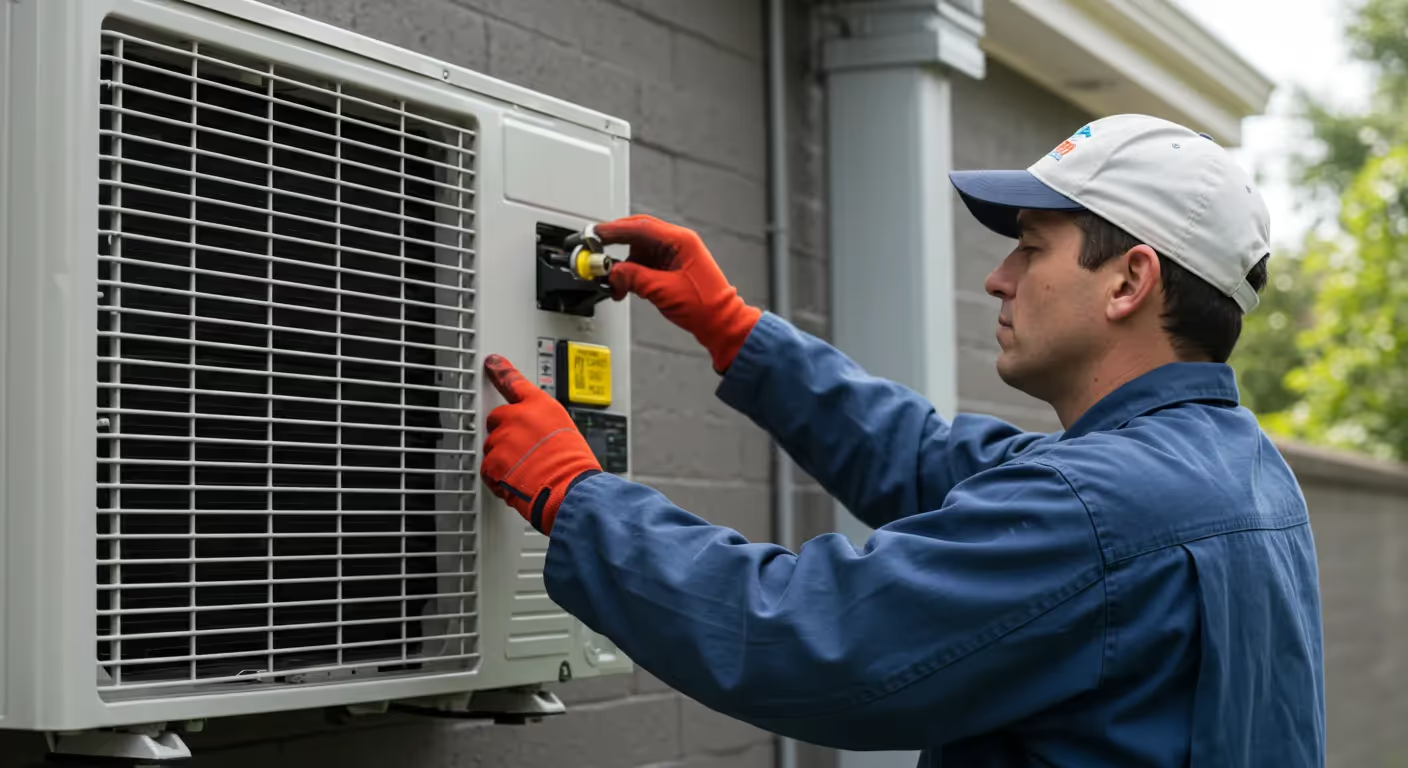
Refrigerant Charge and Pressure Verification
The lifeblood of your air conditioning system is the refrigerant. If levels are too low, usually due to micro-leaks, the system cannot remove heat effectively, causing the compressor to overheat. If levels are too high, the system runs inefficiently:
- Technicians attach gauges to measure superheat and subcooling levels to ensure the refrigerant charge meets the manufacturer's exact specifications.
- We inspect the refrigerant lines for insulation degradation, which can lead to energy loss before the cool air ever reaches your vents.
- Leak detection is performed if pressure variances are detected, preventing environmental hazards and costly compressor failures.
Airflow and Coil Sanitation
Airflow restrictions are the leading cause of frozen evaporator coils and reduced cooling capacity. Over time, the indoor evaporator coil and the outdoor condenser coil build up layers of dust, dirt, and grime:
- We chemically clean the outdoor condenser coil to remove dirt, grass clippings, and pollen that block heat release.
- The indoor evaporator coil is inspected for biological growth, which is common in humid climates. Cleaning this coil improves heat absorption and indoor air quality.
- Blower motor wheels are cleaned to ensure maximum air movement through the ductwork, reducing the strain on the motor.
Electrical Component Analysis
Loose connections and worn electrical parts are fire hazards and the primary cause of intermittent system failures:
- We tighten all electrical connections and measure voltage and amperage on motors to ensure they are not drawing excessive power.
- Capacitors, which help motors start and run, are tested for capacitance. A weak capacitor is a cheap part to replace, but if it fails, it can take the expensive compressor or fan motor down with it.
- Contactors are inspected for pitting or burning, ensuring the unit cycles on and off reliably without arcing.
The Maintenance Execution Process
Our approach to servicing your air conditioning unit is methodical and transparent. We do not skip steps, and we do not guess. The goal is to leave your system running as efficiently as the day it was installed:
- Initial Assessment and Safety Check: The technician begins by listening to the unit during operation. We check for unusual vibrations, grinding noises, or short-cycling behaviors. We also verify the thermostat is communicating correctly with the control board and that all safety switches, such as high-pressure limits, are functional.
- Power Down and Interior Inspection: Once the initial operational check is done, we disconnect power to the unit to safely access internal components. This allows us to inspect the wiring harness for signs of rodent damage or insulation rot, which are frequent issues in attic spaces or outdoor units.
- Deep Cleaning and Lubrication: This stage involves the physical labor of maintenance. We clear debris from the bottom of the condenser unit. We lubricate all moving parts, specifically fan motor bearings, to reduce friction. Friction causes heat, and heat kills motors. We also clear the condensate drain line. In our humid environment, algae and sludge can easily block this line, causing water to back up and trigger overflow switches or damage your ceiling.
- Reassembly and Performance Testing: After cleaning and part verification, the system is reassembled. We power the unit back on and monitor it through a full cooling cycle. We measure the "temperature split"—the difference in temperature between the air entering the return vent and the air blowing out the supply vents. A healthy system typically shows a specific differential; anything less indicates a lingering issue we need to resolve.
Identifying When to Repair vs. Replace
During a maintenance visit, we may uncover issues that require more than a simple tune-up. While maintenance extends the life of a system, every AC unit eventually reaches a point of diminishing returns. Making the decision to repair or replace depends on hard data regarding the age, condition, and efficiency of your current setup:
The Age Factor and Refrigerant Phase-Outs
Air conditioners generally last between 10 and 15 years in hot, humid climates. If your unit is over 12 years old and requires a significant repair, replacement is often the smarter financial move. Older units may also utilize R-22 refrigerant (Freon), which has been phased out. Repairs involving R-22 are becoming prohibitively expensive due to scarcity. If your older unit has a refrigerant leak, upgrading to a modern system using R-410A or newer refrigerants is usually the only viable long-term solution.
The 50% Investment Rule
A common industry guideline is the 50% rule. If the cost of the necessary repair approaches 50% of the value of a new system, you should replace the unit. For example, if you need a new compressor on an out-of-warranty unit, the cost is substantial. Investing that money into a new system gives you a fresh warranty, zero miles on the odometer, and significantly lower monthly energy bills.
Frequency of Breakdowns
If you find yourself calling for service multiple times a year, your system is telling you it is done. "Band-aid" repairs add up quickly. A reliable new system eliminates the stress of wondering if your AC will start on the next hot afternoon. Additionally, if your energy bills have been creeping up despite regular filter changes, the internal wear on the compressor and coils has likely degraded the system's SEER (Seasonal Energy Efficiency Ratio) rating significantly.
Critical Local Considerations for HVAC Systems
Operating an air conditioner in Galliano presents unique challenges compared to other parts of the country. The local environment aggressively attacks HVAC equipment, meaning standard maintenance protocols often need to be intensified to combat local threats:
- Humidity Management: The high humidity levels here mean your AC is not just cooling air; it is functioning as a massive dehumidifier. If the system is short-cycling (turning on and off too quickly) due to a lack of maintenance or oversizing, it won't run long enough to pull moisture out of the air. This leads to a clammy indoor environment and promotes mold growth in ductwork. Maintenance ensures the system runs long enough cycles to effectively dry the air.
- Salt Air and Corrosion: Proximity to the coast means salt aerosols are present in the air. Salt is highly corrosive to aluminum fins and copper tubing found in condenser coils. Without regular chemical cleaning to rinse away salt deposits, the metal fins will deteriorate and crumble, destroying the unit’s ability to release heat. We pay special attention to the physical condition of the coils to catch corrosion early.
- Drainage and Rainfall: With an average annual rainfall around 60 inches, combined with the condensate water the unit produces, water management is critical. We ensure that the immediate area around your outdoor unit drains properly so the unit does not sit in standing water. Furthermore, we verify that the primary and secondary drain lines are pitched correctly to handle the heavy volume of condensation generated during our humid summers.
- Hurricane Season Preparation: From June to November, your outdoor unit is vulnerable to high winds and flying debris. Part of our service includes checking the tie-downs and anchor bolts that secure the condenser to the concrete pad. We also inspect the electrical whip (the flexible conduit outside) to ensure it is secure and won't be ripped loose during a storm.
Why Professional Execution Matters
There is a significant difference between a cursory check-up and professional maintenance performed by a certified technician. Modern HVAC systems are complex machines relying on precise electronic controls and pressure balances. Attempting DIY maintenance or hiring an unqualified handyman often results in missed diagnostics that lead to major failures later.
Preserving Manufacturer Warranties
Most major HVAC manufacturers require proof of annual professional maintenance to keep the warranty valid. If a part fails and you cannot prove the system was serviced by a licensed professional, the manufacturer may deny the claim, leaving you to pay the full cost of the part. We provide detailed documentation of every service visit, ensuring your warranty coverage remains intact.
Indoor Air Quality Improvement
A neglected system recycles dust, pollen, and mold spores throughout your home. Our maintenance process involves inspecting the blower compartment and filter housing for bypass gaps where dirty air might be entering the stream. By ensuring the system is clean, we help reduce the allergen load in your home, which is vital for families with respiratory sensitivities.
Energy Efficiency and Cost Savings
A clean, lubricated, and calibrated system requires less electrical energy to do its job. For instance, a dirty condenser coil can increase compressor energy consumption by 30%. By removing these inefficiencies, Martin's Heating & Air Conditioning helps you keep your monthly utility bills under control. The cost of a maintenance plan is often recouped through energy savings and the avoidance of emergency repair fees.
Secure Your Comfort Today
Your air conditioning system is the most expensive appliance in your home and the most critical for your comfort. Waiting until the system stops working to call for help often results in higher repair costs, longer wait times, and uncomfortable nights. Proactive maintenance is the only way to ensure consistent performance, lower energy bills, and a long lifespan for your equipment.
Don't let the heat dictate your comfort level. Take control of your home's climate with professional, thorough, and reliable service.
Get your system inspected and tuned up immediately. Contact us today to schedule your service.
Talk to a Local HVAC Expert
.avif)