AC Installation & Replacement in Montegut, LA
AC installation in Montegut with energy-efficient options and expert setup. Contact Martin's Heating & Air for a quick evaluation, warranties, and financing.
Is Your Cooling System Failing to Combat Humidity?
Don't let the intense heat and humidity characteristic of Montegut defeat your indoor comfort this season. If your air conditioner is blowing warm air, making strange noises, or simply refusing to turn on, you need a solution that restores a livable environment immediately. Contact us now to schedule an immediate assessment or to discuss available financing options for a new system.
When you are dealing with a breakdown during peak summer months, waiting days for a technician is not an option. You need a service provider who understands the urgency of restoring climate control in your home. Martin's Heating & Air Conditioning provides the expertise required to assess your current setup and recommend a permanent solution. Whether you require a swift replacement to beat the heat or a planned installation for a renovation, the goal is consistent, reliable cooling.
- Immediate Response: We offer prompt consultation services to address system failures quickly, aiming to minimize the time your home remains uncomfortably warm.
- Expert Implementation: Installations are performed using high-quality equipment and industry-best practices, ensuring your new unit handles the local climate load effectively.
- Clear Financials: We provide transparent pricing structures and financing discussions upfront so you can make an informed decision without hidden costs.
- Peace of Mind: All services are fully licensed and backed by comprehensive warranty coverage to protect your investment.
What You Can Expect From a Modern Installation
Replacing an air conditioning system is a significant investment in your property and your daily quality of life. The process involves more than simply swapping one box for another. It requires a comprehensive evaluation of your home’s thermal characteristics to ensure the new machinery performs efficiently for the next decade or longer.
When you start the replacement process, the focus shifts to capacity and efficiency. Older units often struggle to keep up with the high moisture content in the Louisiana air. Modern systems are designed to manage humidity levels far better, provided they are installed correctly. You will receive a detailed proposal that outlines the scope of work, the specific equipment model matched to your home’s needs, and a clear timeline for completion.
The scope of a standard installation includes the removal and environmentally safe disposal of your old unit, inspection of the existing ductwork to prevent air loss, and the precise calibration of the new equipment. You get a system that meets current energy standards, which frequently results in lower monthly utility bills compared to units manufactured just ten years ago.
The Installation and Replacement Process
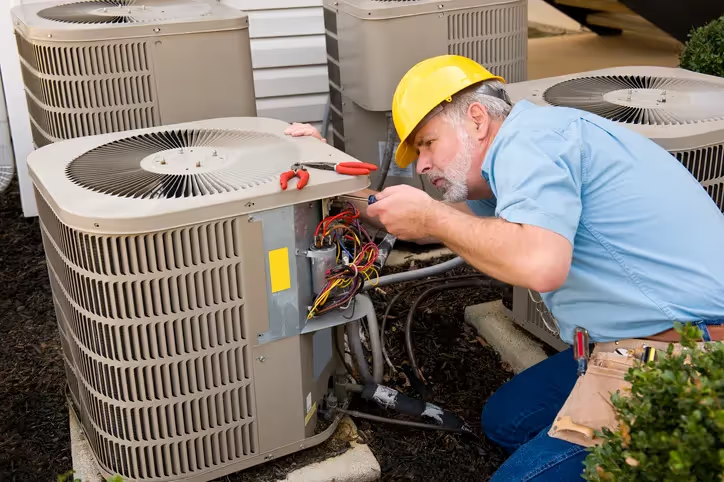
A successful AC replacement follows a strict protocol to ensure safety and system longevity. Cutting corners during the installation phase is the leading cause of premature system failure and inefficiency.
Site Preparation and Safety Measures
The workspace is prepared to protect your property. This includes laying down protective coverings for flooring and ensuring a clear path to the service area. Electrical circuits are disconnected and locked out to ensure safety during the transition.
Recovering Old Refrigerant
Before the old unit can be physically removed, the existing refrigerant must be recovered according to EPA regulations. Venting refrigerant is illegal and harmful to the environment. Technicians use specialized recovery machines to capture the gas into storage cylinders for proper recycling or disposal.
Removal and Ductwork Inspection
The old condenser (outdoor unit) and evaporator coil (indoor unit) are disconnected and removed. Once the equipment is out of the way, the existing plenum and accessible ductwork are inspected. Leaky ducts can reduce system efficiency by a significant margin. If issues are found, they are addressed before the new unit is connected.
Positioning the New Equipment
The new outdoor unit is placed on a composite pad to keep it level and off the ground, protecting it from ground moisture and vibration. Inside, the evaporator coil is fitted to the furnace or air handler. Precise leveling is crucial for proper drainage of condensate water.
Line Set Connection and Brazing
The copper lines that carry refrigerant between the indoor and outdoor units are connected. This step usually involves brazing. During this process, nitrogen is flowed through the lines to prevent oxidation and scale buildup inside the pipe, which could later clog the sensitive valves in the new system.
Pressure Testing and Vacuum
Once connected, the system is pressurized with nitrogen to test for leaks. After confirming the system is sealed, a deep vacuum is pulled to remove all moisture and non-condensable gases from the lines. This is a critical step; moisture left in the lines can mix with refrigerant oil to create acid, which destroys compressors.
Charging and Commissioning
The system is charged with the correct amount of refrigerant based on the manufacturer’s specifications and the length of the line set. The unit is then started, and technicians measure airflow, static pressure, and temperature splits to verify the system is operating at peak performance.
When Replacement Beats Repair
Homeowners often struggle with the decision of whether to pour more money into an aging unit or to invest in a replacement. While repairs are often cheaper upfront, they can become a financial drain over time. There are specific indicators that suggest replacement is the more prudent financial choice.
The 50% Rule
A common guideline in the HVAC industry is the 50% rule. If the cost of the repair approaches 50% of the value of the system, you are better off replacing it. Spending half the cost of a new unit on a machine that is already nearing the end of its life expectancy is rarely a good investment.
System Age and R-22 Refrigerant
Most air conditioners are designed to last between 10 and 15 years. If your unit is in this age range and requires a major component like a compressor or a coil, replacement is usually recommended. Additionally, if your system utilizes R-22 (Freon), repair costs will be exorbitant due to the phase-out of this refrigerant. Upgrading to a system that uses R-410A or newer refrigerants is necessary for future serviceability.
Rising Energy Bills
As components wear out, motors and compressors have to work harder to produce the same amount of cooling. If you have noticed a steady increase in your electric bill despite normal usage, your system’s efficiency has degraded. Martin's Heating & Air Conditioning can calculate the potential energy savings of a high-efficiency replacement, which often offsets the monthly financing cost of a new system.
Uneven Cooling and Humidity Issues
If some rooms in your Montegut home are freezing while others are sweltering, or if the air feels clammy despite the AC running, the system may be losing compression or airflow capacity. When a unit can no longer dehumidify effectively, it impacts comfort and indoor air quality, signaling that the equipment is no longer capable of doing its job.
Local Considerations for Montegut Homeowners
Operating an air conditioning system in Terrebonne Parish presents unique challenges due to the specific climate and geography of the region. A standard installation that might work in a dry climate will fail here.
Humidity Management
The primary load on an AC system in this region is latent heat—the moisture in the air. If a system is not properly calibrated to remove humidity, your home will feel warm even at lower temperatures. This often leads to homeowners setting the thermostat lower and lower, driving up energy costs. Equipment selection must prioritize humidity control.
Corrosion Protection
Proximity to the coast means salt air is a factor. Standard condenser coils can corrode quickly, leading to leaks and efficiency loss. It is often advisable to consider units with enhanced coil protection or coatings designed to withstand coastal environments to extend the lifespan of the outdoor unit.
Storm Security and Elevation
Given the susceptibility to tropical storms and hurricanes, the physical installation of the outdoor unit requires specific attention. Local codes may dictate that units be elevated on stands to protect against potential storm surge or localized flooding. Additionally, secure tie-downs are essential to prevent the unit from shifting or tipping during high-wind events.
Permitting and Compliance
Installations in Terrebonne Parish must comply with local building codes. This ensures that the electrical connections are safe, the drainage is handled correctly to prevent water damage, and the unit meets energy efficiency standards. Professional installers handle the permitting process, ensuring your installation is legal and recognized by insurance providers.
The Importance of Correct Sizing
One of the most common misconceptions is that a bigger air conditioner is better. In reality, an oversized unit is detrimental to comfort and efficiency, especially in a humid climate.
The Problem with Oversizing
When an AC unit is too powerful for the space it serves, it cools the air temperature down very quickly. While this sounds good, it causes the unit to shut off before it has had time to run a full cycle. This "short cycling" means the system does not run long enough to pull moisture out of the air. The result is a house that is cold but damp, promoting mold growth and clammy discomfort.
The Problem with Undersizing
Conversely, a unit that is too small will run continuously, never reaching the set temperature on the hottest days of the year. This leads to excessive wear on the compressor and fan motors, causing premature failure.
Manual J Load Calculation
To determine the correct size, a professional must perform a load calculation. This process looks at factors beyond just square footage. It accounts for window orientation, insulation levels, ceiling height, and heat-generating appliances. This data ensures the installed unit is perfectly matched to the thermal profile of your home.
Energy Efficiency Ratings and Savings
Understanding efficiency ratings is key to maximizing the return on your investment. The Seasonal Energy Efficiency Ratio (SEER2) measures how efficiently a cooling system operates over an entire season.
Understanding SEER2
The Department of Energy has updated testing standards to SEER2, which more accurately reflects real-world conditions. A higher SEER2 rating indicates a more efficient unit. While higher-rated units have a higher upfront cost, they consume significantly less electricity, providing return on investment over the life of the system.
Single-Stage vs. Variable-Speed
- Single-Stage Systems: These units run at 100% capacity whenever they are on. They are simple and reliable but less efficient and less effective at maintaining stable temperatures.
- Two-Stage Systems: These can operate at a lower capacity (usually around 70%) for milder days and ramp up to 100% only when necessary. This provides better dehumidification and energy savings.
- Variable-Speed (Inverter) Systems: These units can adjust their output in tiny increments, running continuously at very low power to maintain a precise temperature. They offer the highest efficiency and the best humidity control available.
Ductwork and Airflow Requirements
Even the most expensive, high-efficiency air conditioner will fail if the ductwork is compromised. The duct system is the respiratory system of your HVAC setup.
Leaks and Insulation
In many older homes, ducts may be uninsulated or leaking conditioned air into the attic or crawlspace. Sealing these leaks and ensuring proper insulation is often part of the replacement process. This ensures that the air you pay to cool actually reaches your living spaces.
Return Air Sizing
Modern high-efficiency systems often require more airflow than older units. If the return air grille or duct is too small, the system will be "starved" for air. This increases static pressure, makes the blower motor work harder, and can freeze up the coil. Assessing and upgrading the return air capacity is a standard part of a professional installation.
Warranty and Future Maintenance
Protecting your new equipment involves understanding the warranty terms and maintaining the system. Manufacturer warranties typically cover parts for 10 years, provided the equipment is registered and maintained.
Registration Requirements
Most manufacturers require the equipment to be registered within 60 to 90 days of installation to receive the full warranty term. Failure to register often reverts the warranty to a standard 5-year term. Professional installers typically handle or assist with this registration process.
Routine Maintenance
Warranties almost always require proof of annual maintenance. This includes cleaning coils, checking refrigerant levels, and clearing drain lines. Neglecting maintenance can void the warranty. Setting up a maintenance plan immediately after installation ensures the system remains compliant and operates at peak efficiency.
Securing Your Comfort for the Long Term
Replacing your air conditioning system is a critical decision that impacts your comfort, health, and finances. It is not just about buying a product; it is about hiring a team capable of integrating that product into your home’s unique infrastructure. From calculating the precise cooling load to navigating local permit requirements in Terrebonne Parish, professional execution makes the difference between a system that struggles and one that performs effortlessly.
Martin's Heating & Air Conditioning focuses on delivering technical precision and reliable outcomes for every installation. The goal is to ensure that when the heat rises, your home remains a cool, consistent sanctuary. Do not wait for a catastrophic failure during the peak of summer to address your cooling needs. Ensure your home is prepared for the heat by scheduling your consultation today.
Talk to a Local HVAC Expert
.avif)