Electric Panel Upgrade & Replacement in Montegut, LA
Upgrade your electrical panel in Montegut with expert technicians. Increase safety and efficiency with a modern 200-amp panel installed to code for your home.
Secure Your Home with Reliable Electrical Upgrades
Worried about your home's electrical safety or tired of constantly tripping breakers? Immediate upgrade and replacement solutions are available near you in Montegut to restore power reliability and eliminate fire hazards; contact us today to schedule your comprehensive electrical assessment. Outdated panels often fail to keep up with the demands of modern appliances, leading to potential safety risks and inconsistent performance.
- Upgrade to a modern, safe panel today with our licensed technicians.
- Receive a complete safety assessment and immediate installation.
- Enjoy peace of mind with a warranty on all upgrades.
All services are fully licensed, insured, and comply with local building codes. Book your service with Martin's Heating & Air Conditioning now.
Immediate Service and Comprehensive Upgrades Available
When you request an electrical panel upgrade, you are investing in the heart of your home's electrical system. The goal is to ensure your property can handle the electrical load required by today's high-efficiency HVAC systems, smart appliances, and entertainment centers. In Montegut, where residents rely heavily on air conditioning to combat humidity and heat, a robust electrical panel is not a luxury; it is a necessity. A standard service usually involves upgrading from an outdated 60-amp or 100-amp service to a robust 200-amp system — view financing options.
Martin's Heating & Air Conditioning provides a turnkey solution that covers every aspect of the transition. The scope of work is extensive to ensure long-term safety and code compliance. This is not merely swapping out a box; it involves a detailed reconfiguration of your home’s energy distribution.
The service includes:
- Complete Load Calculation: Technicians assess your current and future power needs to size the panel correctly, ensuring you have room for future additions like EV chargers or hot tubs.
- Old Panel Removal: Safe disconnection and removal of the existing hardware, including the proper disposal of hazardous materials often found in older equipment.
- Service Entrance Upgrade: If necessary, the service mast, weather head, and meter base on the exterior of your home are replaced to match the new amperage capacity.
- Grounding and Bonding: Installation of new grounding rods and water pipe bonding to meet the strictest National Electrical Code (NEC) safety standards.
- Circuit Identification: Every breaker in the new panel is clearly labeled, eliminating the guesswork when you need to shut off power to a specific room.
- Arc Fault and Ground Fault Protection: Installation of AFCI and GFCI breakers in required zones (such as kitchens, bathrooms, and bedrooms) to prevent shocks and electrical fires.
Timeline expectations are straightforward. While the complexity of the job can vary, most standard panel replacements are completed within a single day to minimize disruption to your daily routine. Power is typically shut off in the morning and restored by late afternoon, ensuring you are not left in the dark overnight.
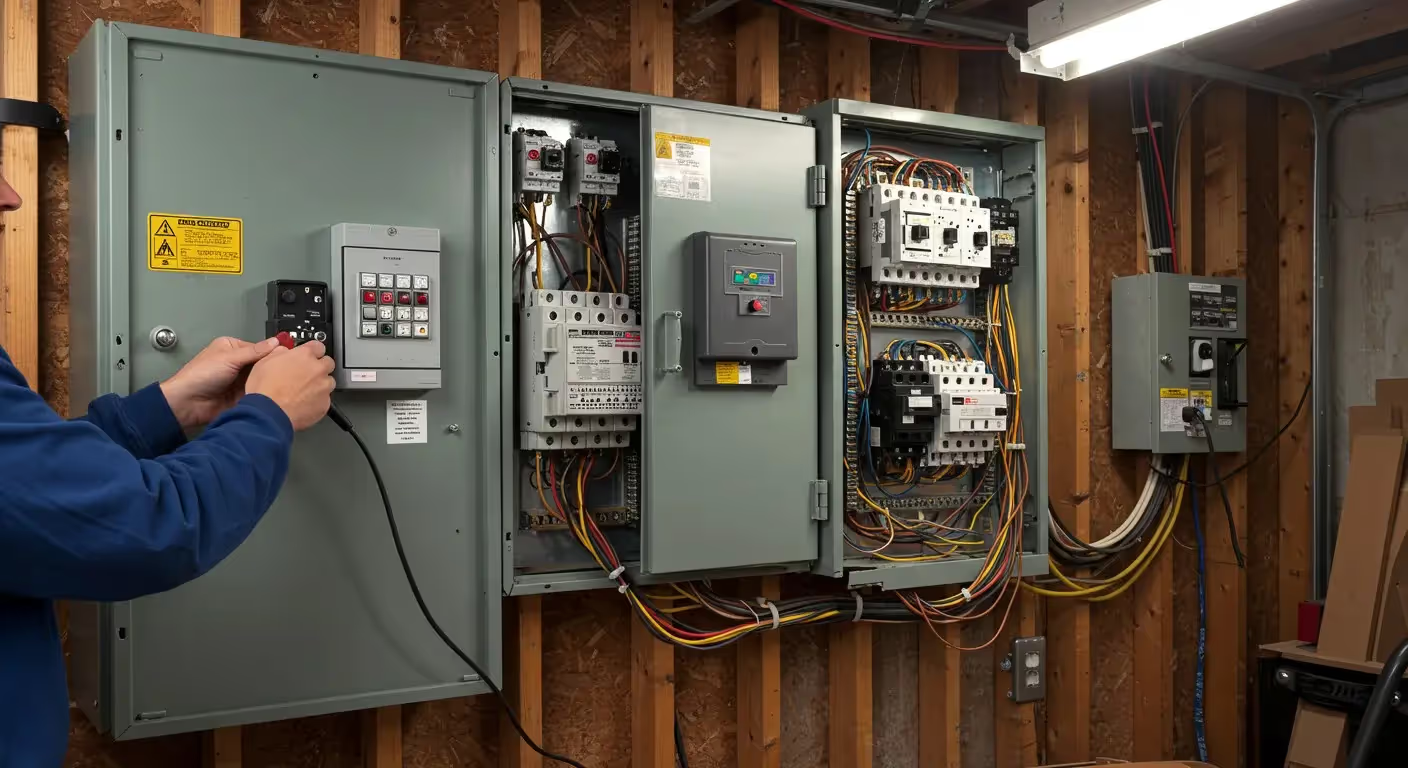
Your Guide to a Hassle-Free Electrical Panel Upgrade
Understanding the installation process helps alleviate anxiety about the work being done in your home. The process is designed to be efficient, safe, and transparent. Professional technicians handle all coordination, meaning you do not need to worry about the logistics of dealing with utility companies or municipal inspectors.
The workflow generally follows this sequence:
- Initial Site Assessment: A licensed electrician visits your property to inspect the existing panel, the wiring condition, and the grounding system. This visit determines the feasibility of the upgrade and identifies any code violations that must be corrected.
- Permitting and Utility Coordination: Before any wire is cut, the necessary electrical permits are secured from the local building department. Simultaneously, coordination with the local utility provider is managed to schedule the temporary power disconnection required for safe work.
- Site Preparation: On the day of installation, the work area is prepped to protect your home. Technicians ensure clear access to the main service line and the panel location.
- Disconnection and Demolition: The utility company cuts power to the home. The old panel is dismantled, and wires are carefully detached and inspected for damage or brittleness.
- Installation of New Hardware: The new enclosure (the metal box) is mounted securely. The service entrance cables are connected, and the new grounding system is established.
- Rewiring and Breaker Installation: Existing circuits are routed into the new panel. If wires are too short, junction boxes are used to extend them safely. New circuit breakers are snapped into place, balancing the electrical load across the two phases of power.
- System Testing: Once the physical installation is complete, power is restored. Technicians test every circuit to verify proper voltage, polarity, and grounding.
- Final Inspection: A municipal inspector reviews the installation to certify it meets all local and national safety codes.
Deciding Between Electrical Panel Repair or Replacement
Homeowners often struggle to determine if they need a simple repair or a full system overhaul. Making the right decision depends on the age of your equipment, the symptoms your system is exhibiting, and the type of hardware currently installed. While a repair might seem cost-effective in the short term, it often serves as a temporary bandage on a systemic issue.
When to Repair:
- Single Breaker Failure: If only one circuit is causing issues and the rest of the panel is in good condition, replacing a single worn-out breaker is usually sufficient.
- Loose Wiring: Occasionally, a flickering light is caused by a loose wire at the terminal. Tightening the connection can resolve the issue without a full replacement.
- Recent Installation: If your panel is less than 15 years old and was installed by a reputable contractor, it likely only needs maintenance rather than replacement.
When to Replace:
- Age of the Panel: Electrical panels have a lifespan of 25 to 40 years. If your home was built before 1990 and still has the original panel, internal components are likely degraded.
- Evidence of Overheating: Scorch marks on the panel backing, melted insulation on wires, or a burning smell near the breaker box are critical warning signs of imminent failure.
- Frequent Tripping: If using the microwave and the toaster simultaneously trips the breaker, your panel lacks the amperage capacity for modern living.
- Rust and Corrosion: In humid environments, rust can form on the bus bars and breaker connections. This increases electrical resistance, generates heat, and creates a significant fire hazard.
- Obsolete Brands: Certain panel brands installed decades ago, such as Federal Pacific Electric (FPE) Stab-Lok and Zinsco, have documented design flaws. These panels may fail to trip during a short circuit, leading to fires. If you have one of these brands, immediate replacement is the only safe option.
- Reliance on Power Strips: If you are using multiple extension cords and power strips because you lack sufficient outlets, a panel upgrade combined with new circuit installation is required to safely distribute power.
- Dimming Lights: Lights that dim when the air conditioner or refrigerator kicks on indicate that your system is maxed out and struggling to deliver the necessary current.
Local Codes and Seasonal Considerations for Montegut
Electrical work in Louisiana requires specific attention to environmental factors and local regulations. In Montegut, the humid subtropical climate poses unique challenges to electrical infrastructure. High humidity levels accelerate corrosion on metal components. If your electrical panel is located in a garage, a utility room, or on the exterior of the home, it is constantly exposed to moisture.
Environmental Impact:
- Condensation Issues: Rapid temperature changes can cause condensation inside the panel enclosure. Technicians may use duct seal or other barriers to prevent moisture from entering the panel through the service entrance cable.
- Corrosion Resistance: For outdoor panels, using NEMA 3R rated enclosures (weather-resistant) is mandatory to protect against rain and sleet.
- Storm Resilience: Given the region's susceptibility to tropical storms, ensuring the service mast is securely anchored to the structural framing of the house is critical to prevent it from being ripped away during high winds.
Regulatory Compliance:
- Permits: Electrical panel upgrades are major structural alterations that legally require a permit. This ensures that an impartial third-party inspector verifies the safety of the work.
- NEC Adoption: Local codes generally follow the National Electrical Code (NEC). Recent updates to the NEC require the installation of an emergency disconnect on the exterior of the home for first responders. This allows firefighters to cut power to the house quickly without entering the building during an emergency.
- Utility Requirements: Coordination with the local power company is essential. They have specific requirements regarding the height of the meter, the type of conduit used, and the location of the grounding rods. Failure to adhere to these utility-specific "gold book" standards can result in a refusal to reconnect power.
Licensed Professionals Dedicated to Safety and Quality
Selecting the right contractor for an electrical panel upgrade is a decision that impacts the safety of your home and family for decades. Electrical work is not a candidate for DIY attempts or handyman shortcuts. The risks associated with improper installation include electrocution, arc faults, and electrical fires that can destroy property.
Professional intervention ensures that every connection is torqued to manufacturer specifications. Loose connections are the leading cause of electrical heat buildup. Licensed electricians utilize torque screwdrivers to ensure precise tightness, a step often skipped by unqualified laborers. Furthermore, professionals understand load balancing—distributing the electrical draw evenly across the two hot legs of your service. Unbalanced loads can cause voltage fluctuations that damage sensitive electronics like computers and smart TVs.
Schedule Your Service Now
Martin's Heating & Air Conditioning employs technicians who are rigorously trained in safety protocols and current code requirements. By choosing a licensed provider, you also protect your financial investment. Most homeowner insurance policies deny claims related to electrical fires if the work was performed by unlicensed individuals without permits. A professional installation comes with a warranty on labor and parts, providing recourse should any component fail prematurely.
Professional service also means a clean job site. Upgrading a panel involves drywall dust, old metal parts, and wire scraps. A reputable team ensures that your home is left clean, the old panel is recycled or disposed of properly, and your new system is labeled clearly for easy use.
Upgrading your electrical panel is the single most impactful step you can take to modernize your home’s infrastructure and ensure the safety of your household. Don't wait for a total power failure or a sparking outlet to address the issue. Secure your home with a system built for today's energy demands.
Ready to power your home safely and efficiently? Contact us now to book your electrical panel upgrade.
Talk to a Local HVAC Expert
.avif)