




Furnace Maintenance Costs Explained — Average Prices and How to Save in Galliano, LA
Furnace maintenance cost is what homeowners pay for routine inspections, cleanings, tune-ups and small repairs that keep a heating system safe and running efficiently. Knowing how fuel type, system age, technician labor and service scope interact helps Galliano homeowners predict bills, avoid surprises and extend equipment life. This guide breaks down the main cost drivers for basic tune-ups and full maintenance visits, shows typical local price ranges, and gives practical rules of thumb for deciding when to repair or replace. You’ll find what basic and comprehensive services include, how gas, electric and oil systems affect pricing, and how technician expertise and local labor rates shape the final bill. Read on for local cost tables, concise checklists and step-by-step tips to get accurate quotes in Galliano, LA.
What Is the Average Furnace Maintenance Cost in Galliano, LA?
Average furnace maintenance cost in Galliano, LA depends on the level of service: a basic tune-up covers inspection and light cleaning, while comprehensive maintenance adds deeper cleaning, safety testing and minor repairs. Local price differences reflect labor rates, parts availability and system complexity — which is why two similar homes can get different bills. The biggest cost drivers are scope (inspection-only visits are cheaper than tune-ups that include calibration and filter changes) and parts (replacing ignitors, sensors or belts raises the bill significantly). Knowing local averages helps you compare quotes and spot unusually low prices that might skip important safety checks.
Building Maintenance and Repair Data for HVAC Life-Cycle Cost Analyses
Maintenance and repair (M&R) cost estimates are needed during planning, design, and operations of Army facilities. During planning, life-cycle costs help evaluate alternatives such as leasing, new construction, or renovating existing facilities. During design, M&R requirements for components (for example, built-up or shingle roofs) are needed so total life-cycle cost of different designs can be minimized. Once a facility is built, out-year predictions of maintenance and repair costs are needed so enough funds can be programmed to ensure facilities are maintained properly and do not deteriorate due to lack of maintenance.
Building Maintenance and Repair Data for Life-Cycle Cost Analyses: Heating, Ventilating, and Air Conditioning (HVAC) Systems, 1991
| Service Level | Typical Inclusions | Typical Price Range (Galliano) |
|---|---|---|
| Basic Tune-Up | Visual inspection, filter check, thermostat check, basic cleaning | $80 – $150 |
| Comprehensive Maintenance | Deep cleaning, blower service, safety tests, minor repairs, lubrication | $150 – $300 |
| Emergency/After-Hours Service | Rapid response, diagnostic and urgent repairs (varies) | $200 – $450+ |
This table outlines expected price bands so you can compare quotes and tell when extra costs reflect needed parts or higher-skill labor. For personalized estimates in Galliano, Martin’s Heating & Air Conditioning provides local service and a maintenance plan that can reduce emergency calls and lower repair costs through member discounts and priority scheduling; call the local office or check our Google Business Profile to request a quote and confirm availability.
How Much Does a Basic Furnace Tune-Up Typically Cost?
A basic furnace tune-up focuses on safety and performance checks to catch obvious problems and restore baseline efficiency. Technicians usually inspect or replace the filter, do a visual check of components, verify thermostat operation, check ignition/pilot on combustion systems, and perform a simple blower clean to remove surface dust. These visits typically take 30–60 minutes. In Galliano, expect about $80–$150 depending on travel time and whether minor consumables are included. Small items like basic filters may be part of the service; sensors or belts would usually be charged extra — ask what’s included in a quoted “basic” tune-up.
Knowing what a basic tune-up covers makes it easier to spot underpriced services that skip essential safety checks. Understanding typical time-on-site and standard inclusions also helps when comparing providers and deciding whether a one-time basic visit or a full tune-up is the better choice.
What Are the Price Ranges for Comprehensive Furnace Maintenance?
Comprehensive furnace maintenance goes further: deep cleaning, lubrication, full safety testing, heat exchanger inspection on gas units and minor part replacement when needed. This level addresses hidden buildup, checks combustion efficiency where applicable, and may include calibration or small repairs that restore lasting performance. Comprehensive services typically take 60–120 minutes and in Galliano usually range from $150 to $300 depending on parts and system complexity. For older units or systems with skipped service, a comprehensive tune-up often prevents costlier emergency repairs later.
When scheduling a comprehensive visit, ask for a line-item quote that separates labor, diagnostics and parts so you can see the cost drivers. If a company bundles minor parts and applies a maintenance-plan discount, the upfront cost can deliver measurable savings through fewer emergency calls and better efficiency.
Which Furnace Types Influence Maintenance Costs the Most?
Furnace type heavily affects routine maintenance tasks and costs because fuel source and design determine required safety checks and common failure modes. Gas furnaces need combustion checks, flue inspection and CO testing; electric furnaces focus on electrical components and element checks; oil systems add burner and tank checks plus specialized cleaning. These differences change the time technicians spend and the likelihood of needing replacement parts, so expect type-specific price variation when comparing maintenance estimates.
Knowing these differences helps you budget and talk clearly with technicians about parts and procedures. The table below summarizes typical tasks and price expectations for the three common furnace types in the Galliano area.
| Furnace Type | Typical Maintenance Tasks | Typical Price Range (Galliano) |
|---|---|---|
| Gas Furnace | Combustion check, flue/vent inspection, flame sensor cleaning, CO test | $125 – $300 |
| Electric Furnace | Electrical inspection, contactor/element check, blower maintenance | $100 – $225 |
| Oil Furnace | Burner service, filter and nozzle inspection, tank/burn chamber cleaning | $150 – $350 |
This comparison explains why gas and oil systems often sit at the higher end of maintenance costs: they require combustion or burner inspections and safety testing that add time and technical steps. Matching service scope to your furnace type helps control costs while keeping the system safe and efficient.
How Do Gas Furnace Maintenance Expenses Compare?
Gas furnace maintenance usually costs more because combustion systems require safety-focused inspections that should only be done by qualified technicians. Typical gas-specific tasks include flue and vent inspection, carbon monoxide testing, cleaning or replacing the flame sensor, checking gas-valve operation and verifying proper combustion efficiency. Replacing gas-related components such as ignitors or gas valves raises costs more than swapping simple blower parts because of part price and regulatory requirements. For safety and warranty reasons, choose experienced technicians for gas furnace maintenance to ensure proper combustion and flue integrity.
Because combustion safety affects occupant safety, the extra cost for gas furnace maintenance is justified. An experienced tech lowers the risk of missed issues and costly emergency repairs down the road.
What Are the Cost Differences for Electric and Oil Furnace Maintenance?
Electric furnaces are generally cheaper to maintain because they don’t have combustion parts; the work centers on electrical inspections, heating-element condition, contactors and blower performance. Tasks are simpler but still require careful checks to avoid electrical hazards and keep efficiency up. Oil furnaces often need burner cleaning, nozzle and filter replacement, and more frequent inspections because of soot and fuel handling — those add labor and sometimes specialized parts. As a result, electric systems tend to sit at the lower end of the price range, while oil systems can hit the higher end due to their specialized servicing needs.
Picking the right service scope for your furnace type prevents paying for unnecessary steps and ensures the technician addresses the common failure modes for your system.
How Does Furnace Age and Condition Affect Maintenance Pricing?
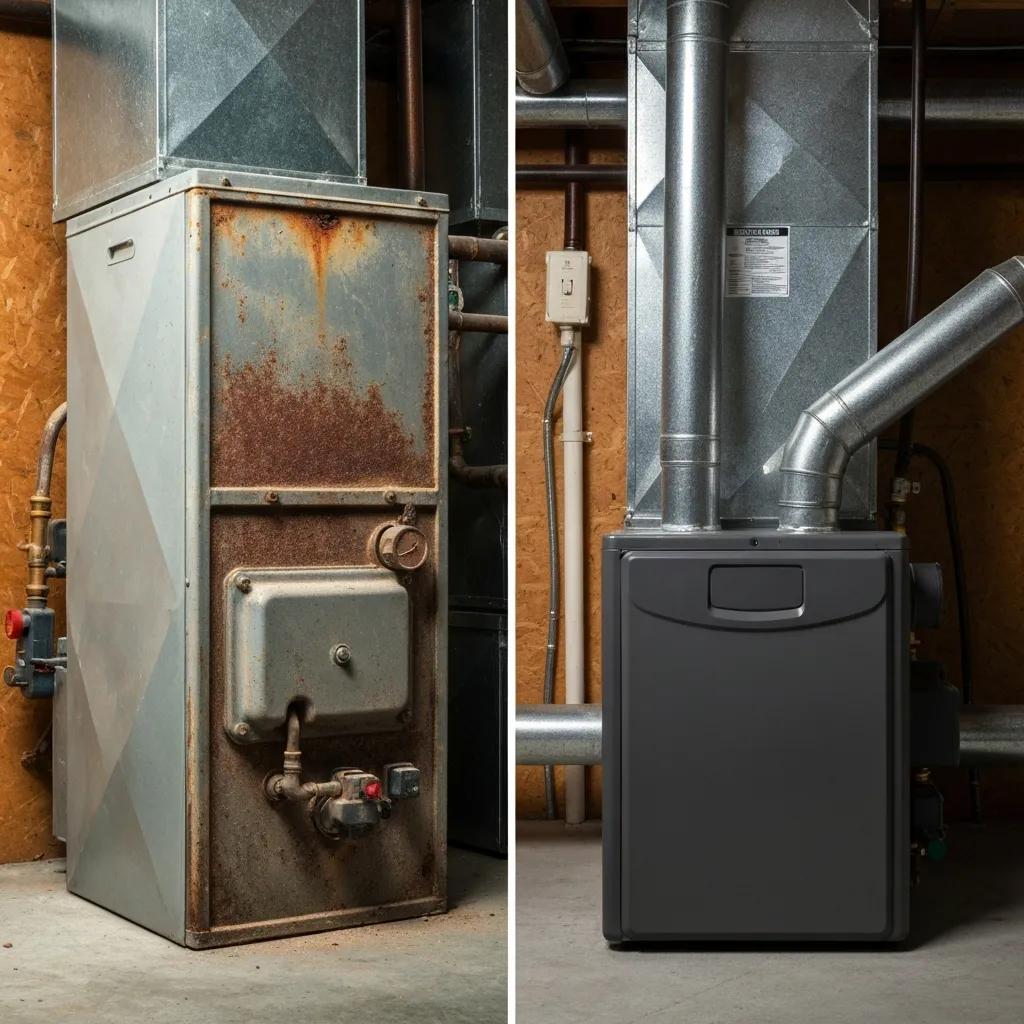
Furnace age and condition are major cost drivers because older systems usually show more wear, use harder-to-find parts and run less efficiently — all of which lengthen diagnostics and increase the chance of component replacement. As a system ages, technicians spend more time troubleshooting intermittent faults, dealing with corroded or brittle parts, and sourcing legacy components. That typically leads to higher parts and labor costs compared with newer, still-warrantied equipment.
Understanding how age affects cost helps homeowners budget for higher maintenance or plan a replacement that minimizes total ownership cost. The checklist below helps decide whether recurring maintenance or replacement makes more financial sense.
- Age Benchmark: Note your furnace’s age and its typical lifespan.
- Repair Frequency: Track how often the unit needs service each year.
- Repair-to-Replacement Ratio: Compare yearly repair costs to the amortized cost of replacement.
- Efficiency Loss: Watch for rising energy bills that indicate declining efficiency.
Using these criteria gives a clear framework for deciding if ongoing maintenance remains cost-effective or if replacement will save money and headaches long term.
Why Do Older Furnaces Typically Cost More to Maintain?
Older furnaces cost more because parts wear out, original components become obsolete, and hidden damage such as corrosion or heat-exchanger issues require more diagnostic time and sometimes hard-to-source parts. Technicians often face longer on-site work and wait times for discontinued components, which raises labor and parts costs. Older systems also run less efficiently, increasing operating costs that add to the maintenance burden. Together, these factors explain why maintaining older equipment can approach or exceed the value of replacing it.
Seeing this trend early helps homeowners compare accumulated repair costs to the amortized price of a new system. When annual repairs climb or safety-related parts degrade, replacement is often the more sensible choice.
When Is Furnace Replacement More Cost-Effective Than Maintenance?
Replacement becomes more cost-effective when a unit’s age, repair frequency and falling efficiency reach points where continued investment no longer makes sense. A common rule of thumb: if annual repair costs repeatedly exceed 50% of an estimated replacement cost, seriously consider replacing the unit. For example, if yearly repairs average $600 and a replacement amortized over financing costs $3,000–$5,000, replacement may be the smarter long-term move. Financing options can make upgrades manageable — some local providers offer plans such as 7.99% APR for 60 months to spread the cost without a large up-front payment.
Running a simple repair-versus-replace calculation clarifies your choices and helps avoid pouring money into an unreliable or inefficient system.
What Role Do Labor Rates and Technician Expertise Play in Furnace Service Costs?
Labor rates and technician skill directly affect service costs: hourly rates, travel time and a tech’s ability to diagnose and fix issues on the first visit determine total billable hours. Skilled technicians may charge higher hourly rates but often lower your overall cost by improving first-time-fix rates and avoiding repeat trips. Local labor market conditions, emergency premiums and the availability of certified techs also influence what homeowners pay in Galliano and nearby communities.
Knowing how labor interacts with parts and diagnostics helps you evaluate quotes beyond the headline price. The list below highlights the main labor-related cost drivers to consider when comparing bids.
- Technician hourly rate and service-call fee
- Travel time or trip charge for remote calls
- Emergency or after-hours premiums (weekends/holidays)
- First-time-fix rate and diagnostic thoroughness
Comparing bids by these factors — not just by low price — helps you choose technicians who deliver long-term value and safety.
How Do Local HVAC Technician Rates Impact Your Bill?
Local technician rates shape the final bill through hourly charges, flat diagnostic fees and after-hours premiums; a higher hourly rate can still save money if the tech fixes the problem quickly. For a routine tune-up, the tech’s hourly rate combined with expected on-site time makes up the labor portion of the cost, while parts and diagnostics add variable amounts. Emergency calls or weekend service often carry surcharges that can double or triple labor costs. Ask whether a quoted price is a flat tune-up fee or a time-and-materials estimate to avoid surprises.
Choosing a contractor with transparent pricing and a strong first-time-fix record usually gives better long-term cost control, even if their hourly rate is higher up front. That experience reduces repeat visits and hidden diagnostic charges.
Why Is Experienced Technician Service Worth the Investment?
Experienced technicians are worth the premium because they diagnose faster, perform correct safety testing (especially on gas and oil systems) and often extend equipment life through precise adjustments. They spot early signs of major failures and recommend cost-effective fixes that prevent emergency breakdowns. While their rates may be higher, fewer repeat calls, fewer missed issues and better safety compliance deliver a measurable return on investment.
As a brief ROI example: paying a modest premium for experienced labor that avoids one emergency replacement can save thousands in equipment and labor costs — making expertise a wise financial choice.
Frequently Asked Questions
What factors should I consider when choosing a furnace maintenance service?
When choosing a furnace maintenance service, prioritize the technician’s experience, the scope of services offered and customer reviews. Look for companies that provide clear, itemized quotes showing labor and parts. Ask about maintenance plans, which can save money over time. Also verify certifications and insurance to ensure industry-standard safety and quality. Finally, check their emergency availability during peak heating months.
How often should I schedule furnace maintenance?
We recommend at least one furnace maintenance visit per year, ideally before the heating season starts. That annual check helps your system run efficiently and safely. For older or heavily used furnaces, consider twice-yearly checks to catch issues early. Regular maintenance extends equipment life and can lower heating bills. Ask your technician for a schedule tailored to your system.
What are the signs that my furnace needs maintenance?
Signs your furnace needs maintenance include unusual noises (banging or rattling), uneven heating, rising energy bills and strange odors. Frequent on-off cycling or a yellow flame instead of blue are also warning signs. If you notice any of these, schedule a maintenance check to prevent bigger problems and ensure safe operation.
Can I perform any maintenance on my furnace myself?
Homeowners can handle basic tasks like changing or cleaning the air filter, checking thermostat settings and keeping vents clear. But leave combustion and electrical inspections to qualified technicians — attempting complex repairs without training can be dangerous and may void warranties. Always follow your user manual for specific care instructions.
Conclusion
Knowing the factors that affect furnace maintenance costs helps homeowners make smarter decisions that boost efficiency and extend equipment life. Regular maintenance, the right service scope and experienced technicians reduce surprises and improve safety. Consider a maintenance plan for predictable costs and repair discounts. For personalized help and to learn more about our services, contact Martin’s Heating & Air Conditioning today.