
Restoring Comfort When Your Heat Pump Fails Unexpectedly
Facing unexpected heat pump failures can disrupt your comfort, especially during Houma’s hot summers or wet seasons. At Martin's Heating & Air Conditioning, we respond quickly to get your system back on track. Contact us immediately to schedule a diagnostic visit or to ask about financing options for major repairs.
- Rapid On-Site Service: Technicians arrive within hours of your call to restore climate control.
- Comprehensive Diagnostics: We identify and rectify all mechanical and electrical issues the first time.
- Full-Service Guarantee: Complete repair solutions come with satisfaction assurance.
Licensed service backed by a satisfaction guarantee and flexible financing options.
Immediate Heat Pump Repairs: Get Comfortable Again
A malfunctioning heat pump in the humid climate of South Louisiana is more than a minor inconvenience; it disrupts your daily life and can lead to dangerous indoor temperature levels. When your system stops regulating temperature effectively, humidity levels rise rapidly, creating a sticky, uncomfortable environment inside your home. Whether the unit is blowing warm air during a mild winter night or failing to cool during the peak of a humid afternoon, immediate intervention is required to protect your home’s air quality and your family's comfort.
The urgency of a repair often depends on the specific symptoms your unit displays. A system that refuses to turn on, emits burning odors, or makes grinding noises indicates a critical failure that could lead to permanent compressor damage if left running. In Houma, where high moisture content is a constant environmental factor, a broken heat pump also means a lack of dehumidification. This can lead to moisture buildup on windows, walls, and furniture within hours. Our goal is to intercept these issues before they escalate into total system replacements.
We focus on restoring the equilibrium of your indoor environment. Heat pumps are complex systems that handle both heating and cooling through a reversing valve mechanism. When this mechanism fails, or when refrigerant leaks occur, the efficiency of the unit plummets, causing energy bills to spike while comfort decreases. We prioritize emergency calls to ensure that residents do not have to endure prolonged periods without climate control.
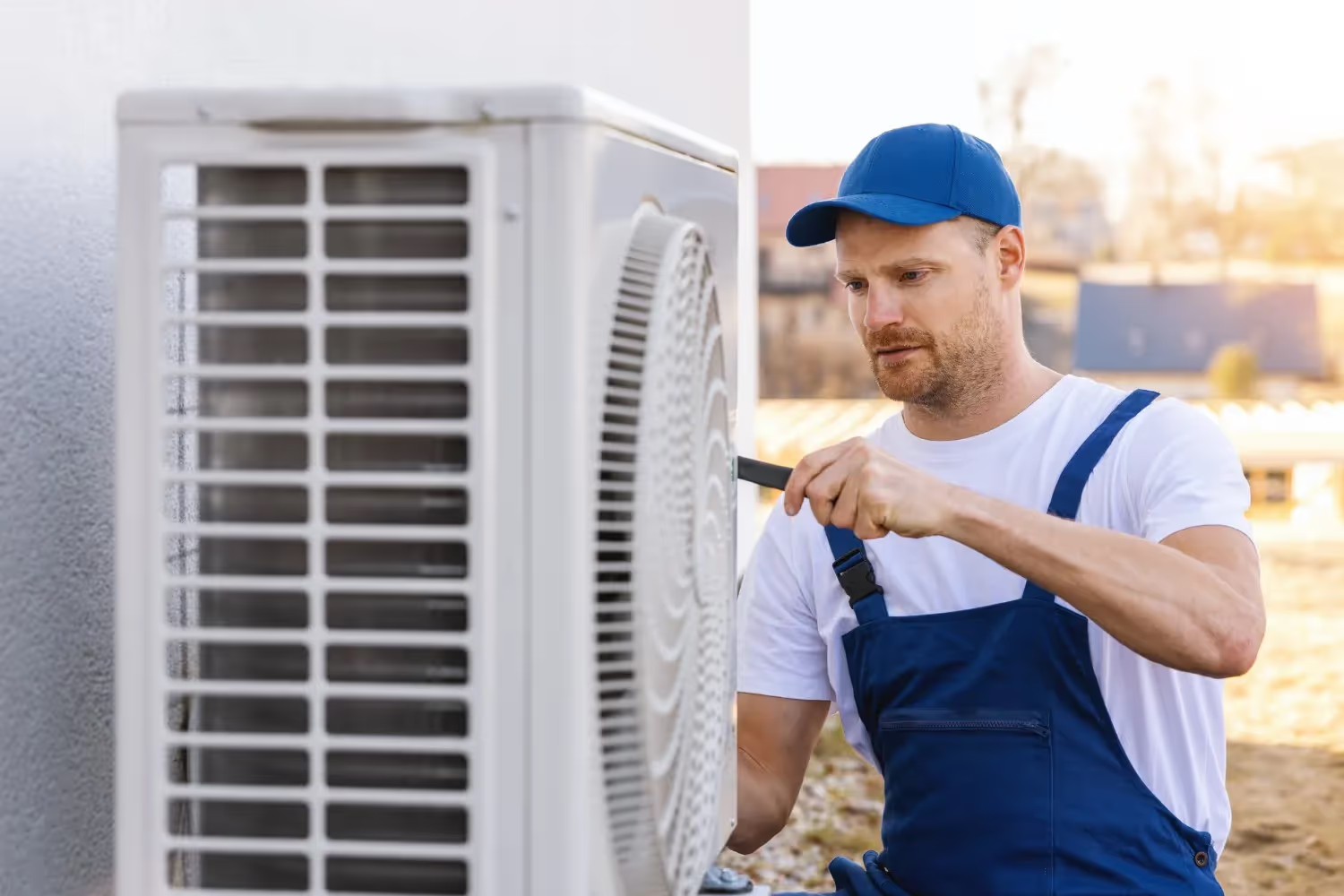
What You Get Today: Scope, Timeline, and Inclusions
When you request service, the objective is to move from a state of disruption to a state of resolution as efficiently as possible. The service visit is structured to minimize downtime and maximize transparency. You are not just paying for a quick fix; you are investing in a comprehensive assessment of your HVAC system’s health.
- Thorough System Diagnostics: The process begins with a complete evaluation of the electrical components, refrigerant levels, airflow dynamics, and thermostat calibration. Technicians use advanced diagnostic tools to pinpoint the exact source of the failure, rather than guessing based on symptoms.
- Clear Explanation of Issues: Once the problem is identified, you receive a detailed explanation of what went wrong. This includes a breakdown of which parts have failed, why they failed, and how the repair will rectify the situation.
- Upfront Repair Strategy: You are presented with a clear plan of action. This includes the scope of work required to fix the immediate issue and any recommendations to prevent future breakdowns.
- Fully Stocked Service Vehicles: To expedite repairs, service trucks are stocked with common parts such as capacitors, contactors, fan motors, and control boards. This inventory management aims to complete the repair in a single visit whenever possible.
- Verification and Testing: After the repair is completed, the system is not just turned on; it is stress-tested. Technicians verify that the unit is cycling correctly, that temperature differentials are within manufacturer specifications, and that airflow is unobstructed.
How the Repair Process Works
Understanding the workflow of a professional service call helps manage expectations and ensures a smooth experience. The process is designed to be systematic, reducing the chance of oversight and ensuring safety protocols are followed strictly.
- Initial Contact and Scheduling: The process starts when you reach out with your issue. Dispatchers prioritize calls based on urgency and technician availability. You receive a confirmed time window for the technician’s arrival.
- Arrival and Site Protection: Upon arrival, technicians respect your property by wearing shoe covers and using drop cloths where necessary. The work area is prepped to ensure no damage occurs to flooring or surrounding areas during the repair.
- Safety Inspection: Before touching any internal components, power is safely disconnected. Technicians inspect the unit for electrical hazards, frayed wires, or signs of overheating that could pose a fire risk.
- Component Isolation and Testing: The technician isolates the suspected faulty components. For example, if the outdoor unit is not running, the capacitor and compressor are tested for electrical continuity and capacitance. If the unit is not heating, the reversing valve is checked for proper operation.
- Part Replacement and Repair: Faulty parts are removed and replaced with OEM or high-quality equivalent components. Connections are tightened, and moving parts are lubricated if necessary.
- Refrigerant Charge Verification: If a leak was repaired, the system is evacuated to remove moisture and air, then recharged with the precise amount of refrigerant required for optimal performance.
- Final System Calibration: The thermostat is checked to ensure it communicates correctly with the heat pump. Fan speeds are adjusted to match the ductwork static pressure.
- Cleanup and Debrief: All old parts and packaging are removed from the site. The technician walks you through the work performed and answers any final questions regarding the operation of the repaired system.
When Replacement Beats Repair
Deciding between repairing an aging unit and investing in a new system is a significant financial decision. While repairs are often the most immediate solution, there are scenarios where continuing to patch up an old system is economically unwise. Understanding the tipping point helps homeowners make informed choices about their long-term comfort and budget.
- The 50% Rule: A general guideline used in the industry is the 50% rule. If the cost of the repair approaches or exceeds 50% of the value of a new system, replacement is usually the better investment. This is particularly true if the unit is out of warranty.
- Age of the Equipment: Heat pumps typically have a lifespan of 10 to 15 years. If your unit is over 12 years old and requires a major component replacement, such as a compressor, investing that money into a modern, more efficient system often yields a better return on investment.
- Frequency of Breakdowns: If you find yourself calling for service multiple times a year, the cumulative cost of these minor repairs adds up quickly. A system that breaks down frequently is signaling that it is reaching the end of its useful life.
- Efficiency Ratings: Older heat pumps have significantly lower SEER (Seasonal Energy Efficiency Ratio) and HSPF (Heating Seasonal Performance Factor) ratings compared to modern units. Replacing a 10 SEER unit with a modern 16+ SEER system can result in substantial savings on monthly utility bills, effectively offsetting the installation cost over time.
- R-22 Refrigerant Phase-Out: If your older system utilizes R-22 (Freon) refrigerant, repairs involving refrigerant leaks can be exorbitantly expensive due to the scarcity of this phased-out chemical. Modern systems use R-410A or newer refrigerants, which are more environmentally friendly and affordable to service.
- Comfort Consistency: As systems age, they often lose the ability to maintain consistent temperatures or control humidity effectively. If your home has hot and cold spots or feels clammy despite the AC running, the system may have lost compression or airflow efficiency that a simple repair cannot fully restore.
Local Notes: Permits, Utilities, and Seasonality
Operating a heat pump in Houma presents unique challenges driven by the local geography and climate. Homeowners must be aware of how these external factors influence the maintenance and repair of their HVAC systems.
- Hurricane Season Preparation: From June through November, the threat of tropical storms and hurricanes requires specific attention to the outdoor unit. High winds can deposit debris into the fan blades or coils, causing mechanical failure. Electrical surges from storm activity often damage sensitive control boards. Post-storm inspections are crucial to ensure the unit is safe to operate.
- Humidity Management: The high humidity levels in the region place a heavy load on the heat pump’s dehumidification capabilities. Ensuring the condensate drain line is clear of algae and blockages is critical. A clogged drain line can cause water damage to ceilings and floors and trigger safety switches that shut down the system.
- Salt and Corrosion: For homes located closer to coastal marshes, salt spray can accelerate corrosion on the outdoor condenser coils. This corrosion reduces heat transfer efficiency and can lead to premature refrigerant leaks. Specialized coatings or more frequent cleaning may be required to protect the equipment.
- Permitting Requirements: Significant repairs, particularly those involving the replacement of the outdoor condenser or the indoor air handler, may require permits from local building departments. Ensuring compliance with local codes protects the homeowner from liability and ensures the work meets safety standards.
- Utility Coordination: In older homes, electrical panels may need upgrades to support modern, high-efficiency heat pumps. Coordination with local utility providers is sometimes necessary when upgrading service drops or meters to handle the load of new HVAC equipment.
- Entergy Solutions and Rebates: Local utility programs occasionally offer incentives or rebates for upgrading to high-efficiency systems or performing duct sealing. Being aware of these programs can help offset the cost of necessary improvements — view our HVAC promotions for more savings.
Proof and Differentiators
Choosing the right service provider is about more than just finding someone with a wrench. It involves selecting a partner who understands the technical complexities of heat pump technology and the specific demands of the local environment. Heat pumps are more sophisticated than standard air conditioners because they include reversing valves, defrost boards, and often variable-speed compressors. Misdiagnosing a heat pump issue is common among inexperienced technicians, leading to unnecessary part replacements and unresolved comfort issues.
Martin's Heating & Air Conditioning employs technicians who undergo rigorous training to stay updated on the latest HVAC technologies. This expertise allows for accurate diagnostics of complex issues like reversing valve failures or refrigerant imbalances that mimic other problems.
- Technical Expertise: Modern heat pumps rely heavily on electronics and sensors. Technicians must be proficient in reading wiring diagrams and using multimeters to trace electrical faults.
- Tooling and Equipment: Proper repair requires specialized tools, such as digital manifolds for precise pressure readings, micron gauges for vacuum verification, and combustion analyzers for hybrid systems.
- Regulatory Compliance: Handling refrigerant requires EPA certification (Section 608). This ensures that refrigerants are recovered and recycled according to federal law, protecting the environment and the homeowner from fines.
- Warranty Preservation: Manufacturer warranties often require proof that repairs were performed by a licensed professional. DIY repairs or work done by unlicensed handymen can void these warranties, leaving the homeowner responsible for expensive parts in the future.
- Safety Protocols: HVAC systems involve high-voltage electricity and high-pressure gases. Licensed professionals follow strict safety protocols to prevent injury and property damage during the repair process.
- Local Reputation: A long-standing presence in the community indicates a track record of reliability and customer satisfaction. Established companies are more likely to honor warranties on their labor and be available for follow-up service if needed.
When your comfort is compromised, you need a solution that is fast, reliable, and technically sound. Do not let a minor issue spiral into a major system failure. Secure your home’s comfort and efficiency by reaching out to a team that prioritizes precision and speed.
Call Us Now
Contact us today to schedule your heat pump repair service.
Talk to a Local HVAC Expert

.avif)