Time for a New HVAC System in Your Home?
Handling the sweltering Houma heat or unexpected winter snaps may prove challenging with an outdated system, leaving you uncomfortable in your own home while utility bills continue to rise. If your HVAC is struggling with efficient temperature control or requires frequent repairs, contact us today to schedule a consultation or learn about available financing options.
Martin's Heating & Air Conditioning specializes in replacing underperforming units with high-efficiency systems designed to handle the specific demands of the local climate. We focus on proper sizing, professional installation, and ensuring your home remains cool during the humid summers and warm during the chilly months.
We provide the following outcomes for every installation project:
- Fast, reliable installations tailored to Houma's unique climate conditions.
- Energy-efficient units ensuring year-round comfort and reduced utility costs.
- Robust systems designed to withstand tropical weather and high humidity.
All installations conform to local codes with comprehensive warranties and financing options available to fit your budget.
What You Get Today: Quick, Efficient Installation Services
When you invest in a modern HVAC replacement, you are purchasing more than just a metal box that sits outside your home. You are investing in a comprehensive climate control solution that addresses humidity, air quality, and consistent airflow. Modern systems are vastly different from units manufactured even ten years ago. They utilize advanced technology to modulate temperatures more precisely, removing the "clammy" feeling often associated with standard air conditioning in humid regions.
Our installation service focuses on total system performance. We do not simply swap out old equipment for new equipment. We evaluate the entire thermal envelope of your property. This ensures that the new unit is compatible with your existing ductwork and that it has the capacity to cool every room evenly without short-cycling. Short-cycling—where a unit turns on and off too frequently—is a common issue when systems are oversized, leading to high energy bills and premature failure. Conversely, an undersized unit will run continuously without ever reaching the set temperature.
Included in our installation services are:
- Load Calculation: We perform a detailed Manual J load calculation to determine the exact heating and cooling requirements of your specific floor plan.
- Equipment Matching: We ensure the indoor evaporator coil and outdoor condenser are perfectly matched for maximum SEER2 (Seasonal Energy Efficiency Ratio) performance.
- Ductwork Inspection: Existing ducts are checked for leaks, disconnects, or insulation failures that could compromise the efficiency of the new system.
- Thermostat Upgrades: We install compatible smart thermostats or programmable controls to give you better command over your energy usage.
Installation Process: What to Expect Start to Finish
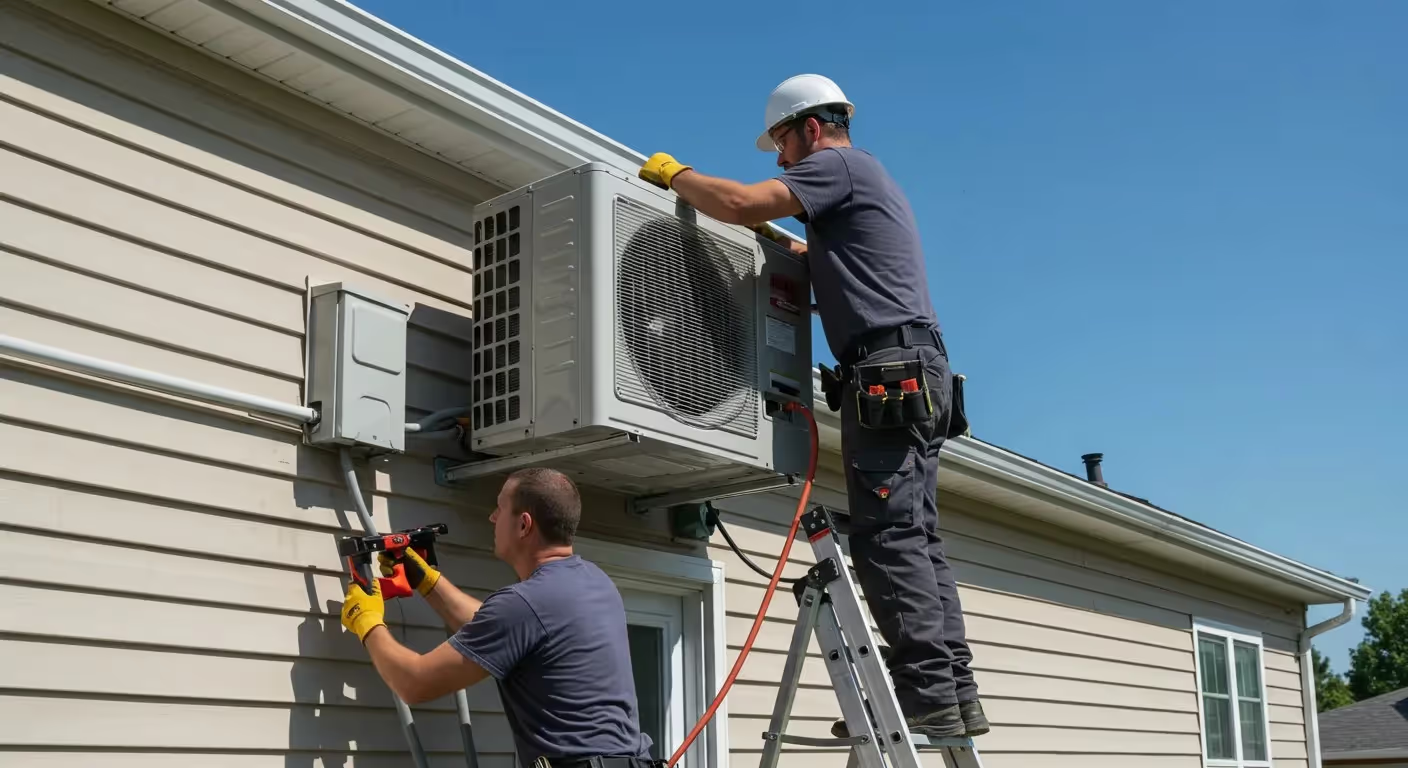
A professional installation is a structured process designed to minimize disruption to your daily life while ensuring technical precision. We understand that having technicians in your home requires trust, which is why the process is transparent and efficient. From the moment the truck arrives to the final testing phase, every step is executed with a focus on safety and cleanliness.
The timeline for a standard change-out is typically one day, though more complex installations involving ductwork modification may take longer. The goal is to restore comfort to your home as quickly as possible without cutting corners on safety protocols or manufacturer specifications.
Here is the step-by-step workflow you can expect:
- Site Protection: Technicians lay down drop cloths and wear protective shoe covers to keep your flooring and interior clean throughout the project.
- Safety Disconnect: Power and gas lines (if applicable) are safely shut off and disconnected from the existing unit to prevent accidents.
- Refrigerant Recovery: Old refrigerant is reclaimed according to EPA guidelines to prevent environmental contamination; it is never vented into the atmosphere.
- Equipment Removal: The old condenser and air handler or furnace are carefully removed and hauled away for proper recycling or disposal.
- Pad and mounting Preparation: We inspect the outdoor pad to ensure it is level and stable. If necessary, we replace it or add hurricane strapping to meet wind rating requirements.
- New Equipment Placement: The new units are positioned, ensuring proper clearance for airflow and serviceability.
- Line Set Connection: Copper refrigerant lines are connected, brazed with nitrogen to prevent oxidation, and pressure-tested to ensure there are no leaks.
- Electrical and Drain Setup: High-voltage and low-voltage wiring is connected, and condensate drain lines are installed with safety float switches to prevent water damage.
- Vacuum and Charge: A deep vacuum is pulled on the system to remove moisture and non-condensables before releasing the factory refrigerant charge.
- System Commissioning: The system is started, and technicians measure static pressure, temperature split, and amperage to verify it is running at peak manufacturing specs.
- Final Walkthrough: We guide you through the operation of your new system and thermostat, answering any questions regarding maintenance.
When Replacement Beats Repair: A Cost-Benefit Guide
Deciding between repairing a failing unit or investing in a replacement is often a financial calculation based on the age of the system and the cost of the required repair. While a quick fix might seem cheaper in the short term, it often leads to a "money pit" scenario where cumulative repair costs exceed the value of a new system. Additionally, older systems are significantly less efficient, meaning you pay more each month to the utility company for the same amount of cooling.
Industry professionals often refer to the "$5,000 Rule" to help homeowners decide. Multiply the age of your equipment by the estimated repair cost. If the total exceeds $5,000, replacement is generally the smarter financial move. For example, if your 12-year-old system needs a $500 repair, the score is 6,000, suggesting replacement is viable.
Martin's Heating & Air Conditioning recommends considering replacement under the following conditions:
- Age of Equipment: If your heat pump or air conditioner is over 10 to 12 years old, it is nearing the end of its expected lifespan. Major components like compressors are likely to fail soon.
- Refrigerant Type: If your system utilizes R-22 (Freon), it is obsolete. R-22 is no longer produced, making repairs involving refrigerant prohibitively expensive and eventually impossible.
- Frequent Breakdowns: If you have called for repairs more than twice in the last year, the system is becoming unreliable and untrustworthy during extreme weather.
- Rising Energy Bills: A steady increase in energy costs, despite normal usage, indicates the internal components are wearing down and losing efficiency.
- Uneven Comfort: If some rooms are freezing while others are hot, or if humidity levels remain high indoors, the system can no longer effectively manage the load.
- Cost of Repair: If a single repair bill equals 50% or more of the cost of a new unit, replacement offers a better return on investment through warranty coverage and energy savings — check for promotions today.
Local Compliance: Meeting Houma’s HVAC Regulations
Installing an HVAC system in Houma requires adherence to specific building codes and regulations designed to protect homeowners and ensure safety. This region faces unique environmental challenges, including high humidity, salt air corrosion potential, and the threat of tropical storms. Consequently, installation standards here are more rigorous than in landlocked or temperate areas.
Compliance is not optional; it is a legal requirement that impacts your home insurance and future resale value. Unpermitted work can lead to fines, voided equipment warranties, and denied insurance claims in the event of storm damage.
Key compliance and environmental considerations include:
- Wind Ratings and Anchoring: Local codes often mandate that outdoor condenser units be securely anchored to concrete pads with specific hurricane straps or tie-downs to prevent them from becoming projectiles during high winds.
- Elevation Requirements: In flood-prone zones, equipment may need to be elevated on stands or platforms to remain above base flood elevation levels.
- Electrical Safety: All wiring from the breaker panel to the disconnect box and the unit itself must meet the current National Electrical Code (NEC) standards to prevent fire hazards.
- Refrigerant Handling: Only EPA-certified technicians are legally permitted to handle, recover, and charge refrigerant, ensuring environmental compliance.
- Condensate Management: Due to high humidity, condensate drainage is critical. Codes require primary and secondary drain lines, often with emergency shut-off switches, to prevent attic or ceiling water damage.
- Permitting: We handle the acquisition of all necessary mechanical permits required by the parish or city, scheduling the required third-party inspections to verify the work meets all safety standards.
Our Commitment: Experienced Technicians and Reliable Services
Choosing the right contractor is just as important as choosing the right brand of equipment. The longevity and efficiency of your heating and cooling system depend heavily on the quality of the installation. A top-tier unit installed poorly will fail sooner and run less efficiently than a mid-range unit installed perfectly.
We pride ourselves on technical excellence and customer transparency. Our technicians are trained not only in the mechanics of HVAC but also in building science. We understand how airflow, insulation, and ventilation work together to create a comfortable home environment. We do not use high-pressure sales tactics; instead, we provide data-backed recommendations that allow you to make an informed decision for your property.
Our service commitment includes:
- Licensed and Insured: We carry full liability insurance and workers' compensation, protecting you from any liability during the project.
- Factory Training: Our team undergoes regular training on the latest equipment, including variable-speed inverters and communicating systems.
- Clear Communication: You will receive a detailed written quote with no hidden fees, explaining exactly what is included in the installation.
- Respect for Property: We treat your home with care, cleaning up all debris and ensuring the workspace is left exactly as we found it.
- Post-Installation Support: We register your equipment warranties for you and offer maintenance plans to keep your new system running at peak performance for years to come.
Contact Us Now
Secure your home’s comfort and efficiency today. Contact Martin's Heating & Air Conditioning to request your installation estimate and take the first step toward a reliable, high-performance HVAC system.
Talk to a Local HVAC Expert
.avif)