EV Chargers in Larose, LA
Expert installation of Level 2 EV charging stations in Larose. Ensure safe, quick charging at home with licensed electricians. Contact us today for an estimate!
Need a Reliable Level 2 Charging Station at Home?
Are you worried about the technical complexity and electrical demands of installing a dedicated electric vehicle charger at your property? You are not alone, and professional, licensed electricians are ready to help with quick, reliable solutions; contact us today to schedule an estimate or discuss available financing options.
- Get your installation done efficiently on the same day as your scheduled appointment.
- Benefit from deep technical experience with years of serving the Larose area.
- Take advantage of available local rebates to make your installation more affordable.
- With all necessary permits and up-to-date expertise, we ensure your installation meets regional codes and standards.
Switching to an electric vehicle changes the way you interact with your car, shifting the "refueling" process from a gas station to your own garage or driveway. However, relying on a standard wall outlet (Level 1 charging) often means waiting days for a full charge, which is impractical for daily commuters. Martin's Heating & Air Conditioning provides the electrical infrastructure required to support Level 2 charging, drastically reducing wait times and ensuring your vehicle is ready when you are.
Residents in Larose understand that high-voltage electrical work is not a DIY project. It requires specific amperage calculations, dedicated circuits, and adherence to the National Electrical Code (NEC). A proper installation ensures that your vehicle charges safely without tripping breakers or overheating your home’s wiring.
What is Included in Professional EV Charger Installation
When you commit to a home charging solution, you are purchasing more than just a piece of hardware; you are upgrading your home’s electrical capability. A professional installation covers the entire scope of work required to take energy from your main utility connection and deliver it safely to your vehicle’s battery management system.
The scope of work generally includes:
- Load Calculation: A thorough assessment of your current electrical panel to ensure you have the "headroom" to add a heavy continuous load.
- Permitting and Inspection: Handling the paperwork required by local municipalities to ensure the work is legal and insured.
- Circuit Installation: Running a new 240-volt dedicated circuit from your breaker box to the charging location.
- Conduit and Wiring: Installing protective conduit (pipe) and heavy-gauge copper or aluminum wiring sized specifically for the distance and amperage of the charger.
- Hardware Mounting: Securely fastening the charging unit or NEMA 14-50 outlet to the wall or pedestal.
- Testing: Verifying voltage levels, grounding, and communication between the charger and a test vehicle or simulator.
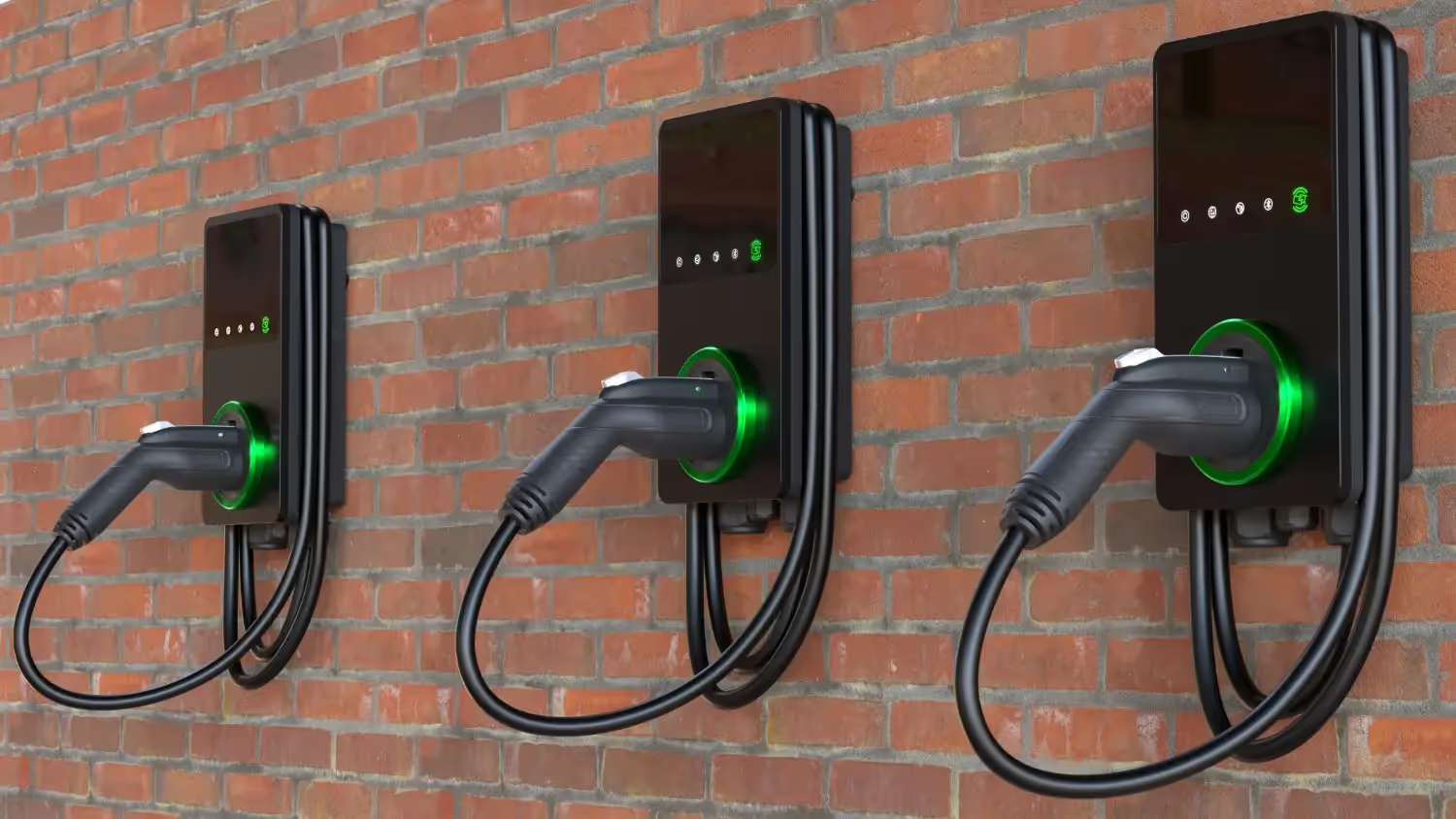
This process transforms a standard garage or driveway into a fueling station. The goal is to provide a seamless charging experience where you simply plug in and walk away, confident that the system will handle the load for hours at a time without interruption.
How the Installation Process Works
Understanding the steps involved helps homeowners prepare for the installation day. While every home layout is different, the electrical principles remain consistent. Professional electricians follow a strict sequence to ensure safety and efficiency.
Site Assessment and Load Calculation
First, the electrician examines your main electrical panel. They look at the total amperage (usually 100, 150, or 200 amps) and calculate the load of existing appliances like AC units, ovens, and dryers.
This step determines if your panel can handle the additional 32 to 50 amps an EV charger draws.
If the panel is full or at capacity, load management devices or a service upgrade may be recommended immediately.
Circuit Run and Conduit Layout
Next, the technician maps out the path from the panel to the parking spot.
In a garage installation, this might involve running conduit along the surface of the walls or fishing wire through drywalled ceilings.
For exterior installations, trenching may be required to run underground PVC conduit to a detached garage or driveway post.
Breaker and Wiring Installation
A new double-pole breaker is installed in the main panel.
Heavy-gauge wire is pulled through the conduit. The wire gauge is strictly dictated by the amperage; using wire that is too thin poses a severe fire risk.
A continuous ground wire is installed to ensure safety during fault conditions.
Termination and Connection
The wiring is connected to the EVSE (Electric Vehicle Supply Equipment) or the heavy-duty outlet.
Torque screwdrivers are used to tighten connections to manufacturer specifications, preventing loose connections that cause arcing.
Final Commissioning
Finally, the system is energized.
The technician tests the voltage drop and ensures the ground is effective.
If the charger is a "smart" unit, they may assist in connecting it to your home WiFi for app-based monitoring.
Upgrading vs. Standard Installation: Assessing Your Electrical Panel
One of the most critical decision points in this process is determining whether your current electrical service is sufficient. Not every home is ready for a Level 2 charger "out of the box." Recognizing when you need a panel upgrade versus a standard installation saves time and prevents future power outages.
Signs you need a Service Upgrade or Load Management:
- 100-Amp Service: Many older homes have 100-amp panels. If you have electric heat, an electric range, and central air, adding a 40-amp EV load might overload the main breaker.
- Physical Space: If your breaker box is physically full with no slots for a new double-pole breaker, you either need a sub-panel or a main panel upgrade.
- Dimming Lights: If your lights already flicker when the AC turns on, adding a massive continuous load like a car charger will exacerbate the issue.
- Age of Components: Panels that are over 30 years old or from defunct brands (like Federal Pacific or Zinsco) should often be replaced for safety before adding high-stress loads.
When a Standard Installation is Sufficient:
- 200-Amp Service: Most modern homes with 200-amp service have plenty of capacity for an EV charger.
- Gas Appliances: If your heating, water heater, and stove are gas, your electrical demand is likely low enough to accommodate charging even on smaller panels.
- Adjustable Chargers: Some chargers can be de-rated to run at lower amperages (e.g., 20 amps instead of 40), allowing installation without a heavy-up, though this slows down charging speeds.
Regional Considerations for Larose Installations
Installing electrical equipment in South Louisiana presents unique challenges compared to other regions. The local climate and infrastructure heavily influence the materials used and the placement of your equipment.
Humidity and Corrosion Protection
The humid subtropical climate means moisture is always present.
Electrical components in garages or outdoors must be rated to withstand humidity.
Outdoor installations require NEMA 3R or NEMA 4 rated enclosures to prevent water ingress during torrential downpours.
Heat Management
EV chargers generate heat while operating, and wires resist flow more as they get hotter.
In a garage that reaches high temperatures during summer, technicians may upsize the wire gauge to compensate for ambient heat, ensuring the charger operates efficiently even when the heat index surpasses 100°F.
Flood and Storm Safety
Given the vulnerability to tropical storms and hurricanes, mounting height is a consideration.
Chargers should be mounted well above potential flood lines to protect the expensive electronic components.
Rigid conduit is preferred for outdoor runs to protect against flying debris impact.
Utility Rebates and Incentives
Entergy and other local utility providers frequently offer incentives for installing Level 2 chargers.
These programs often require the installation to be performed by a licensed professional to qualify.
Some programs offer rebates on the hardware, while others incentivize off-peak charging (charging at night) to reduce strain on the local grid.
Hardwired vs. Plug-In: Making the Right Choice
Homeowners often face the decision between a hardwired charger and installing a NEMA 14-50 outlet for a plug-in unit. Both have distinct advantages depending on your specific usage and vehicle requirements.
Hardwired Units:
- Higher Amperage: Hardwired connections generally allow for higher charging speeds (up to 48 amps or more), provided the panel can handle it.
- Reliability: Direct wiring eliminates the connection point of a plug, which is a common point of failure or thermal stress. There is no risk of the plug partially backing out.
- Aesthetics and Security: The unit is permanently fixed to the wall, making it harder to steal and cleaner looking with no visible heavy cord draping to an outlet.
- Code Compliance: In many jurisdictions, GFCI breakers are required for outlets but not always for hardwired units (since the unit has internal GFCI). This prevents "nuisance tripping" where two GFCI devices conflict with each other.
Plug-In (NEMA 14-50) Units:
- Portability: If you move, you can unplug the charger and take it with you, leaving the outlet behind.
- Flexibility: The outlet can be used for other purposes, such as an RV or a welder, when the car is not charging.
- Replacement: If the charger unit fails, you can simply unplug it and buy a new one without calling an electrician to disconnect the wiring.
- GFCI Requirement: Current NEC code usually mandates a GFCI breaker for garage outlets, which adds cost to the breaker installation and can occasionally cause tripping issues with certain EV chargers.
Why Professional Licensing Matters for EVSE
It is tempting to look for the cheapest option when installing a charger, but the risks associated with improper installation are significant. An Electric Vehicle Supply Equipment (EVSE) setup is a continuous load device. Unlike a toaster that runs for two minutes, an EV charger runs at maximum power for 4 to 8 hours straight.
Martin's Heating & Air Conditioning ensures that every component in the chain—from the main breaker to the connector nozzle—is rated for this continuous duty cycle. Improper torque on a wire nut or using the wrong type of receptacle can lead to melting, arcing, and electrical fires.
Professional installers also ensure that the load calculation is documented. If you sell your home, inspectors will look for evidence that the EV charger installation was permitted and did not overload the existing service. A professional paper trail protects your property value and your insurance validity.
Furthermore, manufacturer warranties on charging units often contain clauses that void coverage if the unit was not installed by a certified electrician. Professional installation protects your investment in the vehicle and the charging hardware.
Ready to Power Your Drive?
The transition to electric driving offers convenience and savings, but it relies entirely on having a dependable charging infrastructure at home. Waiting for a slow charge or tripping breakers is not a viable long-term strategy. You need a system that is robust, safe, and tailored to your specific driving habits and electrical panel capacity.
Whether you need a simple outlet installation or a full service upgrade to support a high-speed hardwired station, professional execution is key to safety and longevity. Martin's Heating & Air Conditioning is ready to help you navigate the options and get your station up and running.
Secure your home’s electrical safety and ensure your vehicle is ready to go every morning.
Contact us today to schedule your EV charger installation.
Talk to a Local HVAC Expert
.avif)