House Rewiring in Larose, LA
Upgrade to modern, secure wiring in Larose, LA. Schedule a full electrical assessment with Martin's Heating & Air Conditioning for code compliance and safety.
Outdated Wiring Creates Safety Hazards and Power Inconsistency
Dealing with flickering lights, buzzing outlets, or breakers that trip the moment you turn on a major appliance is more than a nuisance; it indicates your home’s electrical system cannot handle modern energy demands. Homeowners in Larose, LA often reside in properties where the electrical infrastructure was installed decades ago, leading to insulation breakdown and increased fire risk. Contact us today to schedule a comprehensive electrical assessment and secure your home’s power.
Upgrading your home’s wiring is the only way to ensure 100% safety and compatibility with today’s high-efficiency HVAC systems, smart appliances, and entertainment centers. Ignoring these signs leads to potential damage to expensive electronics and serious safety liabilities. Martin's Heating & Air Conditioning provides complete rewiring services designed to bring your home up to code and up to capacity.
- Eliminate fire hazards associated with degrading wire insulation and ungrounded outlets.
- Stabilize power delivery to prevent damage to sensitive electronics and appliances.
- Ensure full compliance with current National Electrical Code (NEC) and local safety standards.
All services are fully licensed, insured, and backed by a satisfaction guarantee for your peace of mind.
What You Get With Professional House Rewiring
A whole-house rewire is a major infrastructure project that replaces the electrical "veins" of your property. When you invest in this service, you are not simply swapping out wires; you are modernizing the entire electrical capacity of the structure to meet safety standards that did not exist twenty or thirty years ago.
Complete Removal and Replacement
The core of this service involves removing old, dangerous wiring—such as knob-and-tube, cloth-sheathed, or aluminum wiring—and replacing it with modern, copper cabling (Romex) with proper grounding. This includes running new lines to every switch, outlet, and fixture box in the home.
Service Panel Upgrades
New wiring usually requires a new electrical panel. Many older homes operate on 60-amp or 100-amp service, which is insufficient for modern living. A rewire typically includes upgrading your main service panel to 200-amps. This allows for dedicated circuits for heavy-load appliances like air conditioners, dryers, electric ranges, and potential electric vehicle chargers, ensuring the main breaker does not trip under normal load.
Device and Fixture Installation
The service includes the installation of new receptacles, switches, and lighting boxes.
- Grounded Outlets: All two-prong outlets are replaced with three-prong, grounded outlets (TR receptacles).
- GFCI and AFCI Protection: Ground Fault Circuit Interrupters (GFCI) are installed in wet areas like kitchens and bathrooms, while Arc Fault Circuit Interrupters (AFCI) are installed in living areas to detect dangerous arcing that causes fires.
- Hardwired Safety: The scope often includes installing hardwired smoke and carbon monoxide detectors, which communicate with each other for whole-home alerts.
How the Rewiring Process Works
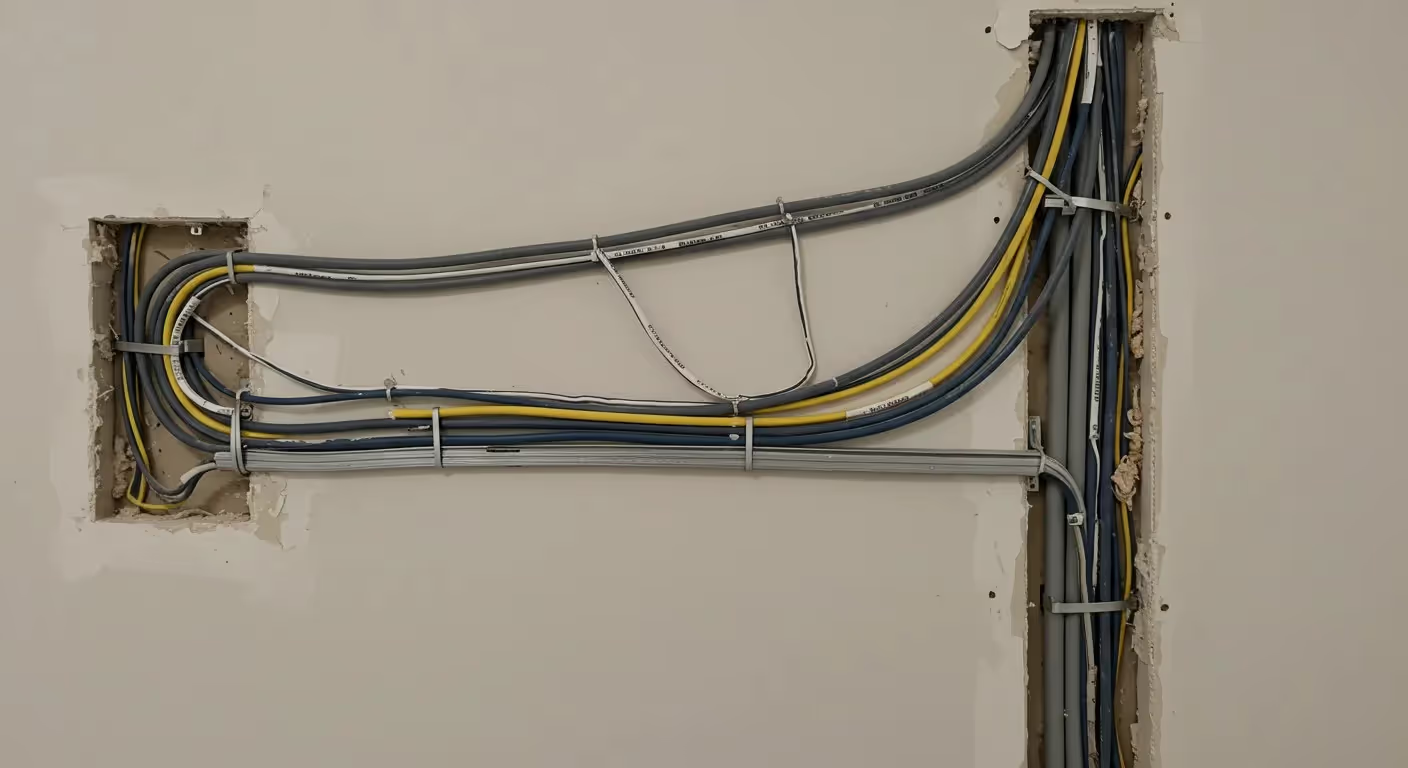
Rewiring a home is an invasive but necessary process. Understanding the workflow helps homeowners prepare for the temporary disruption required to make the home safe. The project is executed in distinct phases to ensure code compliance and structural integrity.
- Initial Load Calculation and Inspection: First, the electrical team performs a load calculation to determine the necessary amperage for the new service panel. They map out all existing circuits and identify areas where additional outlets or switches are needed to meet code or improve convenience.
- Permitting and Utility Coordination: Before any physical work begins, the contractor pulls the necessary electrical permits from the local building department. If the service drop (the wire from the street) needs upgrading, coordination with the local utility provider is arranged to disconnect power safely during the panel swap.
- Preparation and Access: Next, the crew prepares the workspace. Because wires run behind walls, ceilings, and floors, access points must be created. This involves cutting small holes in drywall or plaster at strategic intervals to fish wires through studs and joists without tearing down entire walls. Furniture and flooring are covered to protect against dust and debris.
- The "Rough-In" Phase: The electricians drill holes in framing and pull new non-metallic sheathed cable throughout the house. New device boxes are mounted for outlets and switches. At this stage, wires are not connected to devices; they are simply routed from the panel to their destinations.
- Rough-In Inspection: Once the wires are run, but before walls are closed, a municipal inspector must review the work. They check that wire gauges are correct for the circuits, that stapling and support meet code, and that box fill calculations are accurate.
- The "Trim-Out" Phase: After the rough-in passes inspection and walls are patched (by drywall specialists), electricians return to install the actual switches, outlets, and light fixtures. The new panel is wired up, breakers are installed, and circuits are labeled clearly.
- Final Inspection and Energizing: Finally, a concluding inspection is performed to test polarity, grounding, and safety systems. Once approved, the system is fully energized, and the home runs on a completely new, safe electrical grid.
When Replacement Beats Repair
Homeowners often ask if they can simply repair specific sections of wiring rather than committing to a full rewire. While minor repairs work for isolated damage, systemic issues require full replacement. Making the correct decision depends on the age of the material and the frequency of electrical failure.
Presence of Aluminum Wiring
If your home was built between the mid-1960s and early 1970s, it may contain aluminum wiring. Aluminum expands and contracts with heat more than copper, leading to loose connections and a significantly higher risk of fire. While "pigtailing" (adding copper ends) is a temporary fix, insurance companies often require or strongly incentivize full replacement with copper.
Knob-and-Tube Wiring
Homes built before the 1940s often utilize knob-and-tube wiring. This system lacks a ground wire and utilizes insulation that becomes brittle and crumbles over time. It is incompatible with modern insulation (which causes it to overheat) and cannot support modern appliances. Repair is not an option here; total removal is the only safe path.
Persistent Electrical Symptoms
Repair is insufficient if you experience systemic symptoms across multiple circuits.
- Hot Outlets: If switch plates or outlets feel warm to the touch, internal resistance is building up dangerously.
- Dimming Lights: If lights dim every time the AC or refrigerator kicks on, the system lacks the amperage to support the load.
- Burning Smells: An acrid smell of burning plastic near outlets is an immediate emergency indicating melting insulation.
During Major Renovations
The most cost-effective time to rewire is when walls are already open. If you are planning a kitchen remodel, bathroom upgrade, or an addition in Larose, it is financially prudent to replace the wiring in those areas—and often the rest of the house—while access is easy — check financing options.
Local Considerations: Humidity, Storms, and Codes
Operating in Larose means addressing environmental factors that don't affect other regions as severely. The local climate places unique stress on electrical components.
Combating High Humidity and Corrosion
The high humidity levels common in the region accelerate oxidation on electrical contacts. When rewiring, it is critical to use corrosion-resistant materials and proper sealants, especially for outdoor service entrances and panels. Standard indoor wiring exposed to persistent dampness in crawl spaces or attics can degrade faster than expected, so appropriate conduit or outdoor-rated cabling (UF-B) may be necessary in transition areas.
Hurricane Preparedness and Resilience
Electrical systems in this area must be robust enough to handle the aftermath of tropical storms. During a rewire, many homeowners opt to install a manual or automatic transfer switch directly into the new panel. This allows for safe, legal connection of a portable or standby generator during power outages, preventing dangerous "back-feeding" that can injure utility workers. Additionally, whole-home surge protection is highly recommended to protect the new investment from lightning strikes and grid fluctuations common during storm season.
Compliance with Louisiana Codes
Local building authorities enforce strict adherence to the National Electrical Code (NEC). This includes specific requirements for Arc Fault protection in bedrooms and Tamper Resistant outlets to protect children. Martin's Heating & Air Conditioning ensures that every aspect of the project meets not just the national standards, but the specific amendments required by the local parish jurisdiction.
Why Professional Execution Matters
Choosing a contractor for house rewiring is a decision that impacts the safety of your home for the next 30 to 50 years. This is not a project for handymen or DIY attempts; the complexity of load balancing and code compliance requires a master electrician’s oversight.
Safety and Liability
Electrical work is one of the few home improvements where a mistake can be fatal or catastrophic. Professional rewiring ensures that every connection is tight, every wire is gauged correctly for its breaker, and every ground is secure. This eliminates the risk of electrical fire and ensures your home insurance policy remains valid. Unpermitted work can lead to claim denials in the event of an accident.
Minimal Disruption Strategy
An experienced service provider understands that your house is a home, not just a job site. The goal is to route wires with surgical precision to minimize the amount of drywall that needs to be cut and patched. Professionals plan the wire paths to utilize attics, basements, and crawl spaces effectively, reducing the impact on your living space.
Future-Proofing Your Investment
A professional rewire anticipates future needs. It doesn't just fix today's problems; it provides the capacity for future EV chargers, hot tubs, or workshop tools. It increases the resale value of the home significantly, as updated electrical is a major selling point for buyers who fear old wiring issues.
Secure Your Home’s Electrical Future
Living with outdated wiring is a gamble that no homeowner should take. The risks of fire, equipment damage, and personal injury increase with every year the system ages. A modern, professionally installed electrical system provides consistent power, safety for your family, and the ability to run modern technology without hesitation.
Martin's Heating & Air Conditioning is dedicated to delivering high-quality, code-compliant rewiring services that restore safety and efficiency to your property. Don’t wait for a breaker to fuse or a spark to ignite — schedule service today.
Call us now to discuss your home’s electrical needs and schedule a comprehensive wiring evaluation.
Talk to a Local HVAC Expert
.avif)