Is Your Heat Pump Ready for the Louisiana Weather?
Facing unexpected heat pump failures or preparing for the upcoming hurricane season requires immediate action to protect your home. Ensure your home stays comfortable and safe with our rapid, professional heat pump installation services. Contact us today to schedule an estimate or apply for financing to secure your new system immediately.
In Larose and the surrounding areas, the climate demands a system that can handle high humidity in August just as well as a damp chill in January. A failing unit puts your home at risk for mold growth, uncomfortable sleepless nights, and spiking energy bills. Our team specializes in replacing outdated equipment with modern, high-efficiency infrastructure designed for the specific atmospheric pressures of Southern Louisiana.
- Quick installation protocols ensure minimal downtime for your household.
- High-efficiency SEER2 and HSPF2 rated units that actively reduce monthly utility expenditures.
- Comprehensive professional consultations to size and select the exact heat pump for your square footage.
All installations are backed by comprehensive warranties and flexible financing options to fit your budget.
Comprehensive Heat Pump Installation Services
When you commission a heat pump replacement, you are purchasing more than a metal box; you are investing in a complete climate control ecosystem. The modern heat pump is the most efficient way to heat and cool homes in this region because it moves heat rather than generating it. In the summer, it acts exactly like an air conditioner, removing heat from your home. In the winter, the cycle reverses, pulling ambient heat from the outside air—even when it feels cold—and concentrating it inside your home.
Martin's Heating & Air Conditioning focuses on delivering a turnkey solution. We do not simply drop a unit on a pad and leave. The scope of work involves a total system assessment. This ensures that the new equipment communicates correctly with your thermostat and that your ductwork is capable of handling the airflow required by high-efficiency variable-speed motors.
What is Included in Your Installation
The replacement process covers every component required to get your system running at peak performance. We handle the logistical removal and environmentally safe disposal of your old unit, including the recovery of old refrigerant, which is mandated by EPA regulations.
Your installation includes:
- Load Calculation and Sizing: We perform a Manual J load calculation to determine the precise heating and cooling needs of your home. This prevents the installation of an oversized unit, which causes short-cycling and high humidity, or an undersized unit that runs constantly without reaching the set temperature.
- Equipment Placement and leveling: The outdoor unit (condenser) is placed on a composite pad and leveled to ensure proper oil return to the compressor. In flood-prone zones or areas with high water tables, we ensure the unit is elevated according to local code.
- Line Set Flush and Connection: We flush existing copper refrigerant lines to remove contaminants or replace them entirely if the diameter does not match the new specifications.
- Electrical Safety Inspection: Our technicians inspect the high-voltage disconnect box and the low-voltage control wiring to ensure your electrical system can safely power the new unit.
- Condensate Management: We install new condensate drain lines and safety switches to prevent water damage to your ceilings or floors if the drain becomes clogged.
The Installation and Replacement Process
Understanding the workflow helps you prepare your home for the day of service. We prioritize organization and cleanliness, treating your property with respect while working efficiently to restore your comfort.
- Site Preparation and Protection: Our technicians arrive with drop cloths and shoe covers to protect your flooring. We clear the area around the indoor air handler and the outdoor condenser to ensure safe access. We turn off gas and electricity to the HVAC system before beginning any demolition.
- Refrigerant Recovery and Demolition: Before removing the old unit, we attach recovery cylinders to pull the existing refrigerant out of the system. This is a critical legal and environmental step. Once the system is empty, we disconnect the electrical whip, the thermostat wires, and the plenum connections. The old equipment is then removed from the premises.
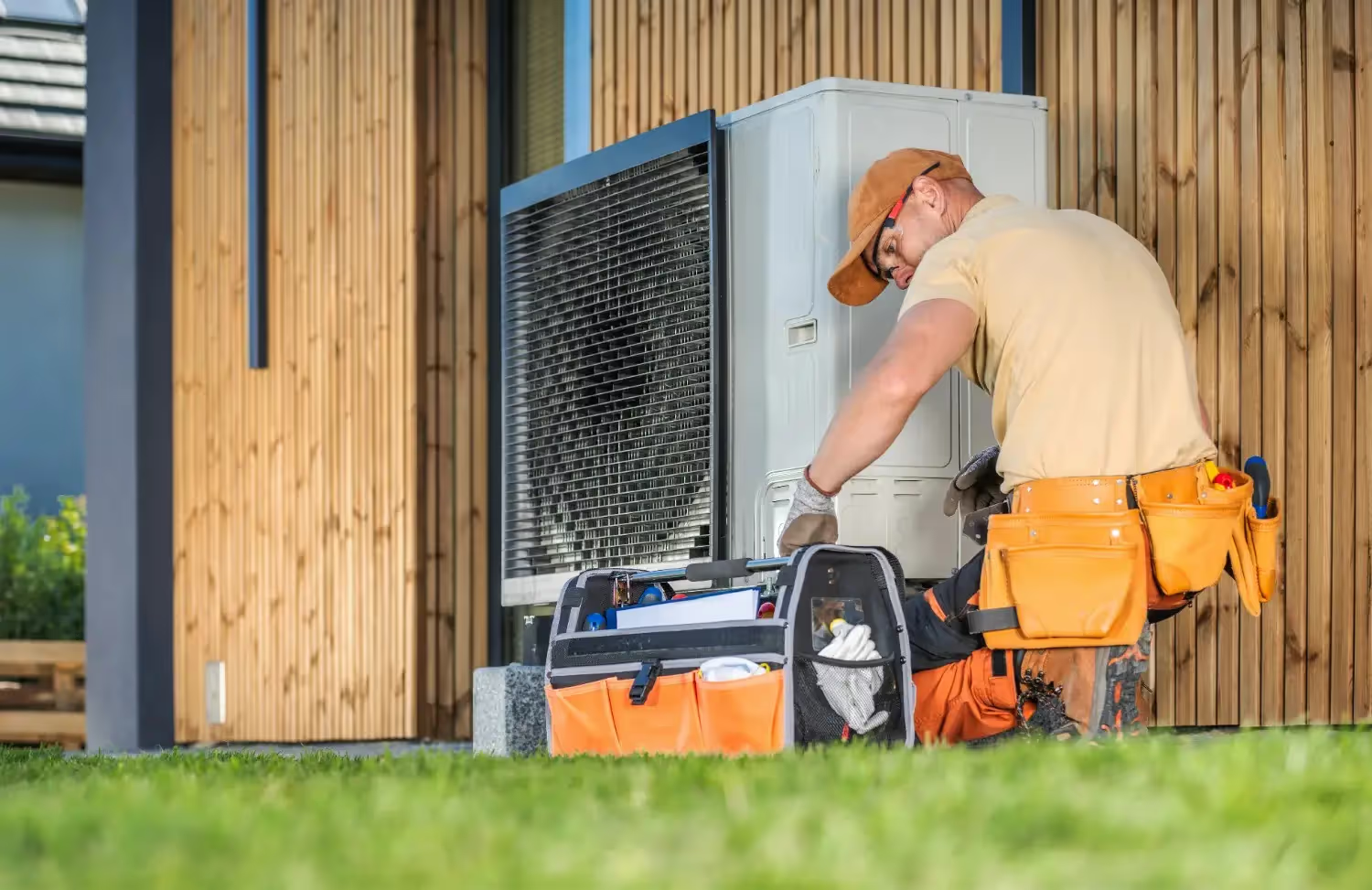
- Indoor and Outdoor Unit Installation: We position the new air handler or furnace coil indoors, sealing the connection to the supply and return plenums to prevent air leakage. Outdoors, the new heat pump is set on its pad. We pay close attention to the orientation of the unit to ensure airflow is not restricted by fences or shrubbery.
- Brazing and Sealed System Work: We connect the copper refrigerant lines using nitrogen-purged brazing. Flowing nitrogen through the lines while heating them prevents oxidation and scale buildup inside the pipe, which can clog the sensitive expansion valves in modern heat pumps.
- Vacuum and Pressure Testing: Once the lines are connected, we pressurize the system with nitrogen to check for leaks. After confirming the system is tight, we use a vacuum pump to remove all moisture and non-condensibles from the lines. This step is vital for the longevity of the compressor.
- System Commissioning: We release the factory refrigerant charge and fine-tune the levels based on the specific length of your line set and the outdoor temperature. We test the heating mode, cooling mode, and defrost cycle. Finally, we walk you through the operation of your new thermostat.
Deciding Between Repair and Replacement
Determining whether to repair a struggling heat pump or invest in a new system is a financial calculation based on age, efficiency, and reliability. While repairs can solve immediate issues, they often serve as temporary bandages on a system that is reaching the end of its useful life.
The 50% Rule and Age Factor
Industry standards suggest that if the cost of a repair approaches 50% of the value of a new system, replacement is the smarter financial move — view current promotions. Furthermore, if your heat pump is over 10 to 12 years old, it is likely operating at a significantly lower efficiency level than current models. Heat pumps in Larose work year-round, unlike furnaces in the north or ACs in the dry west, meaning they accumulate wear and tear twice as fast.
Rising Energy Bills
A clear sign that your compressor or coils are failing is a steady increase in electricity usage despite normal weather conditions. As components wear out, the motor has to work harder to move the same amount of refrigerant. Replacing an old 10 SEER unit with a modern 15+ SEER2 system can reduce cooling costs by 30% to 50% immediately.
R-22 Refrigerant Availability
If your existing system utilizes R-22 (Freon), you are facing a hard obsolescence. R-22 is no longer produced or imported. If your system develops a leak, the cost to recharge it is astronomical, and eventually, the refrigerant will be unavailable entirely. Upgrading to a system that uses R-410A or newer refrigerants future-proofs your home.
Comfort Issues
If you notice that some rooms are hot while others are cold, or if the humidity levels in your home remain high even when the AC is running, the system is no longer performing its job. Modern heat pumps offer two-stage or variable-speed compressors that run longer at lower speeds, providing superior humidity control—a non-negotiable requirement for our region.
Regional Considerations for Heat Pump Installation
Installing a heat pump in Larose presents specific challenges that do not exist in other parts of the country. The proximity to the coast, high rainfall, and tropical storm risks dictate specific installation standards.
Humidity and Moisture Control
Our region experiences extremely high dew points. A properly sized heat pump is the primary defense against indoor mold and mildew. If a contractor installs a unit that is too large, it will cool the air too quickly and shut off before it has removed the moisture. We prioritize proper sizing to ensure the system runs long enough to dehumidify your living space effectively.
Hurricane Preparation and Codes
Local building codes in Lafourche Parish often require outdoor units to be anchored securely to prevent them from shifting or tipping during high winds. We utilize specific strapping or bolting methods for the condenser pad. Additionally, if your home is elevated, we ensure the platform for the outdoor unit is stable and vibration-isolated to reduce noise transfer into the home structure.
Corrosion Protection
Salt spray and heavy rainfall can accelerate corrosion on the aluminum fins of a heat pump. We recommend equipment with coated coils or epoxy finishes that resist the corrosive effects of the coastal environment. This extends the lifespan of the condenser and maintains heat transfer efficiency for years longer than untreated units.
Electrical Infrastructure
Many older homes in the area may have outdated electrical panels. Modern heat pumps are generally more energy-efficient, but they require clean, stable power. We verify that your breakers and wire gauge meet the National Electric Code (NEC) requirements for the specific amperage of the new unit.
Why Technical Expertise Matters
The most important day in the life of a heat pump is the day it is installed. Research consistently shows that installation quality has a greater impact on system longevity than the brand name on the box. A top-tier unit installed poorly will fail sooner and cost more to run than a mid-range unit installed perfectly.
Ductwork Integrity
New heat pumps push air differently than older models. If your ductwork is crushed, disconnected, or leaking, you will lose the efficiency gains of the new machine. We inspect the accessible ductwork during the replacement process to ensure static pressure remains within the manufacturer’s design limits. High static pressure is the leading cause of premature blower motor failure.
Warranty Validations
Manufacturers are strict regarding warranty claims. If a compressor fails and the manufacturer determines the unit was not installed according to their specifications—for example, if a vacuum decay test was not performed—they may deny the claim. We adhere to strict protocols that protect your manufacturer warranty, and we stand behind our labor to ensure you are covered if issues arise.
Intelligent Thermostat Integration
Modern heat pumps often pair with smart thermostats that monitor weather data and adjust indoor conditions automatically. We ensure these devices are wired correctly to utilize features like "auxiliary heat lockout," which prevents expensive electric strip heat from turning on when the heat pump is perfectly capable of warming the home efficiently.
Securing Your Comfort
Your home’s comfort system is critical infrastructure. Delaying replacement when warning signs appear often leads to emergency situations during the worst possible weather. By proactively managing your heat pump installation, you gain control over your energy costs, indoor air quality, and peace of mind.
Martin's Heating & Air Conditioning delivers precise, code-compliant installations tailored to the specific demands of Southern Louisiana. We ensure that every connection is sealed, every volt is accounted for, and every degree of temperature is delivered exactly where it is needed.
Take the next step toward a comfortable, efficient home. Schedule your professional consultation now.
Talk to a Local HVAC Expert

.avif)