Eliminate Inconsistent Temperatures with High-Efficiency Heat Pump Installation
Facing intense heat, high humidity, or the uncertainty of upcoming storms requires a cooling and heating system that performs without failure. Ensure your year-round comfort with our expert heat pump installation and replacement services. Contact us today to schedule an on-site assessment or to apply for flexible financing.
We provide solutions designed to withstand the demands of the local climate while lowering your monthly energy consumption:
- Installation times as fast as one day to minimize disruption to your home life.
- State-of-the-art heat pumps that maximize energy efficiency and significantly reduce utility costs.
- Experienced local technicians who understand the specific cooling loads required in Raceland.
All services come with comprehensive warranties on parts and labor, alongside flexible financing options to fit your budget.
When you live in Raceland, you understand that the weather dictates your comfort. The summers bring oppressive heat and humidity, while the winters, though generally mild, can dip into uncomfortable chills. A heat pump is often the ideal solution for this region, offering a dual-purpose system that cools and heats efficiently. However, an aging or improperly sized unit can lead to uneven temperatures, soaring electric bills, and the constant fear of a breakdown during a heatwave. Martin's Heating & Air Conditioning specializes in replacing outdated units with modern, high-performance systems designed for the specific atmospheric challenges of southern Louisiana.
What to Expect From a Modern Heat Pump System
Upgrading your HVAC equipment is an investment in long-term reliability. Modern heat pumps operate differently than units manufactured even a decade ago. The technology has shifted from simple on-off cycles to sophisticated, variable-speed operations that adjust specifically to the cooling or heating load your home requires at any given moment. This results in consistent indoor temperatures, eliminating the hot and cold spots that plague many multi-story or sprawling homes in the area.
When you choose a replacement system today, you are securing equipment with higher SEER2 (Seasonal Energy Efficiency Ratio) and HSPF2 (Heating Seasonal Performance Factor) ratings. These standards ensure that for every dollar spent on electricity, you receive more cooling and heating output compared to older models. In a humid climate, higher efficiency also translates to superior dehumidification. A modern system runs longer at lower speeds, pulling more moisture out of the air than a system that blasts cold air for ten minutes and then shuts off.
Your installation package includes a comprehensive assessment of your current ductwork and electrical infrastructure. A new unit cannot perform at peak efficiency if the delivery system—the ducts—are leaking or undersized. The scope of work involves removing the old condenser and air handler, inspecting the refrigerant lines, and ensuring the new equipment is perfectly matched to your home's square footage and insulation values. Most replacements are completed within a single day, ensuring you are not left without climate control overnight.
The Installation and Replacement Process Explained
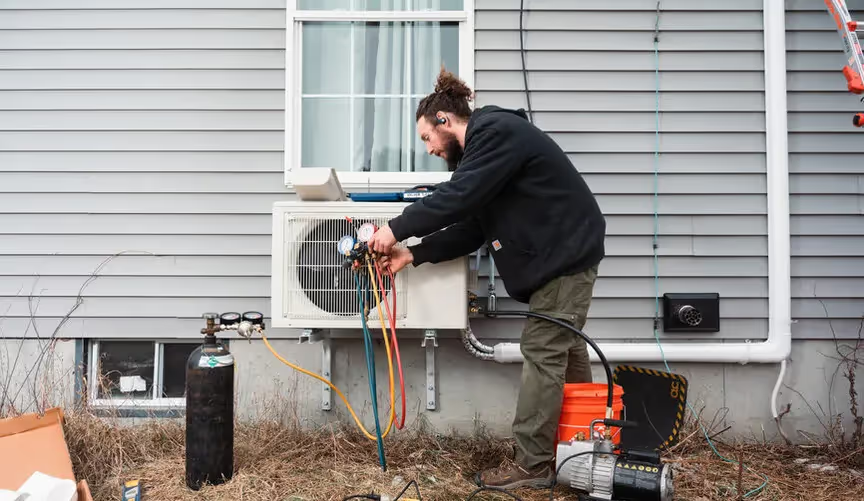
A professional installation follows a rigorous set of protocols to ensure the longevity of the system. This is not merely swapping one box for another; it is a recalibration of your home's thermal envelope:
Load Calculation and Sizing
The process begins with a Manual J load calculation. This determines the exact heating and cooling capacity needed based on window exposure, insulation levels, and square footage. Guessing the size leads to short-cycling (if too big) or constant running (if too small).
Site Preparation and Protection
Technicians prepare the work area to protect your flooring and property. For the outdoor unit, the ground is leveled, and a new composite pad is often installed to prevent sinking or shifting, which is common in soft soil conditions.
System Removal and Environmental Safety
The existing refrigerant is recovered according to EPA standards. This prevents harmful chemicals from venting into the atmosphere. The old unit is disconnected and hauled away for proper recycling.
Equipment Placement and Connection
The new air handler is positioned in the attic, closet, or garage, and the outdoor condenser is set on the pad. Refrigerant lines are brazed using nitrogen purging to prevent oxidation inside the copper pipes—a critical step that prevents future compressor failure.
Electrical and Drainage Setup
High-voltage and low-voltage wiring is connected and tested for safety. The condensate drain line is rebuilt or cleared to ensure proper moisture removal, often including safety float switches to prevent water damage to ceilings.
Vacuum and Charging
A deep vacuum is pulled on the lines to remove all moisture and non-condensables. The system is then charged with the precise amount of refrigerant required by the manufacturer.
Commissioning and Testing
The system is powered on and tested in both heating and cooling modes. Static pressure tests confirm airflow is unrestricted, and the thermostat is programmed to your preferences.
Deciding Between Heat Pump Repair and Replacement
Determining whether to sink more money into an existing unit or invest in a new one is a major financial decision. While repairs can solve immediate issues, they often act as a bandage on a failing system. Understanding the thresholds for replacement helps you avoid throwing money at a lost cause:
The 50% Investment Rule
If the cost of the repair approaches 50% of the value of a new system, replacement is the financially sound choice. A major component failure, such as a compressor or leaking evaporator coil, usually falls into this category.
Equipment Age and R-22 Freon
Heat pumps generally last 10 to 15 years. If your unit is over 12 years old, parts availability decreases while costs rise. Furthermore, if your system utilizes R-22 refrigerant (Freon), which has been phased out, a refrigerant leak makes repair prohibitively expensive and environmentally irresponsible.
Rising Energy Bills
Components degrade over time. Motors lose lubrication, and coils corrode, forcing the system to draw more amperage to do the same amount of work. If your utility bills have spiked without a change in usage habits, the efficiency loss justifies replacement.
Frequent Breakdowns
If you have called for service more than twice in the last year, the system has likely entered its end-of-life phase. The cumulative cost of service calls and minor repairs often exceeds the monthly financing cost of a new, warrantied unit.
Humidity Issues and Comfort
If your home feels clammy or sticky even when the AC is running, the compressor may have lost the ability to effectively dehumidify. In our region, humidity control is just as important as temperature control.
Navigating Local Requirements and Climate Factors
Installing a heat pump in Raceland requires specific attention to local codes and environmental stresses. The proximity to the Gulf of Mexico means the equipment must be resilient against salt air corrosion and potential high-wind events:
Hurricane Preparedness and Codes
Lafourche Parish requires HVAC equipment to meet specific wind ratings. Outdoor units must be securely anchored to the concrete or composite pad using approved hurricane straps or tie-downs. This prevents the unit from becoming a projectile during tropical storms or hurricanes.
Elevation and Flood Zones
Many properties in the area are situated in flood zones. It is often necessary to elevate the outdoor condenser on a stand or platform to keep it above potential floodwaters. Protecting the electrical components from rising water is essential for the system’s survival during severe weather.
Permitting and Inspections
Replacement projects typically require a mechanical permit from the local building department. This ensures the electrical connections meet safety codes and the installation complies with current energy standards. A professional contractor handles the application and scheduling of these inspections.
Utility Rebates and Incentives
Local utility providers and federal programs often offer rebates for upgrading to high-efficiency heat pumps. These incentives are based on the SEER2 rating of the new unit. Upgrading from an inefficient system to a high-performance heat pump can qualify homeowners for tax credits or direct rebates, offsetting a portion of the installation cost.
Why Proper Sizing and Installation Quality Matter
The most expensive equipment will fail prematurely if installed incorrectly. The brand of the equipment matters less than the quality of the installation. A heat pump relies on a delicate balance of airflow and refrigerant pressure. If the ductwork is too small, the blower motor will overwork and burn out. If the refrigerant charge is off by even a few ounces, the compressor will overheat or freeze up.
Choosing a service provider involves looking for technical proficiency and adherence to industry best practices. We ensure that every connection is sealed, every wire is tightened, and the system is calibrated to the specific static pressure of your home. Martin's Heating & Air Conditioning focuses on the technical details that invisible to the homeowner but crucial for the system's lifespan.
Proper sizing is equally critical. An oversized unit will cool the house too quickly, shutting off before it has removed the humidity. This leads to a "cave-like" feeling where the air is cold but damp, promoting mold growth. An undersized unit will run continuously, never reaching the set temperature on the hottest August days. We utilize precise load calculations to ensure the unit fits your home exactly.
Secure Your Comfort for the Coming Season
Delaying a necessary replacement often leads to failure at the most inconvenient time—usually during the peak heat of summer or a sudden winter freeze. A proactive approach allows you to choose the system that best fits your needs rather than accepting whatever is available during an emergency. By upgrading now, you gain immediate access to lower energy bills, improved indoor air quality, and the peace of mind that comes with a manufacturer’s warranty.
Don't wait for the next heatwave to discover your system is compromised. Take control of your indoor climate and ensure your home remains a sanctuary against the Louisiana weather with Martin's Heating & Air Conditioning experts.
Ready to upgrade your home comfort? Contact us today to request your heat pump installation estimate.
Talk to a Local HVAC Expert

.avif)