Restore Consistent Comfort to Your Home with Expert Heat Pump Care
Inconsistent heating or cooling cycles can turn a humid Raceland afternoon or a chilly winter evening into an uncomfortable ordeal for your family or employees. When your system short-cycles, creates unusual noises, or fails to maintain the thermostat’s set temperature, you need immediate professional intervention to prevent total system failure and rising energy costs. Contact us today or apply for financing options to restore your system immediately.
Martin's Heating & Air Conditioning understands that a malfunctioning heat pump is more than an inconvenience; it is a disruption to your daily life that requires a swift, technical resolution. Our approach focuses on diagnosing the root cause of the inefficiency rather than applying temporary patches, ensuring your system operates reliably throughout the year:
- Immediate response and accurate diagnosis within 24 hours to minimize downtime.
- Expert repairs and maintenance protocols designed to ensure maximum efficiency and extend heat pump lifespan.
- Transparent pricing structures with no hidden fees, providing clarity before any work begins.
All services are backed by a robust warranty and flexible financing options to ensure you receive the care your system needs without delay.
Comprehensive Maintenance Protocols for Optimal Performance
A heat pump operates differently than a standard furnace and air conditioner combination, as it moves heat rather than generating it. This dual-function capability means the system works year-round, accumulating wear and tear twice as fast as standalone units. Without a rigorous maintenance schedule, critical components such as the reversing valve and compressor can degrade, leading to efficiency losses of up to 25% over time.
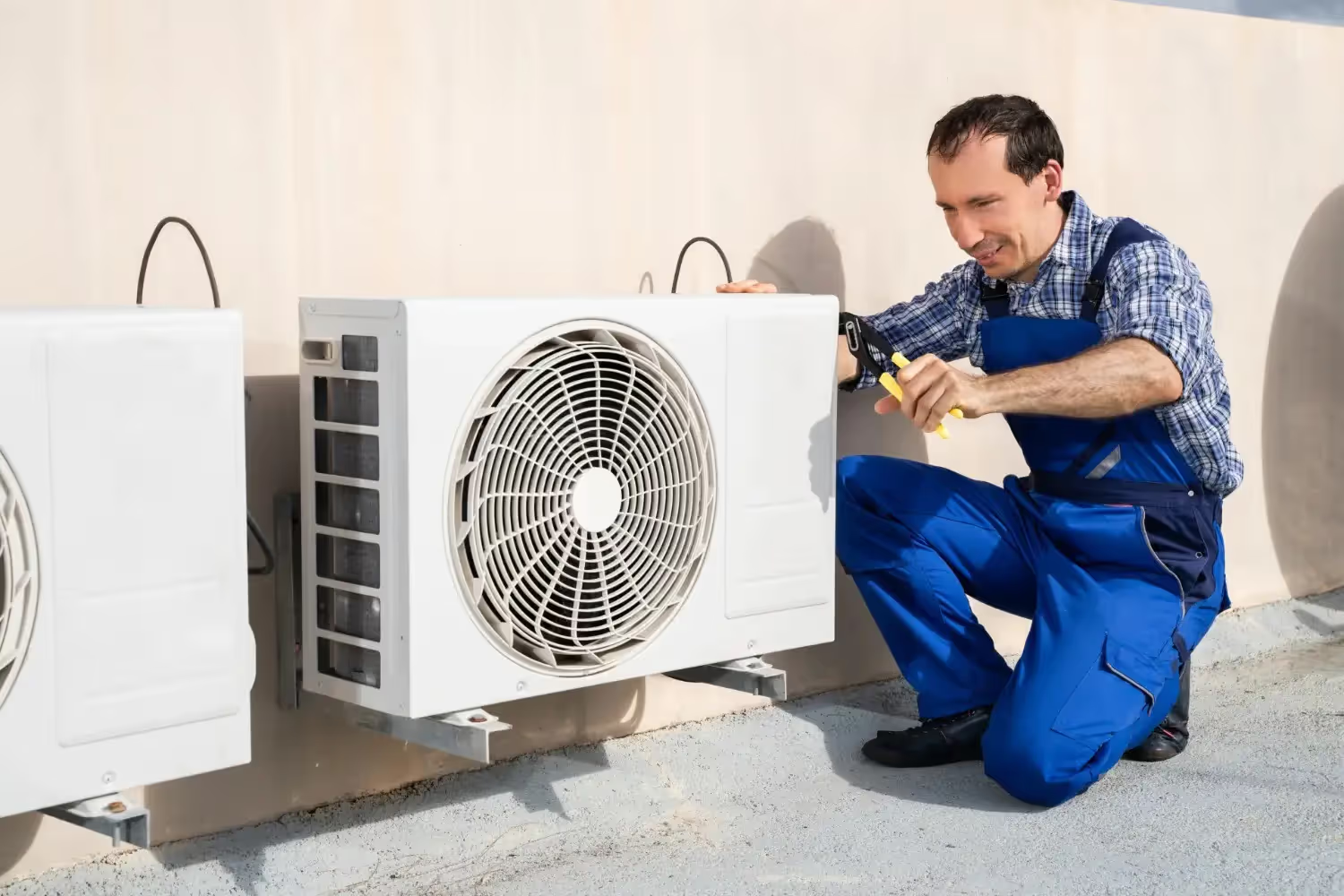
Our maintenance service is a deep-dive inspection and tune-up process designed to return your unit to factory specifications. We focus on the specific mechanical and electrical stressors that affect heat pumps in the Louisiana climate.
Coil Cleaning and Airflow Optimization:
Dirty evaporator and condenser coils significantly reduce the system's ability to absorb and release heat. In a humid environment, a dirty coil can also lead to ice formation during the cooling cycle or the defrost cycle in winter. We chemically clean these coils to ensure optimal heat transfer. Simultaneously, we inspect the blower motor and fan blades for debris buildup, ensuring that airflow remains unobstructed and consistent across all vents.
Refrigerant Level and Pressure Verification
Incorrect refrigerant levels are a primary cause of compressor failure. Too little refrigerant causes the system to overheat and freeze up; too much causes liquid slugging that can destroy the compressor valves. We measure superheat and subcooling levels to ensure the refrigerant charge is exact, which is critical for the efficiency of the heat exchange process.
Electrical Component Inspection
Loose connections and worn contacts can cause unsafe operation and unexpected breakdowns. We tighten all electrical connections and measure the voltage and current on motors. This includes testing the starting capabilities of the compressor and inspecting the run capacitor, a small component that often fails during peak usage months.
Reversing Valve and Defrost Cycle Testing
The reversing valve is the heart of a heat pump, allowing it to switch between heating and cooling. We test this valve to ensure it shifts correctly without sticking. Additionally, we simulate a frost condition to verify that the defrost control board triggers the defrost cycle effectively, preventing the outdoor unit from becoming a block of ice during colder nights in Raceland.
Drainage System Clearance
Humidity removal is a byproduct of the cooling process. We inspect the condensate drain line and pan for blockages caused by algae or mold growth. clearing these lines prevents water damage to your property and ensures the system does not shut down due to float switch activation.
Seamless Heat Pump Service and Repair Process
When a breakdown occurs, you need a defined process that moves from diagnosis to resolution without unnecessary delays. Our service workflow is designed to provide you with actionable information and rapid results. We utilize advanced diagnostic tools to pinpoint issues that manual inspections might miss:
First, Comprehensive System Diagnostics
Upon arrival, the technician performs a static pressure test and utilizes digital gauges to read the internal pressures of the system. This data helps identify if the issue lies within the ductwork, the refrigerant lines, or the mechanical components. We listen for specific auditory cues and use thermal imaging to identify hot spots in the electrical panel or compressor, which often indicate imminent failure.
Next, Clear Explanation and Quote Presentation
Once the issue is isolated, we explain the failure in plain language. You will receive a detailed breakdown of the required repairs, the cost of parts and labor, and the estimated time for completion. We do not proceed with any work until you have approved the scope and the price. This stage often involves checking if the specific part is under manufacturer warranty, which can significantly reduce costs.
Then, Precision Repair Execution
Our service trucks are stocked with universal parts and common OEM components to facilitate same-day repairs whenever possible. Whether replacing a seized fan motor, swapping out a faulty capacitor, or brazing a leak in the copper line set, the repair is conducted according to industry safety codes. We use nitrogen purging during brazing to prevent oxidation inside the pipes, a detail that ensures the long-term health of the new components.
Finally, System Validation and Performance Testing
A repair is not complete until the system is proven to run effectively. We cycle the heat pump through both heating and cooling modes (if weather permits) to verify the repair. We measure the temperature split—the difference between the air entering the return and leaving the supply—to confirm that the unit is heating or cooling at the correct capacity.
Determining When to Repair vs. Replace Your Heat Pump
Homeowners often face the difficult decision of whether to invest in another repair or to upgrade to a modern system. While our priority is always to restore your current unit, there are mathematical and practical thresholds where replacement becomes the more financially sound option. Martin's Heating & Air Conditioning helps you navigate this decision using data rather than guesswork — explore our current HVAC promotions:
The 50% Rule
If the cost of the necessary repair approaches or exceeds 50% of the value of a new system, replacement is generally the better investment. Major failures, such as a grounded compressor or a leaking evaporator coil out of warranty, often fall into this category. Investing thousands into an old unit offers diminishing returns compared to the warranty protection of a new system.
System Age and Refrigerant Type
Heat pumps generally have a service life of 12 to 15 years. If your unit is over 10 years old and requires a major repair, replacement is often advised. Furthermore, older systems utilize R-22 refrigerant, which has been phased out and is prohibitively expensive to restock. Upgrading to a system that uses R-410A or newer refrigerants ensures future serviceability and compliance with environmental regulations.
Frequency of Breakdowns
If you have required service calls more than twice in the last year, your system is likely entering the end-of-life phase. The cumulative cost of minor repairs—contactors, capacitors, fan motors—can quickly equal the monthly payments of a financed new system. Chronic unreliability also poses a risk of failure during extreme weather when you need the system most.
Energy Efficiency Considerations
Heat pump technology has advanced rapidly. A unit installed 15 years ago likely has a SEER (Seasonal Energy Efficiency Ratio) rating of 10 or 12. Modern systems start at SEER2 ratings of 14.3 and go much higher. Transitioning from a 10 SEER unit to a 16 SEER unit can reduce energy consumption by nearly 40%. We can calculate your estimated return on investment based on your current utility bills to show exactly how a new installation pays for itself over time.
Addressing Raceland’s Unique Climate Challenges
Operating a heat pump in Raceland presents specific challenges due to the regional climate. The equipment must be calibrated to handle high humidity loads and distinct seasonality that differs from other parts of the country:
Humidity Control and Dehumidification
In our region, the heat pump acts as a primary dehumidifier during the long summer months. If the system is oversized or short-cycling, it will cool the air quickly but fail to remove moisture, leaving the home feeling clammy and promoting mold growth. Our service ensures the blower settings are adjusted to maximize latent heat removal (moisture removal) alongside sensible heat removal (temperature reduction).
Corrosion and Coil Protection
Proximity to humid, salt-laden air can accelerate corrosion on the outdoor condenser coils. Aluminum fins can deteriorate, leading to a loss of structural integrity and heat transfer capability. We inspect for early signs of galvanic corrosion and can recommend protective coatings or specific maintenance schedules to wash away corrosive deposits before they eat through the metal.
Hurricane Season Preparation
From June to November, the physical security of your outdoor unit is paramount. During maintenance visits, we verify that the unit is securely anchored to the concrete pad according to local wind codes. We also inspect the area for loose debris that could impact the fan grille during high winds. Ensuring the tie-downs are rust-free and secure is a critical part of our safety check.
Mild Winter Optimization
Unlike northern climates where gas furnaces are dominant, Raceland’s mild winters make heat pumps the most efficient heating solution. However, when temperatures occasionally drop near freezing, the "balance point" of the home matters. We check the auxiliary heat strips (electric resistance heat) to ensure they engage only when necessary. If these strips stick in the "on" position due to a faulty sequencer, your electric bill can triple. We verify that the staging of heat sources is functioning correctly to prioritize the efficient heat pump over the expensive emergency heat.
Technical Expertise and Certified Service Standards
Selecting a service provider is a decision based on trust and technical capability. Modern heat pumps utilize complex inverters, variable-speed motors, and communicating thermostats that require specialized training to service. General handyman skills are insufficient for the low-voltage controls and high-pressure refrigeration circuits found in today’s HVAC equipment:
Advanced Diagnostic Tooling
We utilize digital manifolds that provide real-time calculations of superheat and subcooling, eliminating human error in charging systems. Our technicians also employ electronic leak detectors capable of sensing refrigerant leaks as small as a fraction of an ounce per year, ensuring that we solve the problem rather than just refilling the system.
Code Compliance and Safety
All repairs and installations adhere strictly to local building codes and National Electric Code (NEC) standards. This includes proper wire sizing, disconnect box accessibility, and refrigerant handling procedures. Adhering to these standards ensures the safety of your property and maintains the validity of your homeowner's insurance regarding HVAC-related claims.
Ongoing Training and Certification
The HVAC industry evolves constantly. Our team engages in regular training on new manufacturer technologies and efficiency standards. This ensures that whether you have a standard single-stage unit or a high-efficiency variable-speed system, the technician arriving at your door understands exactly how to optimize it.
Trusted Heat Pump Repairs for Long-Term Performance and Efficiency
When your heat pump demands professional attention, you need a partner who values precision and long-term reliability. We are committed to restoring your comfort through technically sound repairs and thorough maintenance that stands the test of time.
Trust Martin's Heating & Air Conditioning for all your heat pump service needs.
Schedule your service or request an emergency repair
Talk to a Local HVAC Expert

.avif)