Indoor Air Quality in Raceland, LA
Improve indoor air quality in Raceland with HEPA filters, dehumidifiers, and UV lights. Schedule service today for cleaner, healthier air throughout the home.
Suffering from Poor Indoor Air Quality?
Are you feeling the effects of Raceland's high humidity inside your home, leaving you with congestion, headaches, or persistent fatigue? Poor indoor air quality often manifests as aggravated allergies, an increase in airborne pollutants, and a general lowering of your daily comfort levels despite your air conditioner running constantly. For immediate scheduling of a comprehensive air quality assessment, contact Martin's Heating & Air Conditioning team today to restore the health of your home:
- Professional assessments and tailored solutions provided within 24 hours.
- Use of certified and efficient technologies such as HEPA filters, whole-home dehumidifiers, and UV lights.
- Guaranteed air quality improvement, backed by proven results and technical expertise.
- Licensed, bonded, and insured—for your peace of mind.
Comprehensive Indoor Air Quality Solutions
Homeowners often mistake temperature control for air quality control. While your HVAC system regulates heat, it does not automatically eliminate the microscopic contaminants that circulate through your ductwork. In an environment like Raceland, where humidity is a constant battle, biological growth and volatile organic compounds (VOCs) can accumulate rapidly. Martin's Heating & Air Conditioning provides a suite of integrated solutions designed to tackle specific pollutants rather than offering a one-size-fits-all product.
When you invest in indoor air quality (IAQ) services, the focus shifts to source control, ventilation, and filtration. The objective is to dilute and remove contaminants that are trapped inside modern, energy-efficient homes. Tightly sealed homes, while great for keeping cool air in, also trap dust mites, pet dander, mold spores, and chemical vapors from household cleaners.
The scope of service involves a multi-tiered approach:
- Whole-Home Dehumidification: Standard air conditioners remove some moisture, but in the height of a Louisiana summer, they often satisfy the thermostat setting before adequately drying the air. A dedicated whole-home dehumidifier works in conjunction with your central system to maintain relative humidity between 40% and 50%, preventing mold growth and dust mite proliferation without over-cooling the home.
- Advanced Filtration Systems: Standard one-inch filters are designed primarily to protect the HVAC equipment, not your lungs. Upgrading to thick-media filters or electronic air cleaners captures smaller particulates, including smoke, bacteria, and fine dust, that standard filters miss.
- UV Germicidal Lights: Installed directly inside the air handler or ductwork, these ultraviolet lights sterilize coil surfaces and the air passing through them. This technology neutralizes biological contaminants like mold and bacteria at the molecular level, preventing them from reproducing and circulating.
- Energy Recovery Ventilators (ERVs): These systems exchange stale indoor air with fresh outdoor air without losing the energy you used to cool your home. They precondition the incoming air, filtering it and adjusting its humidity before it enters the living space.
The Installation and Assessment Process
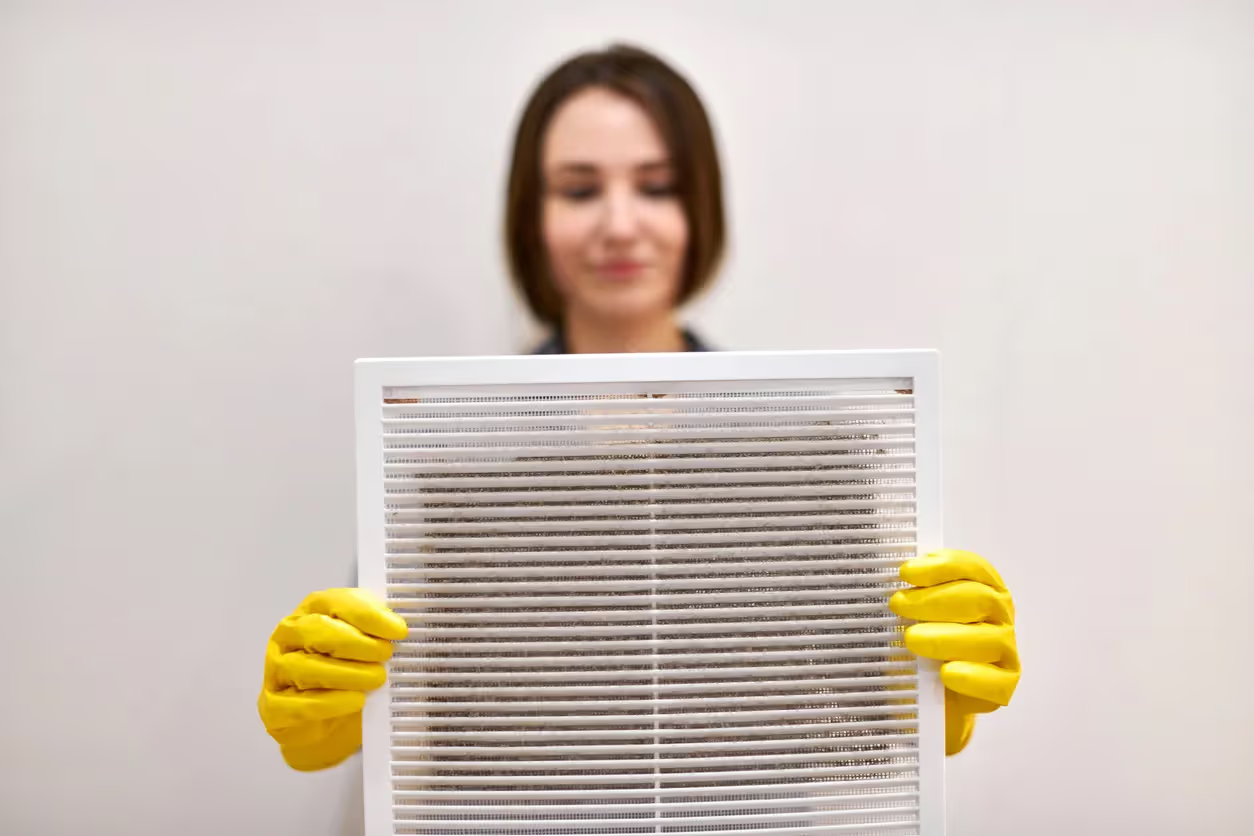
Improving the air you breathe is a technical process that requires precise calculations and proper integration with your existing HVAC infrastructure. The goal is to enhance the system's ability to purify air without restricting airflow, which can damage the blower motor or reduce efficiency.
The process begins with a diagnostic evaluation of the current indoor environment. Technicians utilize advanced monitoring equipment to measure particulate levels, humidity ratios, and airflow static pressure. This data determines exactly which pollutants are present and at what concentration:
- Diagnostic Testing: Technicians deploy air quality monitors to detect elevated levels of CO2, VOCs, and particulate matter (PM2.5 and PM10). This step identifies whether the issue is chemical, biological, or filtration-based.
- System Sizing and Selection: Based on the square footage of the home and the capacity of the current HVAC unit, the appropriate equipment is selected. For example, a UV light must be powerful enough for the specific airflow volume, and a dehumidifier must be sized to handle the latent heat load of the house.
- Strategic Integration: Installation involves cutting into the supply or return plenums to mount the new equipment. Wiring is integrated into the HVAC control board so that air quality systems activate in sync with the blower fan.
- Sealing and Calibration: Once the equipment is physically installed, all connections are sealed with mastic or foil tape to prevent air leakage. The system is then calibrated to ensure it does not create a pressure drop that exceeds the manufacturer's specifications for the furnace or air handler.
- Performance Verification: After installation, a secondary air quality test confirms that pollutant levels are decreasing and that humidity is stabilizing within the target range.
Determining When to Upgrade Your Air Quality Strategy
Many homeowners in Raceland struggle to decide whether they need a simple repair, a duct cleaning, or a complete installation of new IAQ technology. Recognizing the difference between a maintenance issue and a systemic deficiency is key to spending money wisely.
If you are constantly battling dust despite changing filters regularly, or if musty odors return days after a cleaning, the issue is likely not something that can be repaired with standard maintenance. These are signs that the home's infiltration rate (how much outdoor air leaks in) or internal pollutant generation exceeds the system's removal capacity.
Consider the following factors when deciding between repair and new installation:
- Persistent Humidity Issues: If your windows have condensation on the inside or surfaces feel clammy even when the AC is running, a repair to the AC unit is rarely the solution. The AC is likely oversized or short-cycling. In this scenario, installing a whole-home dehumidifier is the correct technical solution to decouple moisture control from temperature control.
- Recurrent Mold Growth: Finding mold near vents or inside the air handler indicates that biological contaminants are thriving. Cleaning the mold is a temporary fix; it will return if the environment remains conducive to growth. Installing UV germicidal lights provides a permanent solution by continuously sterilizing the area.
- Chronic Respiratory Issues: If family members experience symptom relief immediately upon leaving the house, the home itself is the trigger. Standard repairs to the HVAC unit will not remove allergens or VOCs. This requires the installation of high-efficiency filtration or air purification systems.
- Age of Ductwork: If ducts are old, leaky, and filled with debris, cleaning them might damage them further if the liner is deteriorating. In cases of severe contamination or deterioration, replacing the ductwork and sealing it properly is more cost-effective and healthier than attempting a repair.
Regional Climate Factors and Building Requirements
Operating an HVAC system in the Bayou region presents unique challenges that directly impact indoor air quality. In Raceland, the climate is characterized by high heat and oppressive humidity for a significant portion of the year, combined with an annual rainfall of approximately 60 inches. This moisture load creates the perfect breeding ground for mold, mildew, and dust mites.
Local building codes and energy initiatives have pushed for tighter building envelopes to conserve energy. While this keeps the heat out, it significantly reduces natural ventilation. Without mechanical ventilation or purification, indoor air becomes stagnant, and pollutant concentrations rise to levels up to five times higher than outdoor air.
Key regional considerations include:
- Latent Heat Load: A significant portion of your air conditioner's energy is spent removing water from the air (latent heat) rather than just cooling it (sensible heat). When the humidity remains high outdoors, infiltration introduces moisture into the home. Dedicated humidity control is often necessary to meet comfort standards without setting the thermostat to freezing temperatures.
- Ductwork Sweating: Because of the high dew points in the attic spaces typical of Louisiana homes, poorly insulated ducts can sweat. This condensation can drip onto insulation and drywall, creating hidden mold reservoirs. IAQ inspections include checking attic ductwork for proper insulation and sealing.
- Pollen and Agricultural Dust: Being in a region with active agriculture and heavy flowering seasons means high external particulate loads. Standard filters often clog quickly or allow fine dust to bypass. High-capacity media filters are recommended to handle the local particulate load without restricting airflow.
Technical Expertise and Reliable Solutions
Selecting the right partner for indoor air quality involves looking for technical proficiency and a holistic understanding of building science. Effective IAQ management is not about selling a single product; it is about engineering a solution that works with the specific dynamics of your home’s airflow and the local climate conditions.
Martin's Heating & Air Conditioning focuses on measurable results. The approach involves identifying the root cause of the contamination—whether it is infiltration, internal generation, or humidity—and applying the correct engineering control.
- Whole-Home Approach: Solutions are integrated into the central HVAC system, treating 100% of the air that circulates through the home, rather than spot-treating a single room with a portable unit.
- Certified Technicians: Installers understand the physics of airflow (psychrometrics) and ensure that adding filtration or purification devices does not negatively impact the static pressure or longevity of the heating and cooling equipment.
- Source Removal Focus: Priority is placed on neutralizing the source of the problem, such as controlling moisture to stop mold, rather than just masking odors with fragrances.
Protect Your Home and HVAC System with Expert Indoor Air Quality Service
Improving indoor air quality is an investment in long-term health and the structural integrity of the home — check financing options. By controlling humidity and removing airborne contaminants, the workload on the HVAC system is reduced, and the living environment becomes safer and more comfortable.
Take control of the air you breathe and ensure your home is a safe haven from the humidity and allergens of the region.
Contact us today to schedule your comprehensive indoor air quality assessment with Martin's Heating & Air Conditioning.
Talk to a Local HVAC Expert
.avif)