House Rewiring in Chauvin, LA
Upgrade your home with expert house rewiring in Chauvin to prevent electrical hazards. Contact Martin’s Heating & Air Conditioning today for a safer tomorrow.
Is Outdated Wiring Compromising Your Home’s Safety?
Are you facing frequent electrical issues like flickering lights, constant breaker trips, or are you worried about the safety of your home's outdated wiring infrastructure? If your electrical system cannot keep up with modern demands, it is time to consider a comprehensive house rewiring solution to protect your property in Chauvin. Contact us today for an inspection or to discuss financing options.
- Ensure the safety of your home and family with modern, up-to-code wiring that eliminates hidden fire hazards.
- Reduce the risk of unexpected power outages and dangerous electrical fires caused by degraded insulation or overloaded circuits.
- Increase your home's value and energy efficiency with updated electrical systems capable of handling modern appliances and technology.
Licensed, insured professionals and financing options ensure your peace of mind during this critical home upgrade.
The Scope of a Whole-Home Rewire
Rewiring a house is not merely swapping out a few cables; it is a foundational upgrade to the central nervous system of your property. When you commit to this service, you are replacing degraded materials that were likely installed decades ago with modern, safety-rated components designed for today's high-amperage lifestyle. In older properties, the existing infrastructure often lacks the grounding and capacity required to run HVAC systems, smart home devices, and high-efficiency appliances simultaneously.
A complete rewire involves the removal or bypass of old wiring, such as knob-and-tube or cloth-sheathed cables, and the installation of non-metallic (NM) shielded copper wiring. This process includes upgrading the main electrical panel to handle increased amperage—typically moving from 60 or 100 amps to a standard 200-amp service. This ensures that your electrical supply remains consistent and that your lights do not dim when the air conditioner kicks on.
Beyond the wires behind the walls, this service includes the installation of modern safety devices. This covers Ground Fault Circuit Interrupters (GFCIs) in wet areas like kitchens and bathrooms, and Arc Fault Circuit Interrupters (AFCIs) in bedrooms and living areas to detect dangerous sparking. You also receive properly grounded outlets throughout the home, replacing the unsafe two-prong outlets that leave expensive electronics vulnerable to surges. This comprehensive approach ensures that every switch, outlet, and fixture operates safely and reliably.
How the Rewiring Process Works
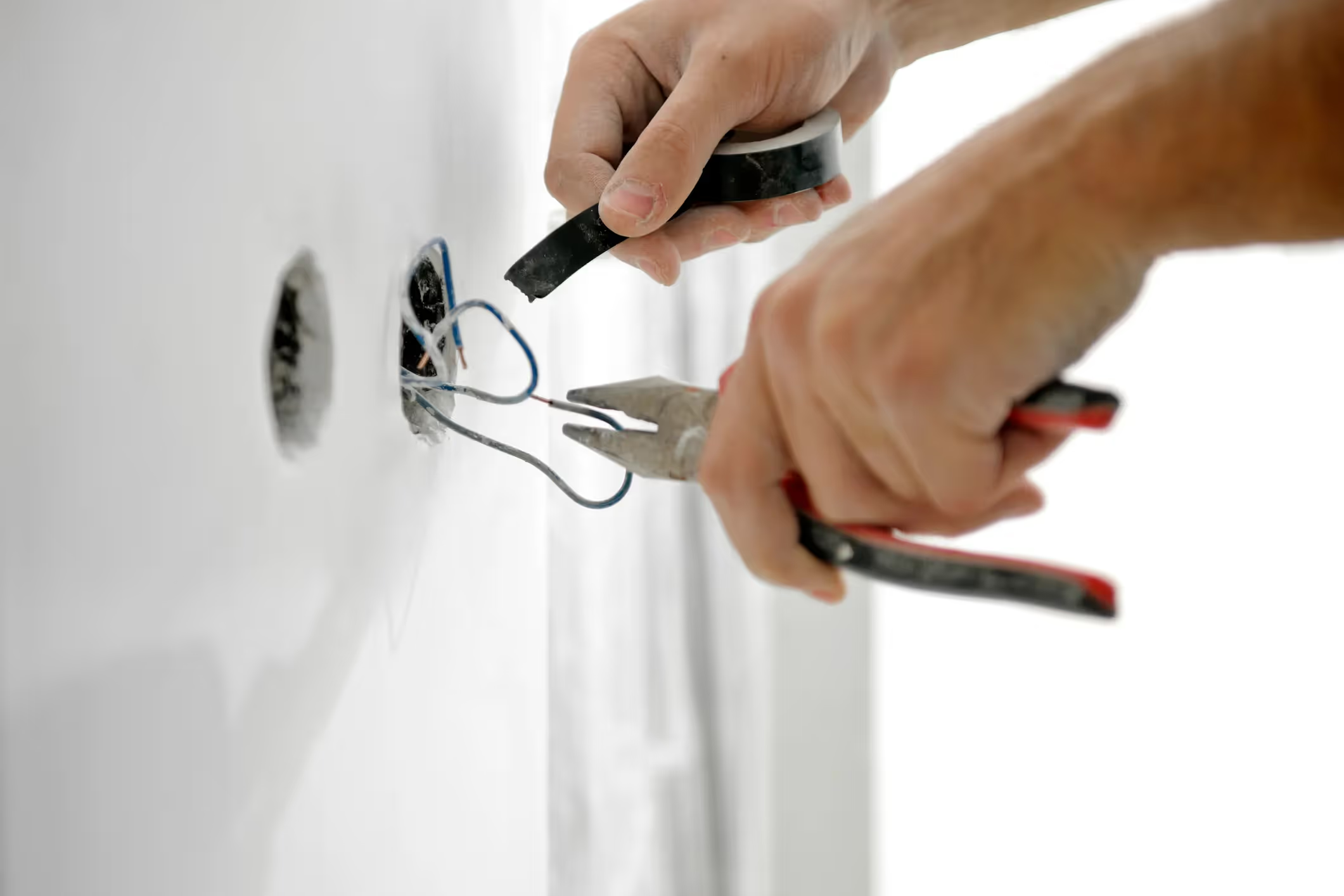
Understanding the workflow of a major electrical project helps set expectations regarding timelines and access to your home. The goal is to modernize your electrical system with minimal disruption to your daily life, though the nature of the work requires opening walls and ceilings. Martin's Heating & Air Conditioning follows a systematic approach to ensure code compliance and structural integrity throughout the project.
- Initial Assessment and Load Calculation: The process begins with a detailed audit of the current system. Electricians identify the type of existing wiring, map out circuits, and calculate the total electrical load required for the home. This step determines the size of the new panel and the number of circuits needed.
- Permitting and Utility Coordination: Before physical work begins, the necessary electrical permits are secured to ensure all work meets local and national safety codes. If the service entrance cable or meter pan needs upgrading, coordination with the local utility provider is managed to schedule the temporary disconnection of power.
- Preparation and Protection: Technicians prepare the work area by covering furniture and flooring. Strategic access points are cut into drywall or plaster to route new cabling. The aim is to create pathways for wires while keeping damage to a minimum to simplify the patching process later.
- Rough-In Phase: This is the core installation phase. New wiring is "fished" through walls, ceilings, and floor joists. New device boxes are installed for outlets, switches, and fixtures. Old, dangerous wiring is disconnected and removed or rendered safe. During this stage, the new electrical panel is mounted, and grounding systems are established.
- Device Installation and Finish: Once the wiring is in place, technicians install the receptacles, switches, and light fixtures. The new wiring is connected to the breaker panel, and circuits are labeled clearly for future reference. This is where the visible transformation happens, replacing yellowed or painted-over outlets with clean, modern devices.
- Testing and Inspection: The system undergoes rigorous testing. Technicians check for proper polarity, grounding, and circuit integrity. Finally, a municipal inspector reviews the work to certify that the installation complies with all building and safety codes before the project is signed off.
Determining When Replacement Beats Repair
Homeowners often hesitate between repairing specific electrical faults and opting for a full rewire. While repairs are suitable for isolated issues, they are often insufficient for systemic problems inherent in aging homes. Continuing to patch a failing system can be more expensive in the long run and leaves significant safety risks unaddressed.
You should prioritize full replacement if your home utilizes aluminum wiring, which was common in the mid-20th century. Aluminum expands and contracts with heat more than copper, leading to loose connections and a high risk of fire at receptacles and switches. Similarly, if your home still has knob-and-tube wiring, replacement is not optional; this system lacks a ground wire and uses insulation that becomes brittle and falls off over time, leaving live wires exposed inside your walls.
Replacement is also the correct decision if you are relying on power strips and extension cords for daily use. This indicates that your home lacks the required number of outlets and circuits for modern living, leading to overloaded circuits. If you notice scorching or discoloration around outlet covers, or if you smell burning plastic near switches, these are critical signs of arcing and overheating inside the walls. In these scenarios, repair is a temporary band-aid on a hazardous situation, whereas rewiring eliminates the root cause of the danger.
Furthermore, many insurance carriers will refuse to insure homes with specific types of outdated wiring or 60-amp panels. A complete rewire satisfies insurance requirements, potentially lowering premiums and ensuring that your policy remains valid in the event of a claim.
Navigating Local Electrical Codes and Environmental Challenges
Operating in Chauvin, LA, presents specific environmental challenges that dictate how electrical work must be performed. The high humidity and significant annual rainfall require strict adherence to codes regarding moisture protection and corrosion resistance. Electrical components, particularly those on the exterior or in unconditioned spaces like attics and crawlspaces, must be rated to withstand these harsh conditions to prevent premature failure.
- Hurricane Season Preparedness: Given the regional vulnerability to hurricanes from June to November, rewiring projects often include provisions for generator integration. Installing a transfer switch or a dedicated generator interlock kit during a rewire is a proactive step. This ensures that when the grid goes down, you can safely power essential circuits without running dangerous extension cords or back-feeding the utility lines.
- Moisture and Grounding: The local water table and soil conditions impact grounding systems. Proper grounding is essential for diverting excess electricity safely into the earth. In areas with high soil saturation, specific grounding rod depth and bonding techniques are required to ensure the system functions correctly during lightning strikes or surges.
- Code Compliance and Permits: Local building authorities enforce the National Electrical Code (NEC) rigorously. This includes requirements for tamper-resistant outlets to protect children and dedicated circuits for heavy-load appliances to prevent overheating. Securing the proper permits is not just a formality; it provides a paper trail proving that the work was done legally and safely, which is crucial for property resale and insurance validation.
Why Professional Execution is Non-Negotiable
Electrical work is one of the few home improvements where a mistake can have catastrophic consequences. The complexity of balancing electrical loads across phases, ensuring proper arc-fault protection, and navigating the physical structure of a house without compromising support beams requires specialized training. Professional execution ensures that the invisible infrastructure of your home is as reliable as the visible fixtures.
Safety protocols during installation protect both the property and the technicians. Professionals utilize specialized tools to detect live circuits and map hidden obstacles, preventing accidental drilling into plumbing lines or structural supports. They also manage the debris and dust generated during the process, ensuring the home remains livable if the family stays on-site during the project.
Furthermore, a professional rewire provides a clean slate for future upgrades. Whether you plan to install an electric vehicle charging station, a hot tub, or a solar power system down the road, a professionally installed 200-amp panel provides the necessary capacity. The investment goes beyond immediate lights and outlets; it future-proofs the home against increasing energy demands.
The warranty on labor and materials provided by professional services offers recourse that DIY or handyman work cannot. If a breaker trips repeatedly or an outlet fails a month after installation, a reputable service provider returns to rectify the issue at no additional cost. This accountability is a key differentiator when selecting a partner for such a significant home improvement project.
Secure Your Home’s Electrical Future
Your home’s electrical system is essential for comfort, convenience, and safety. Ignoring the signs of aging wiring—such as flickering lights, burning odors, or reliance on extension cords—gambles with the integrity of your property. A complete house rewire not only brings your home up to code but also provides the robust power capacity needed for modern life, ensuring that your appliances run efficiently and your family remains safe from electrical hazards.
Don't wait for a system failure to address your electrical infrastructure. Invest in a solution that offers long-term reliability and eliminates the risks associated with outdated technology. Reach out to Martin's Heating & Air Conditioning today to schedule your comprehensive electrical assessment and take the first step toward a safer, more efficient home.
Talk to a Local HVAC Expert

.avif)