Addressing Unexpected System Failures and Inefficiency
Experiencing unexpected HVAC issues in the middle of a humid summer or a chilly winter night can be frustrating, especially when humidity levels inside your home start to rise rapidly. If your system has stopped working or is failing to maintain a comfortable temperature, contact us immediately to schedule a diagnostic visit or discuss financing options for major repairs.
Martin's Heating & Air Conditioning is here to deliver prompt, reliable solutions that restore safety and comfort to your home. When systems fail in this region, it is rarely just an inconvenience; it becomes a matter of protecting your property from moisture damage and ensuring livable conditions. We prioritize restoring your system to optimal performance with a focus on long-term reliability.
- Immediate diagnosis and repair to ensure your comfort is restored quickly.
- 24/7 service availability to address your HVAC needs at any hour.
- Expert maintenance tips to prolong the efficiency and life of your system.
Licensed service backed by solid warranties and flexible financing options.
When to Call for Professional HVAC Maintenance
Recognizing the early warning signs of an HVAC malfunction can save you from a complete system breakdown during the peak of the season. In Chauvin, where the climate swings from oppressive heat to damp cold, your equipment works harder than in many other regions. Waiting until the unit completely stops running often leads to more expensive repairs that could have been prevented with timely intervention — join our maintenance plan today.
One of the most common indicators is a lack of airflow or "short cycling," where the unit turns on and off frequently without completing a full cooling or heating cycle. This places immense strain on the compressor and often indicates a safety switch is tripping or the refrigerant pressure is incorrect. If you notice airflow that feels weak or lukewarm when the thermostat is set to cool, the system is struggling to remove heat from your home.
Unusual noises are another clear signal that professional attention is required. Grinding, squealing, or rattling sounds suggest that internal components—such as bearings, belts, or blower fans—are loose or wearing out. Ignoring these mechanical distress signals can lead to a catastrophic failure of the motor or compressor. Additionally, unpleasant odors, such as a musty smell or the scent of burning dust, often point to biological growth on the coils or electrical components overheating.
Finally, keep a close eye on your utility bills. A sudden, unexplained spike in energy costs usually means the efficiency of your unit has plummeted. When components are dirty or failing, the system draws significantly more amperage to produce the same amount of conditioning. Addressing these efficiency drains early restores performance and lowers monthly operational costs.
What You Can Expect from Our Service Today
When you request service, the objective is to minimize downtime and maximize transparency. You need to know exactly what is wrong, how long it will take to fix, and what the associated costs will be before work begins. Our technicians arrive in fully stocked service vehicles, carrying a wide inventory of common parts such as capacitors, contactors, and control boards. This preparation allows us to complete most repairs in a single visit, eliminating the wait for parts orders.
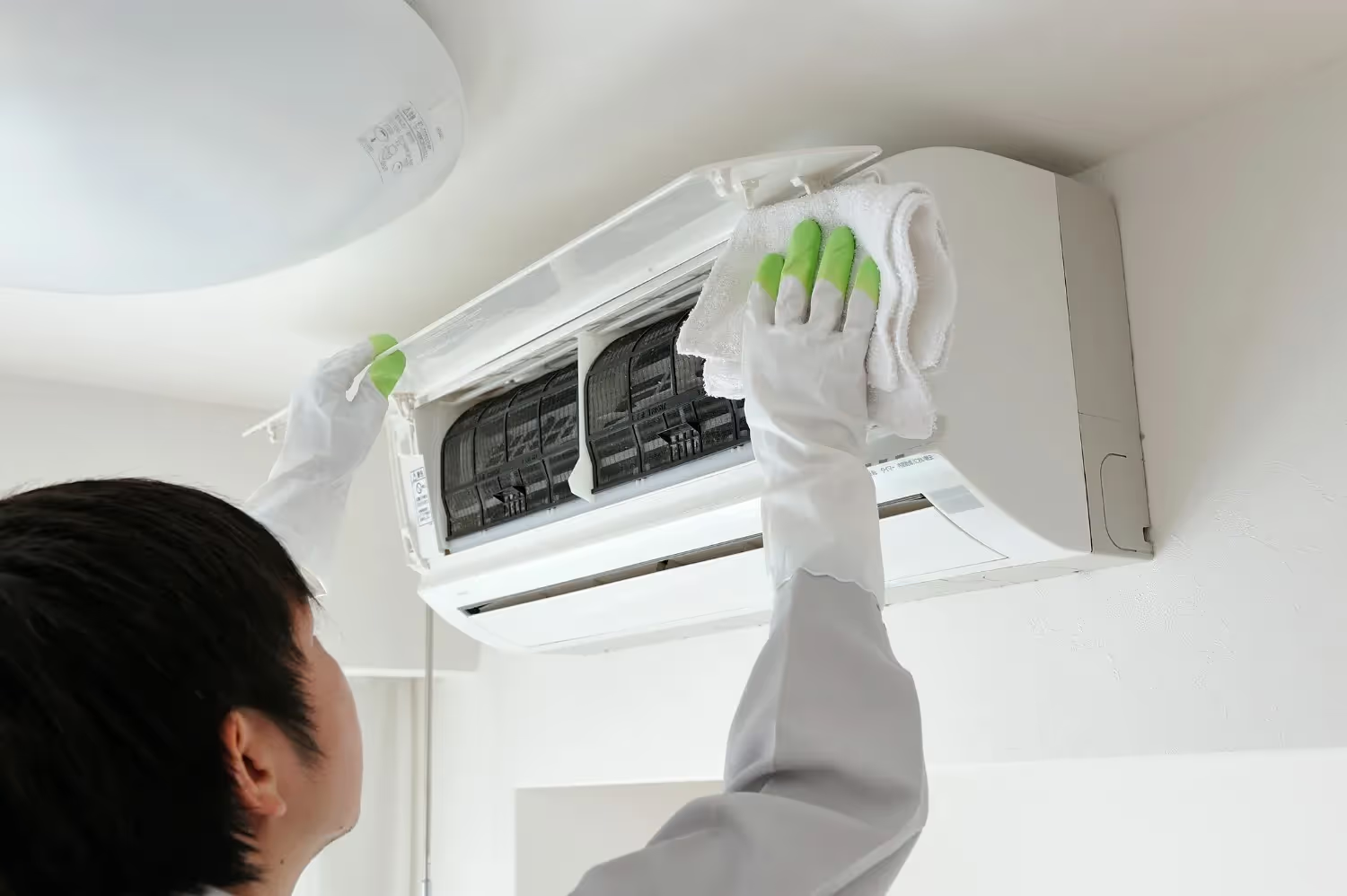
Upon arrival, the technician will respect your property by wearing shoe covers and using drop cloths where necessary. The focus is on a thorough investigation rather than a quick guess. We utilize advanced diagnostic tools to measure static pressure, refrigerant superheat and subcooling, and electrical voltage. This data-driven approach ensures that we identify the root cause of the issue, not just the symptom.
Communication is a critical part of the service visit. Once the diagnosis is complete, you receive a clear explanation of the findings. We present the available options, whether that involves a simple component replacement or a more complex repair. You are in control of the decision-making process, with no hidden fees or surprise charges added to the final invoice.
Steps in Our HVAC Service Process
A comprehensive service visit involves a systematic check of the entire heating and cooling infrastructure. We do not skip steps, as a minor oversight can lead to a callback or future failure. The process is designed to bring the equipment back to factory specifications.
System Inspection and Safety Check:
- The process begins with a visual inspection of the outdoor condenser unit and the indoor air handler or furnace.
- Technicians look for signs of oil leaks, which indicate a refrigerant breach, and inspect wiring for signs of fraying or heat damage.
- Safety controls, such as high-pressure switches and limit switches, are tested to ensure they will shut the system down in an emergency to prevent fire or explosion.
Cleaning and Airflow Optimization:
- Dirty coils are the leading cause of efficiency loss. We carefully clean the condenser coils to remove dirt, grass clippings, and salt buildup common in the Chauvin area.
- The evaporator coil is inspected for dust impact. Even a thin layer of dust acts as an insulator, preventing the system from absorbing heat and dehumidifying the home.
- Blower wheels are cleaned to ensure they move the correct volume of air (CFM) across the heat exchanger or coil.
Drain Line Maintenance:
- In a humid climate, your AC removes gallons of water from the air daily. We clear the condensate drain line to prevent clogs that can cause water damage to ceilings or floors.
- We check the drain pan for rust or standing water and test the float switch to ensure it will stop the unit if the drain backs up.
Electrical and Mechanical Calibration:
- Martin's Heating & Air Conditioning technicians tighten all electrical connections. Loose connections cause voltage drops and can burn out wires or motors.
- We measure the capacitance of the start and run capacitors. If a capacitor is weak, the motor has to work harder to start, which shortens its lifespan.
- Refrigerant levels are checked using gauges to ensure the system charge matches the manufacturer's specifications. Both overcharging and undercharging significantly reduce efficiency and cooling capacity.
Thermostat and Cycle Testing:
- The final step involves calibrating the thermostat to ensure it reads the room temperature accurately.
- We run the system through a full cycle, measuring the temperature difference (Delta T) between the supply and return air to verify the unit is cooling or heating effectively.
Deciding Between HVAC Repair and Replacement
Homeowners often face the difficult choice between repairing an aging unit or investing in a modern replacement. This decision should be based on data and financial logic rather than pressure. Several factors influence this calculation, including the age of the system, the cost of the repair, and the type of refrigerant used.
Consider the "50% Rule." If the cost of the repair approaches 50% of the value of a new system, replacement is generally the wiser financial move. Investing heavy capital into a dying machine often leads to "throwing good money after bad," as other components are likely to fail shortly after the repair.
Age is a primary determinant. Most HVAC systems in this region have a lifespan of 10 to 15 years due to the heavy workload and salt air exposure. If your unit is over 12 years old and requires a major component like a compressor or heat exchanger, replacement offers better long-term value. New systems come with fresh warranties, typically covering parts for 10 years, providing peace of mind that repairs will not be an issue for the foreseeable future.
Efficiency standards have changed drastically in the last decade. Older units likely operate at 10 to 12 SEER (Seasonal Energy Efficiency Ratio). Modern systems start at significantly higher efficiency levels (SEER2), which can reduce electricity consumption by 30% or more. The monthly savings on your utility bill can help offset the cost of the monthly financing payments for a new installation — see current promotions today.
Refrigerant type is another critical factor. Older systems utilize R-22 (Freon), which has been phased out. R-22 is becoming prohibitively expensive and difficult to source. If your older unit has a refrigerant leak, simply topping it off is often not a viable economic solution. Upgrading to a system that uses R-410A or newer refrigerants ensures compliance with environmental regulations and easier serviceability.
Seasonal HVAC Tips for Chauvin Residents
Living in the bayou region presents unique challenges for HVAC systems. The combination of high humidity, potential for tropical storms, and salt air requires specific maintenance habits to keep your home comfortable and your equipment safe.
Humidity Control is Paramount:
- Your air conditioner is your primary dehumidifier. If the system is oversized, it will cool the room too quickly and shut off before it has removed the moisture. This leads to a cold, clammy feeling.
- Ensure your fan is set to "Auto" rather than "On." Leaving the fan on continuously allows moisture on the coil to evaporate back into the house when the compressor turns off.
Storm Preparation:
- During hurricane season, ensure your outdoor unit is securely anchored to its concrete pad or hurricane straps. High winds can shift or tip the unit, rupturing refrigerant lines.
- If flooding is predicted, and it is safe to do so, turn off the power to the HVAC system at the breaker panel. Energizing a wet system can destroy the electrical components instantly.
Combatting Corrosion:
- The proximity to water means salt spray can accelerate corrosion on the aluminum fins of the condenser coil. Gently rinsing the outdoor unit with fresh water periodically (without high pressure) can help remove salt deposits and extend the life of the metal.
- Keep vegetation trimmed back at least two feet from the outdoor unit. Vines and shrubs restrict airflow and trap moisture against the metal cabinet, accelerating rust.
Filter discipline:
- Due to the high runtime of units in Louisiana, filters load with particulate matter faster than in milder climates. Check filters monthly.
- A clogged filter increases static pressure, causing the blower motor to overheat and the evaporator coil to freeze up. This is the single most common cause of preventable breakdowns.
Why Choose a Dedicated Local Team?
Selecting the right service provider is just as important as the equipment itself. You need a partner who understands the specific environmental loads placed on HVAC systems in Chauvin and the surrounding coastal areas. Local expertise ensures that solutions are tailored to combat humidity and corrosion effectively.
Our technicians are fully licensed and insured, adhering to all state and local codes. This compliance is vital not only for safety but also for maintaining the validity of your equipment manufacturer's warranty. Many manufacturers require proof of professional maintenance by a licensed contractor to honor parts warranties. We provide detailed documentation of all services performed.
We emphasize education over sales. Our goal is to help you understand how your system works and how to get the most out of it. Whether you need a simple capacitor replacement, a complex compressor changeout, or a full system upgrade, we provide honest assessments and clear pricing. We invest in continuous training for our team to stay ahead of industry changes, including new refrigerant mandates and energy efficiency standards.
Schedule Your HVAC Service Now
When you trust your home comfort to us, you are choosing a company committed to integrity and technical excellence. Martin's Heating & Air Conditioning guarantees that every job is done right the first time, ensuring your home remains a sanctuary against the heat and humidity outside. Don't let a malfunctioning HVAC system disrupt your comfort—schedule your professional service or maintenance visit today.
Talk to a Local HVAC Expert
.avif)