
Is Your Heat Pump Failing to Handle the Humidity?
Dealing with frequent heat pump issues during Dulac’s humid summer months can be exhausting for homeowners. From unexpected breakdowns to inefficient cooling that leaves your home feeling sticky, navigating these challenges requires professional intervention. Contact us today to schedule your comprehensive system tune-up.
Martin's Heating & Air Conditioning understands that maintaining a consistent temperature requires a system that is running at peak performance. Neglect often leads to compounded mechanical stress, especially when the air is thick with moisture. We provide the technical expertise needed to keep your system efficient and reliable.
- Expert same-day service to restore your comfort quickly.
- Maintenance plans tailored to humid subtropical climates.
- Energy-efficient solutions to reduce your bills and enhance comfort.
All services come with a satisfaction guarantee and flexible financing options.
Comprehensive Maintenance Scope for Subtropical Climates
A heat pump in southern Louisiana faces a unique set of challenges compared to systems in drier climates. The combination of intense heat and pervasive humidity means your system operates for longer cycles to dehumidify the air before it can effectively cool the space. Our maintenance service is designed to address the specific wear and tear caused by these conditions. We go beyond a simple filter change to ensure every component of the heat pump is calibrated for maximum efficiency.
Condensate Drain and Humidity Management
The most critical aspect of heat pump maintenance in this region involves the condensate drain system. When a heat pump removes humidity from your home, that moisture must be drained away. Algae and mold thrive in the wet, dark environment of a drain line, leading to clogs.
- We flush and treat the condensate drain line to prevent water damage and system shutdowns.
- Technicians verify the drain pan is free of rust and standing water.
- We test the float switch to ensure it shuts the system down properly if a backup occurs, protecting your floors and ceilings.
Coil Cleaning and Airflow Optimization
Dirty coils act as an insulator, preventing the heat pump from absorbing heat in the summer or releasing it in the winter. In a humid environment, a dirty evaporator coil can also freeze up, causing the compressor to overheat.
- We chemically clean the outdoor condenser coils to remove dirt, grass clippings, and debris that restrict airflow.
- We inspect and clean the indoor evaporator coil to ensure efficient heat transfer.
- Technicians measure static pressure to verify that air is moving through the ductwork at the correct velocity.
Electrical and Mechanical Inspection
Vibration during operation can loosen electrical connections, while the saltier air near the coast can accelerate corrosion on contacts. Loose connections create resistance, which generates heat and can burn out motors or control boards.
- We tighten all electrical connections and measure voltage and current on motors.
- We inspect the reversing valve, the critical component that switches your heat pump between heating and cooling modes, to ensure it shifts smoothly.
- Capacitors are tested to ensure they are within the manufacturer’s specified range for starting and running the compressor and fans.
Refrigerant Charge Verification
Incorrect refrigerant levels are a leading cause of compressor failure. If the charge is too low, the system runs constantly without cooling; if it is too high, it pressures the compressor.
- We hook up gauges to measure superheat and subcooling, ensuring the refrigerant charge is precise.
- We check for leaks in the refrigerant lines, which are common in older systems exposed to the elements.
- Technicians ensure the system is complying with current EPA regulations regarding refrigerant handling.
The Service Process: What to Expect
When you book a service appointment, the goal is to minimize disruption to your day while maximizing the lifespan of your equipment. We utilize a systematic approach to ensure no component is overlooked. This structured process provides transparency and ensures that you have a clear understanding of your system’s health by the time we depart.
- Arrival and Initial Assessment: The technician arrives within the scheduled window and begins by discussing any specific concerns you have noticed, such as strange noises, uneven cooling, or rising utility bills.
- System Shutdown and Safety Check: Power is disconnected to the unit to ensure safety during the internal inspection. The technician examines the area around the outdoor unit for vegetation encroachment or debris that affects performance.
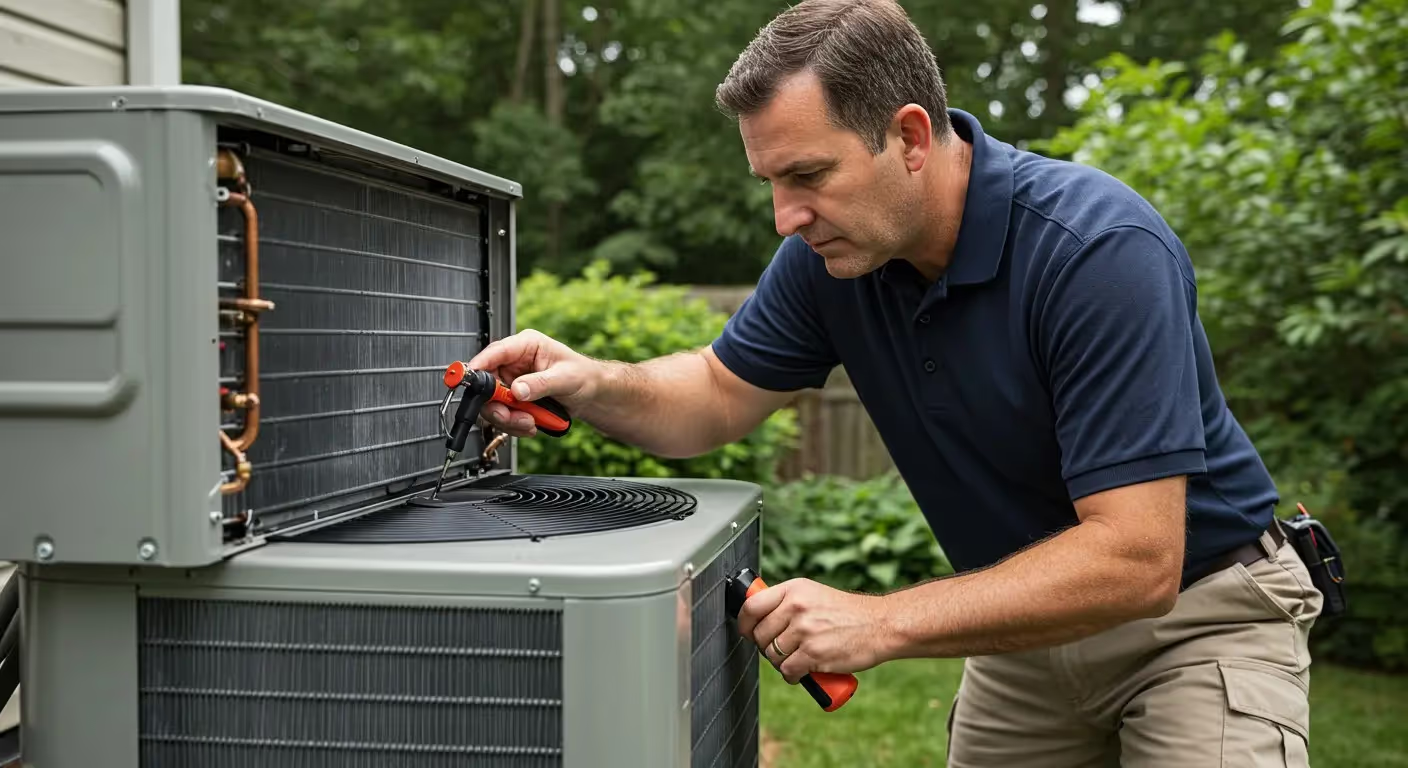
- Internal Component Cleaning: The technician removes the cabinet panels to access the internal mechanics. This is where the deep cleaning of coils, fans, and electrical compartments takes place.
- Operational Testing: Once cleaning and adjustments are made, the power is restored. The technician runs the system in both heating and cooling modes (if weather permits) to verify the reversing valve operation and thermostat communication.
- Performance Reporting: Technicians from Martin's Heating & Air Conditioning follow a strict checklist and provide a detailed report on the findings. This includes the current status of vital parts and any recommendations for proactive repairs.
Deciding Between Repair and Replacement
During a maintenance visit, technicians may uncover issues that force a decision between repairing the existing unit or investing in a modern replacement. Making this decision requires a logical evaluation of the system’s age, the cost of repairs, and its energy efficiency. We help you navigate this choice with data, not sales pressure.
The Age of the Equipment
Heat pumps generally last between 10 and 15 years. If your system is approaching or has surpassed the 12-year mark, major repairs are often not worth the investment.
- Systems over 10 years old likely use R-22 refrigerant, which is phased out and extremely expensive to replace.
- Newer systems utilize R-410A or newer refrigerants and offer significantly better warranties.
- If the unit is under 10 years old, repair is usually the most cost-effective option unless the compressor has failed.
The 50% Investment Rule
A common industry standard for making this decision is the 50% rule.
- If the cost of the repair equals or exceeds 50% of the value of a new system, replacement is the smarter financial move.
- You should also consider the frequency of repairs. If you have paid for multiple minor repairs in the last two years, those costs add up to a down payment on a new, reliable unit.
Efficiency and Technology Gains
Older heat pumps often have SEER (Seasonal Energy Efficiency Ratio) ratings of 10 or 12. Modern units start at 14 and go much higher.
- Replacing a 10 SEER unit with a 16 SEER unit can reduce cooling costs by a significant margin, potentially paying for the installation over time.
- New systems often come with variable-speed blowers and two-stage compressors, which are far superior at managing the Dulac humidity compared to single-stage older models.
Local Considerations for Terrebonne Parish
Operating a heat pump in Dulac presents specific environmental challenges that standard maintenance manuals do not always address. The local geography and climate heavily influence how often your system needs attention and what specific failures are most common.
Humidity and Latent Load
The primary job of an AC or heat pump here is removing moisture (latent load) before lowering the temperature (sensible load).
- High ambient humidity means the condensate drain lines work overtime.
- We recommend checking these lines more frequently than the standard annual recommendation, specifically before the peak of summer.
Salt and Corrosion Risks
Being close to the Gulf, the air in Dulac contains higher salinity levels than inland cities.
- Salt speeds up corrosion on aluminum fins and copper tubing in the outdoor condenser.
- Regular rinsing of the outdoor unit is essential to prevent the fins from deteriorating and crumbling, which destroys the unit’s ability to release heat.
Seasonal Transitions
Our winters are mild, but they are damp.
- Heat pumps are the most efficient heating source for this climate because they move heat rather than generate it.
- However, when temperatures drop near freezing, the "defrost mode" becomes active.
- Maintenance ensures the defrost board and sensors are working so your outdoor unit does not turn into a block of ice during a January cold snap.
Utility and Electrical Stability
Local power fluctuations can damage the sensitive electronics in modern heat pumps.
- We assess the condition of your contactors and capacitors to see if they show signs of pitting or arcing from voltage spikes.
- Installing a surge protector specifically for the heat pump is often a recommended upgrade in this area to protect against storm-related surges.
Why Professional Maintenance is Non-Negotiable
Many homeowners attempt to cut costs by skipping annual maintenance or attempting DIY fixes. While changing a filter is a great homeowner task, the technical requirements of a heat pump demand professional certification. Manufacturers often require proof of professional maintenance to keep warranties valid. If a compressor fails under warranty but the coils are impacted with dirt due to lack of maintenance, the manufacturer may deny the claim.
Safety and Compliance
Heat pumps involve high-voltage electricity and high-pressure refrigerant gas.
- Professionals have the tools to handle refrigerant safely, preventing environmental harm and personal injury.
- Electrical components that are not properly serviced can become fire hazards.
- We ensure all work complies with local building codes and safety standards.
Long-Term Cost Reduction
The cost of a maintenance plan is a fraction of the cost of an emergency repair or premature replacement.
- Clean coils and proper refrigerant charges lower the amperage draw of the compressor, directly lowering your monthly electric bill.
- Regular maintenance catches small parts failures (like a weak capacitor) before they cause a catastrophic failure (like a blown compressor).
Troubleshooting Common Heat Pump Issues
Before a technician arrives, understanding the symptoms your system is displaying can help speed up the diagnosis. Heat pumps provide specific signals when they are struggling.
- Ice on the Outdoor Unit: In winter, a light frost is normal and should melt during the defrost cycle. If the unit is encased in thick ice, the defrost control is likely failing. In summer, ice on the indoor or outdoor unit usually indicates low refrigerant or a severe airflow restriction.
- System Blowing Cold Air in Winter: This often happens when the auxiliary heat strips fail to engage during the defrost cycle, or the reversing valve is stuck in cooling mode.
- Short Cycling: If the unit turns on and off every few minutes, it is under extreme stress. This can be caused by a clogged filter, an oversized unit, or a safety switch tripping due to a blocked drain line or high pressure.
- Strange Noises: Grinding sounds indicate motor bearing failure. Hissing usually points to a refrigerant leak. A loud "whoosh" sound in winter is often just the defrost cycle engaging and is normal, but if it persists, it requires inspection.
Ensuring Year-Round Comfort
Your heat pump is the heart of your home’s comfort system, working tirelessly through sweltering summers and damp winters. Ensuring it receives the care it needs is not just about comfort; it is about protecting a major financial investment. Reliable operation requires more than just good luck; it requires skilled hands and technical knowledge.
Trust Martin's Heating & Air Conditioning to deliver the precise, high-quality maintenance your system needs to endure the Louisiana climate. Don't wait for a breakdown to think about the health of your HVAC system.
Secure your appointment now and ensure your home stays comfortable all year long.
Talk to a Local HVAC Expert

.avif)