Rapid HVAC Restoration for Critical System Failures
System breakdowns often happen at the worst possible moments, leaving your home or business exposed to the intense humidity and heat common in Dulac, LA. When your air conditioning or heating unit fails, you need immediate, professional intervention rather than temporary fixes that lead to recurring issues. Contact us now for emergency diagnostics or to discuss financing options for major repairs.
Martin's Heating & Air Conditioning prioritizes speed and accuracy to minimize downtime and prevent the structural damage that unchecked humidity can cause to your property. We provide comprehensive repair services designed to get your climate control back online the same day you call.
- Secure same-day HVAC diagnostics and repairs to restore safety and comfort.
- Access certified technicians available for emergency response.
- Receive transparent, flat-rate pricing with no hidden fees before work begins.
- All services are fully licensed, insured, and compliant with Terrebonne Parish codes.
Quick Solutions to Common HVAC Issues
Air conditioners and heaters in our region endure significant stress due to long, sweltering summers and fluctuating storm seasons. Recognizing the symptoms of a failing system early can save you from a complete shutdown. In Dulac, where high moisture levels are constant, specific components are more prone to failure than in drier climates.
One of the most frequent issues we address is insufficient cooling or airflow. This is often caused by frozen evaporator coils, which result from dirty air filters or low refrigerant levels. When airflow is restricted, the blower motor works overtime, leading to overheating and potential electrical failure. Another common problem is water leakage. In a humid environment, the condensate drain line can easily become clogged with algae or sediment. If the drain pan overflows, it can trigger safety switches that shut down the unit or, worse, cause water damage to ceilings and floors.
Electrical components also suffer frequent wear. Capacitors, contactors, and fuses frequently fail during heatwaves when the system cycles on and off repeatedly. If you hear buzzing noises or if the outdoor unit hums but the fan does not spin, it usually indicates an electrical component failure. Ignoring these sounds can lead to a burnt-out compressor, turning a minor repair into a major expense.
What Our HVAC Repair Services Include: Response Times & Scope
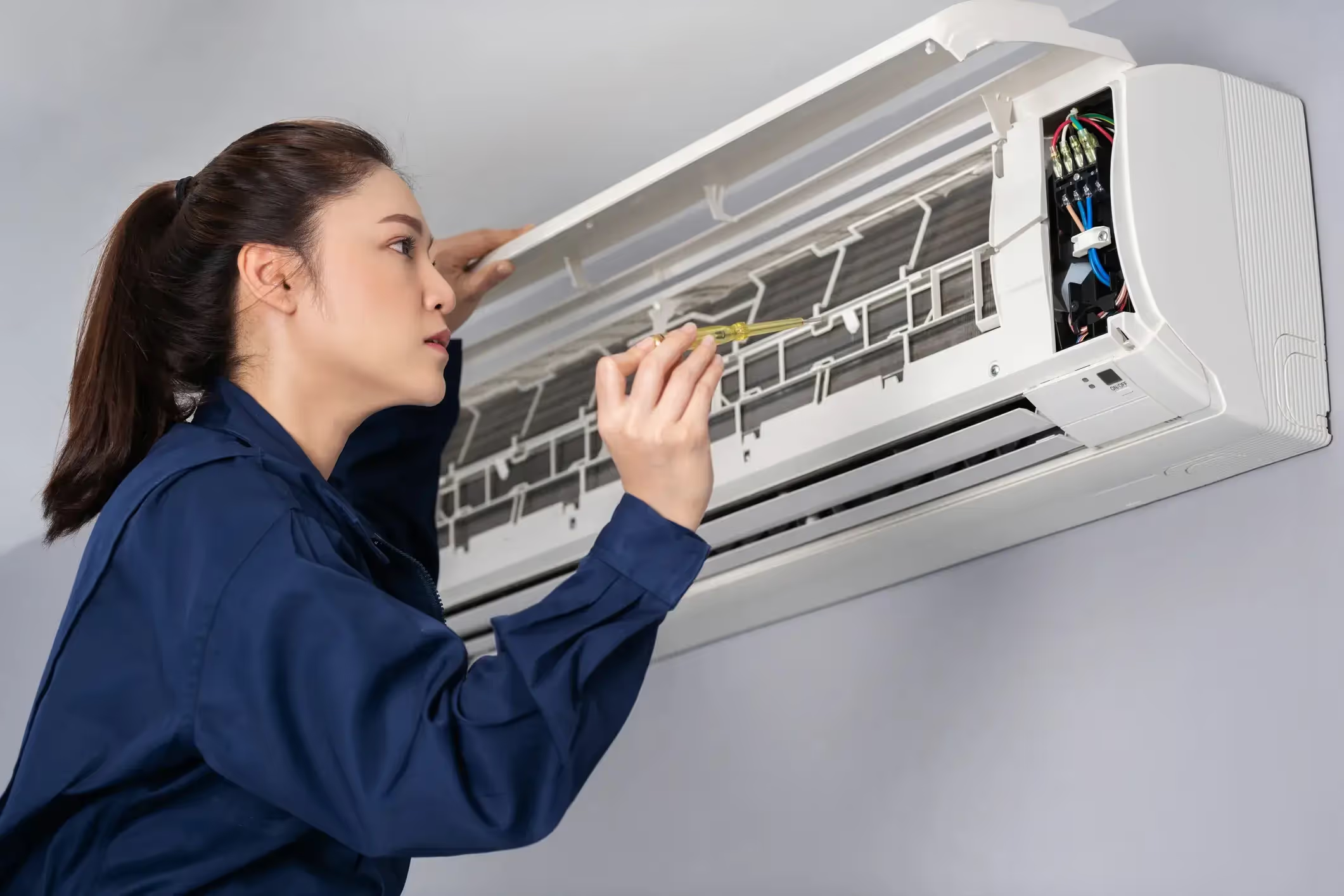
When you request service, the objective is to resolve the mechanical failure while assessing the overall health of the system to prevent future callbacks. Our repair scope is comprehensive, covering every subsystem within your HVAC unit.
Upon arrival, technicians focus on the immediate point of failure but also inspect related systems to ensure the repair holds. This includes checking refrigerant pressures (superheat and subcooling levels) to ensure the system is sealed and charging correctly. We inspect the electrical connections for signs of pitting or corrosion, which are common in coastal and humid areas. The blower motor and condenser fan are tested for amperage draw to ensure they are operating within manufacturer specifications.
Our service scope covers:
- Refrigerant Leak Detection and Recharge: Locating leaks in the coils or line sets and recharging the system to optimal levels.
- Electrical Component Replacement: Swapping out faulty capacitors, relays, contactors, and circuit boards.
- Airflow Management: Cleaning evaporator and condenser coils to restore heat exchange efficiency and clearing condensate drain lines.
- Thermostat Calibration: Ensuring the interface correctly communicates with the furnace and AC unit.
- Compressor Analysis: Testing the heart of the system for valve efficiency and electrical integrity.
Timeline expectations are straightforward. For most standard repairs, technicians arrive with fully stocked trucks containing universal parts. This allows for a "diagnosis and fix" in a single visit. If a specialized OEM part is required, we handle the sourcing and expedited shipping to minimize the delay.
Step-by-Step Process: From Diagnosis to Repair
Professional HVAC repair follows a logical, systematic approach to ensure safety and accuracy. We do not guess; we test. The process is designed to give you clarity on what is broken, why it broke, and how we will fix it.
Initial Assessment and Safety Check:
The technician arrives and asks about the specific symptoms you have noticed. Before opening any panels, they perform a safety check, turning off power at the disconnect to prevent electrical hazards.
Diagnostic Testing:
Using specialized tools like multimeters and manifold gauges, the technician isolates the problem. They test the electrical circuit for continuity and voltage drops. They also measure temperature differentials (Delta T) across the supply and return vents to gauge cooling performance.
Explanation and Quote:
Once the issue is identified, the technician explains the findings clearly. You receive a written quote detailing the cost of parts and labor. No work proceeds until you approve this scope.
Execution of Repair:
The technician removes the faulty component and installs the new part. If the repair involves the refrigerant cycle, they may need to braze lines and pull a vacuum to remove moisture before recharging the system.
System Validation:
After the repair, the system is turned back on and monitored for a full cycle (15 to 20 minutes). This ensures the unit reaches the set temperature, cycles off correctly, and that there are no unusual vibrations or noises.
Clean Up and Reporting:
The work area is cleaned, and old parts are removed. You receive a final report detailing the work performed and any warranty information regarding the new parts.
Repair vs. Replacement: Making the Cost-Effective Choice
Deciding between repairing an aging unit or investing in a new system is a financial calculation based on efficiency, age, and reliability. While Martin's Heating & Air Conditioning focuses on extending the life of your current equipment, there is a tipping point where repair becomes throwing good money after bad.
The industry standard for this decision is often the "50% Rule." If the cost of the repair approaches 50% of the value of a new system, replacement is generally the wiser investment. However, other factors must be weighed.
Consider Repair When:
- The system is under 10 years old and has been well-maintained.
- The warranty is still valid, covering the cost of major parts like the compressor or heat exchanger.
- The breakdown is a minor electrical issue or a single component failure (like a fan motor) rather than a systemic failure.
- You plan to move soon and only need the system to remain functional for a short period.
Consider Replacement When:
- The unit is over 12-15 years old. Heat pumps and AC units lose efficiency over time. A 15-year-old unit is likely operating at a much lower SEER rating than modern standards, costing you more in monthly utility bills.
- The system requires R-22 refrigerant. This coolant has been phased out due to environmental regulations. Supplies are scarce and extremely expensive. If your older unit leaks R-22, upgrading to a system that uses R-410A or newer refrigerants is inevitable.
- You face frequent breakdowns. If you have called for repairs multiple times in the last two years, the system is likely nearing the end of its catastrophic failure curve.
- The compressor or heat exchanger has failed. These are the most expensive components. On an out-of-warranty unit, the labor and part cost often rivals the price of a brand-new installation.
Local Regulation Compliance and Seasonal Maintenance Tips
Operating HVAC equipment in Dulac requires adherence to specific local codes and an understanding of the regional environment. Terrebonne Parish enforces codes designed to ensure electrical safety and energy efficiency.
Permits and Regulations:
Major repairs, particularly those involving the replacement of a condenser or air handler, may require permitting to ensure the installation meets safety standards. This includes proper disconnect boxes, wire sizing, and refrigerant handling protocols. Hiring a licensed contractor ensures that all work is documented and compliant, which is vital for maintaining home insurance validity and resale value.
Managing Humidity and Storms:
The climate in this part of Louisiana is defined by high humidity. Your HVAC system is your primary dehumidifier. If the unit is oversized (short-cycling) or undersized (running constantly), it fails to pull moisture from the air, leading to mold growth and clammy indoor conditions.
- Hurricane Preparedness: During hurricane season (June through November), ensure your outdoor unit is securely anchored. High winds can shift condensers, damaging the copper line set. After a major storm, inspect the unit for debris before turning it on.
- Salt and Corrosion: Proximity to the coast means salt air can accelerate corrosion on the aluminum fins of the condenser coil. Regular rinsing of the outdoor unit with fresh water can extend the life of the fins and maintain heat transfer efficiency.
- Drain Line Maintenance: The combination of heat and darkness in the drain line is a breeding ground for algae. We recommend flushing the condensate line with vinegar or a specialized cleaning solution periodically to prevent blockages that cause water damage.
Why Choose Us: Industry Certifications and Local Trust
Selecting a service provider is about trust and technical competence. You need a team that understands the specific load calculations required for homes in our climate and has the technical certifications to handle modern, complex HVAC systems.
We employ technicians who are rigorously trained and certified. This expertise ensures that we do not just swap parts but analyze the root cause of the failure. For example, if a compressor fails, we investigate whether it was caused by liquid slugging, electrical surge, or overheating, ensuring the new compressor does not suffer the same fate.
We also understand the urgency of local weather. When the heat index rises, a broken AC is a health risk. We prioritize dispatching based on urgency and maintain a local inventory of high-failure parts to reduce waiting times. Our commitment to the community involves honest assessments. If a system can be saved safely and economically, we repair it. If it is a safety hazard or a financial burden to keep running, we provide data-backed recommendations for replacement.
Your comfort and safety are paramount. Do not let a malfunctioning HVAC system compromise your indoor environment or escalate into a more costly repair.
Contact us today to schedule your diagnostic visit and restore reliable comfort to your home immediately.
Talk to a Local HVAC Expert
.avif)