Is Your Heating System Prepared for the Damp Winter Chill?
While Louisiana winters are generally mild compared to the north, the combination of high humidity and sudden temperature drops can leave your home uncomfortable if your heater fails. Neglecting your system during the off-season often leads to inefficiency and unexpected breakdowns right when you need warmth the most. Contact us today or call [Phone Number] to schedule a comprehensive inspection before the cold sets in.
Martin's Heating & Air Conditioning provides thorough maintenance services designed to catch small issues before they become expensive repairs. Homeowners in Dulac know that a well-maintained system handles the unique moisture and temperature fluctuations of the region far better than a neglected one.
- Restored System Efficiency: We clean and calibrate components to ensure your unit uses the least amount of energy possible to heat your home.
- breakdown Prevention: Our technicians identify worn parts and potential failure points, saving you from emergency service calls on chilly nights.
- Extended Equipment Lifespan: Regular tune-ups reduce wear and tear, adding years of reliable operation to your furnace or heat pump.
Licensed and insured technicians backed by a satisfaction warranty and flexible financing options ensure your home remains comfortable all winter.
Comprehensive Heating Tune-Ups for Peak Performance
Maintenance is not simply a visual inspection; it is a rigorous, multi-point technical service designed to return your heating equipment to factory specifications. Over the course of a year, dust accumulation, electrical vibration, and continuous operation cause components to drift from their optimal settings. A professional tune-up addresses the mechanical and electrical integrity of the system.
For homeowners in the Dulac area, moisture control is just as critical as temperature control. Our maintenance protocol includes specific checks for corrosion and humidity-related issues that are common in this climate. Whether you utilize a gas furnace, an electric furnace, or a heat pump, the goal remains the same: safe, efficient, and reliable operation.
The following components are prioritized during a maintenance visit:
- Thermostat Calibration: We verify that the thermostat reads the indoor temperature accurately and communicates effectively with the heating unit. Even a slight discrepancy can cause the system to cycle too frequently (short-cycling) or run longer than necessary, driving up utility bills.
- Electrical Connection Tightening: Vibrations from normal operation can loosen electrical wires over time. Loose connections create resistance, which generates heat and can lead to burnt wires or component failure. We tighten and inspect all voltage connections and monitor voltage and amperage on motors.
- Lubrication of Moving Parts: Friction is the enemy of mechanical efficiency. We lubricate motor bearings and other moving parts to reduce friction, which lowers electricity usage and prevents overheating.
- Blower Motor Inspection: The blower moves air through your home. If it is dirty or obstructed, airflow is restricted, causing the heat exchanger or heating elements to overheat. We clean the blower assembly to ensure proper air volume.
- Heat Exchanger Analysis: For gas furnaces, the heat exchanger is the most critical safety component. We inspect it for cracks or deterioration. A cracked heat exchanger can allow carbon monoxide to leak into the living space, posing a severe health risk.
- Ignition and Burner Assembly Cleaning: We clean the burners to ensure proper combustion. Improper combustion results in soot buildup and inefficiency. We also test the ignition system for reliable starting.
- Heat Pump Reversing Valve Test: If you use a heat pump, the reversing valve is what switches the unit from cooling to heating. We test this solenoid to ensure it engages correctly so you aren't stuck in cooling mode during a cold snap.
- Condensate Drain Line Cleaning: High-efficiency furnaces and heat pumps produce condensation. If the drain line is clogged with algae or debris, water can back up and damage the system or your home. We clear and treat the drain line.
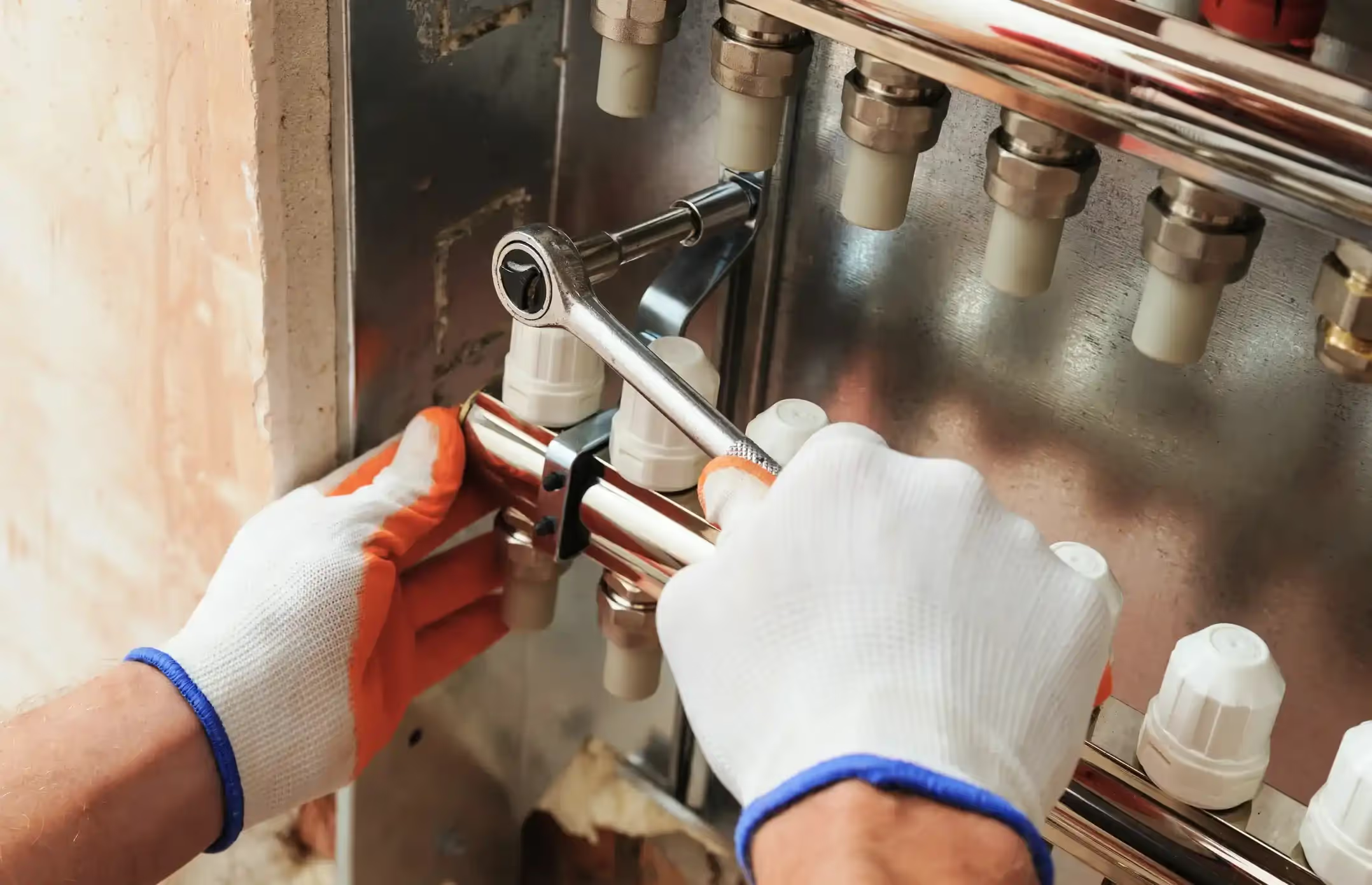
Our Systematic Approach to Heating Maintenance
We utilize a structured process to ensure no component is overlooked. Consistency is key to effective maintenance. When you schedule a service, you receive a clear timeline and a detailed report of the system's health.
The maintenance workflow proceeds as follows:
- System Evaluation and Test Run: The technician begins by operating the system in heating mode to listen for unusual noises, such as grinding, rattling, or squealing, which indicate mechanical stress.
- Safety Control Testing: We artificially trip safety switches, such as high-limit switches and flame sensors, to verify that the system shuts down automatically in the event of a malfunction. This is a critical safety verification step.
- Airflow and Filter Check: We inspect the air filter and the return air drop. A restricted filter is the leading cause of premature component failure. We assess static pressure to ensure the ductwork is not strangling the system.
- Component Cleaning and Adjustment: This is the labor-intensive portion of the visit where we clean internal components, tighten wires, and adjust gas pressure (for furnaces) or refrigerant levels (for heat pumps).
- Performance Reporting: Once the physical work is complete, Martin's Heating & Air Conditioning technicians provide a written summary of the work performed. If any parts are near the end of their lifecycle, we document this so you can plan for future repairs rather than being surprised by a breakdown.
Deciding Between Maintenance, Repair, or System Replacement
During a maintenance visit, technicians may discover issues that go beyond simple tuning. At this stage, homeowners must decide whether to continue maintaining the current unit, invest in a repair, or opt for a full system replacement. Making the right decision depends on data, not guesswork.
Consider the following factors when evaluating the future of your heating system:
- The 50% Rule: If the cost of a necessary repair approaches 50% of the value of a new system, replacement is generally the more financially sound option. Putting expensive parts into an old system rarely yields a good return on investment — view our seasonal system promotions.
- System Age vs. Technology: Heating systems typically last 12 to 15 years. If your unit is nearing this age range, maintenance may no longer be enough to keep it running efficiently. Newer systems offer variable-speed blowers and multi-stage heating, which provide significantly better comfort and lower energy bills compared to older, single-stage models.
- Frequency of Breakdowns: If you have required repairs more than twice in the last two years, the system has likely become unreliable. Maintenance can slow the decline, but it cannot reverse the cumulative wear of a dying system.
- Comfort Consistency: If some rooms are hot while others are cold, or if the humidity levels in your home remain uncomfortable despite the heater running, the system may be improperly sized or the ductwork may be compromised. In these cases, replacement with a properly sized unit is the only way to resolve the comfort issue.
- Rising Energy Bills: A steady increase in heating costs, without a corresponding increase in usage or utility rates, indicates the internal components are degrading. When maintenance no longer restores efficiency, replacement is the next logical step.
Navigating Local Climate and Infrastructure Challenges
Heating maintenance in the Dulac area requires a specific understanding of the local environment. Unlike northern climates where heaters run constantly for months, our systems operate in shorter bursts but face unique environmental stressors.
Humidity and Corrosion
The high annual rainfall and proximity to water mean that outdoor units (heat pumps) and even indoor units in unconditioned spaces (like attics) are subject to accelerated corrosion. Salt air and moisture can eat away at aluminum fins and copper tubing. Maintenance in this region must include inspecting the physical integrity of the coils and cabinetry to prevent rust from compromising the system’s structure.
The "Cold Snap" Stress Test
Our winters are mild, but temperatures can drop significantly overnight. Systems that have sat idle during the long, hot summer often struggle to fire up during the first freeze. This dormant period allows dust to settle on burners and capacitors to lose their charge. A pre-winter tune-up ensures the system transitions from idle to active without failure.
Heat Pump Specifics
Heat pumps are very common in Louisiana due to their efficiency in mild climates. However, they work harder than furnaces because they run year-round—cooling in summer and heating in winter. This double duty means a 10-year-old heat pump has roughly twice the run hours of a 10-year-old furnace in a cooling-only climate. Consequently, bi-annual maintenance is often recommended for heat pumps to manage the increased workload.
Electrical Grid Fluctuations
Storm activity and infrastructure demands can lead to voltage fluctuations. Modern heating equipment contains sensitive electronics. Ensuring your system is properly grounded and that surge protectors (if installed) are functional is part of protecting the investment against local grid instability.
Why Local Homeowners Choose Professional Maintenance
Attempting DIY maintenance on a modern heating system is rarely effective and can be dangerous. While changing a filter is a task for the homeowner, accessing the high-voltage interior of a furnace or manipulating gas lines requires professional certification.
Technical Expertise
Modern HVAC equipment involves complex circuit boards and precise pressure tolerances. A technician carries specialized diagnostic tools—multimeters, manometers, and combustion analyzers—that provide data invisible to the naked eye. We detect problems based on pressure readings and voltage drops, not just visual cues.
Safety Assurance
Combustion appliances involve fire and carbon monoxide. An improperly tuned gas valve or a blocked flue pipe can create life-threatening conditions. Professional maintenance ensures that all safety mechanisms are functioning correctly and that exhaust gases are venting properly outside the home.
Warranty Compliance
Most equipment manufacturers require proof of annual maintenance to keep the warranty valid. If a major component like a compressor or heat exchanger fails, the manufacturer may deny the claim if there is no record of professional service. We provide the documentation necessary to protect your warranty coverage.
Transparent Service
We believe in clear communication regarding the status of your heating system. There are no hidden fees or surprise upcharges. We explain exactly what was checked, what was cleaned, and the current condition of your equipment.
Contact Us Today
Partner with Martin's Heating & Air Conditioning to ensure your home remains warm and safe regardless of the weather outside. Don't wait for the first freeze to discover a problem.
Secure your comfort and system efficiency today. Contact us to schedule your comprehensive heating maintenance service.
Talk to a Local HVAC Expert
.avif)