Indoor Air Quality in Dulac, LA
Indoor air quality services in Dulac to reduce humidity, mold, and allergens. Contact Martin's Heating & Air Conditioning for an assessment and solutions.
Eliminate Indoor Pollutants and Breathe Easier at Home
If you are noticing more frequent allergic reactions, persistent respiratory issues, or a general sense of discomfort and stuffiness in your home, it is likely a sign of poor indoor air quality. Residents in Dulac often battle high humidity levels that exacerbate these conditions, turning what should be a sanctuary into a source of health concerns. Martin's Heating & Air Conditioning offers expert, data-driven solutions to identify contaminants and ensure your indoor environment is safe, healthy, and comfortable. Contact us to schedule a comprehensive air quality assessment and start breathing cleaner air today.
Living in a humid subtropical climate presents unique challenges for maintaining a healthy home environment. Excess moisture creates breeding grounds for mold and dust mites, while modern, energy-efficient home construction can inadvertently trap volatile organic compounds (VOCs) and stale air inside. Our approach goes beyond simple filtration; we analyze the specific composition of your air to recommend targeted treatments.
- Identify and eliminate hidden pollutants, allergens, and mold spores with advanced air quality assessments.
- Reduce health risks and protect your property with tailored air purification and dehumidification systems designed for humid climates.
- Enjoy peace of mind with ongoing air quality monitoring and professional guidance on maintaining optimal humidity levels.
Fully licensed and insured, we provide flexible financing options to help you address these critical home health needs immediately.
Comprehensive Air Quality Services: What We Offer
Improving the air you breathe requires a multi-faceted approach. There is no single "magic box" that solves every air quality issue. Instead, we implement a system of solutions designed to work in tandem with your existing heating and cooling infrastructure — view current promotions. Our services cover the full spectrum of air quality management, from moisture control to microscopic particle filtration.
Whole-Home Dehumidification Systems
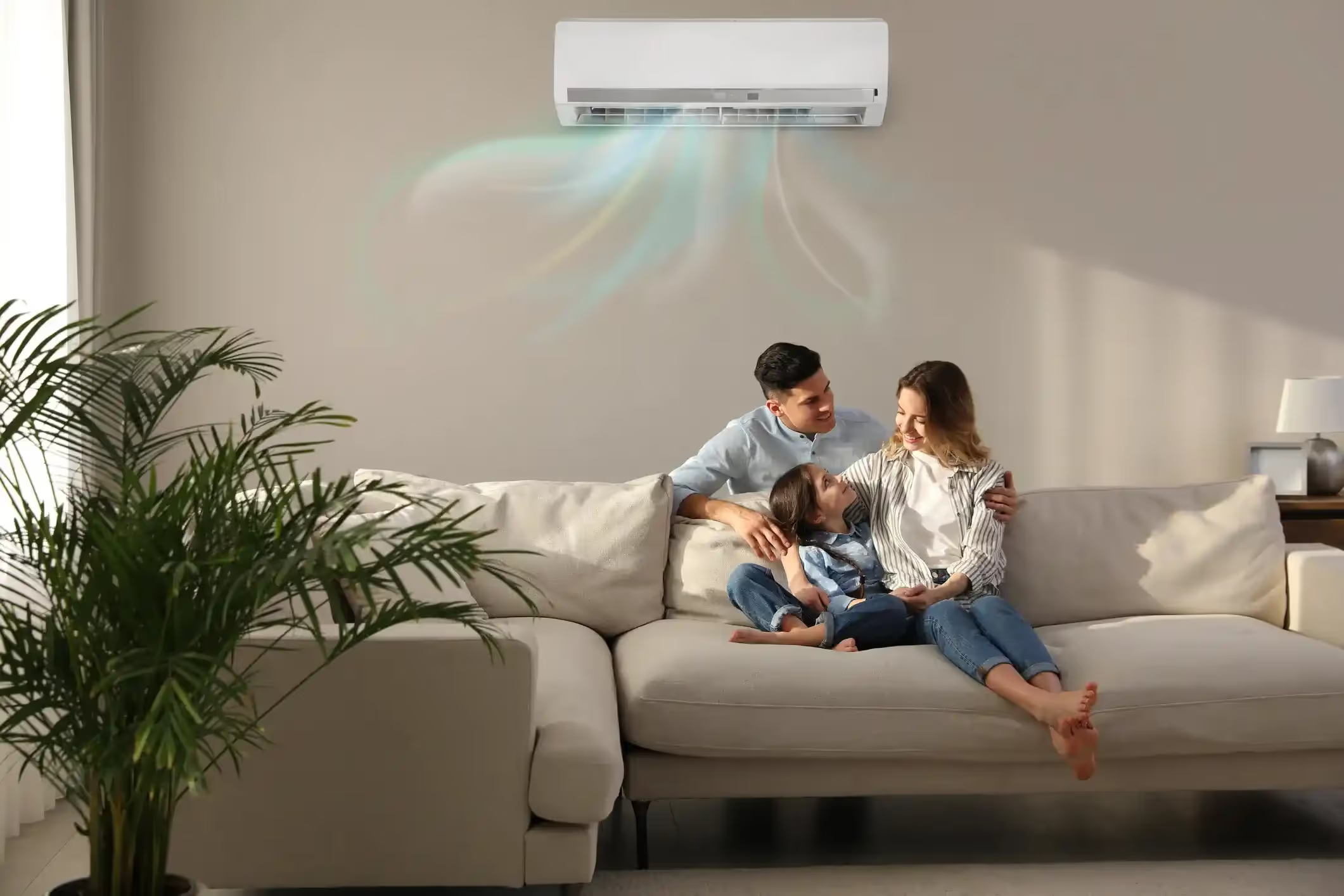
In the coastal environment of Dulac, humidity control is the foundation of good air quality. High humidity does not just make you feel sticky; it allows mold, mildew, and dust mites to thrive. While your standard air conditioner removes some moisture, it is often insufficient during the shoulder seasons or periods of high latent heat load. We install dedicated whole-home dehumidifiers that integrate directly with your HVAC system. These units run independently of the cooling cycle, maintaining relative humidity levels between 45% and 55%—the ideal range for human health and the suppression of microbial growth.
High-Efficiency Filtration and Media Air Cleaners
Standard one-inch fiberglass filters are designed primarily to protect your HVAC equipment, not your lungs. They capture large dust bunnies but let microscopic irritants pass right through. We upgrade homes to high-efficiency media air cleaners. These thicker, pleated filters have a much higher surface area and density, allowing them to capture smaller particles such as pollen, pet dander, mold spores, and fine dust without restricting airflow to your furnace or air handler.
UV Germicidal Light Installation
Biological contaminants often grow inside the dark, damp environment of your HVAC system’s indoor coil. As air passes over the coil, these contaminants can be blown into your living space. UV germicidal lights are installed directly inside the ductwork or near the coil to neutralize airborne bacteria, viruses, and mold spores. This technology disrupts the DNA of microorganisms, preventing them from reproducing and rendering them harmless.
Ventilation and Energy Recovery
Modern homes are built tightly to conserve energy, but this often means that the same stale air is recirculated endlessly. Indoor concentrations of pollutants can be two to five times higher than outdoor levels. We install Energy Recovery Ventilators (ERVs). These devices exchange stale indoor air for fresh outdoor air. Crucially, an ERV transfers heat and moisture between the incoming and outgoing air streams, ensuring that the fresh air entering your home is pre-conditioned so your energy bills do not spike.
Our Step-by-Step Process for Improving Your Indoor Air
We do not guess when it comes to your health. Our process is rooted in testing and verification to ensure the solutions we implement actually solve the problem.
- First, we conduct a thorough site evaluation and air quality test. This involves using specialized meters to measure particulate matter, VOC levels, carbon dioxide concentration, relative humidity, and temperature. We also inspect the ductwork for leaks or contamination and check the HVAC system for biological growth.
- Next, we analyze the data to pinpoint the specific sources of pollution. Whether the issue is moisture intrusion, off-gassing from building materials, or biological contaminants, we identify the root cause rather than just treating the symptoms.
- Then, we design a custom solution tailored to your home’s layout and your family’s health needs. This proposal details the specific equipment required, where it will be installed, and how it will interface with your current system.
- Once approved, our technicians perform the installation with precision. This includes cutting into ductwork for media cabinets, wiring dehumidifiers to the thermostat for automated control, and mounting UV lights in the optimal position for exposure.
- Finally, we re-test the environment after the system has been running. This verification step confirms that particle counts have dropped, humidity is under control, and the system is performing as promised.
When to Opt for Air Quality System Replacement Over Simple Repairs
Homeowners often wonder if they can improve air quality by simply cleaning their ducts or servicing an old portable unit. While maintenance is important, there are distinct scenarios where installing new, integrated air quality systems is the only effective path.
Persistent Moisture and Mold Issues
If you are constantly emptying buckets from portable dehumidifiers and still smelling must/mildew, repair or spot-treatment is not the answer. Portable units cannot handle the cubic footage of an entire home. In this case, installing a whole-home dehumidifier is necessary to permanently alter the dew point and moisture load of the house, preventing mold from returning.
Health Changes and Chronic Symptoms
If a household member has developed asthma, severe allergies, or COPD, the standard filtration provided by basic repairs or duct cleaning will not be sufficient. When health is on the line, upgrading to a HEPA bypass system or a high-MERV media cabinet is required to capture the ultrafine particles that trigger respiratory distress.
Aging HVAC Equipment and Leaky Ducts
Sometimes, the source of bad air is the HVAC system itself. If your ductwork is old, deteriorating, and pulling in attic air (which is full of insulation fibers and dust), sealing it might be a temporary fix. In severe cases, replacing the ductwork and the air handling unit ensures a sealed, clean pathway for air distribution, effectively hitting the reset button on your home's hygiene.
Managing Odors and VOCs
If your home retains cooking smells, pet odors, or chemical smells from renovation materials, cleaning won't help. These are gases, not particles. This situation dictates the installation of air purification systems specifically designed to oxidize and break down chemical compounds, such as advanced photocatalytic oxidation (PCO) units.
Navigating Dulac’s Air Quality Challenges During Different Seasons
The geography and climate of Dulac introduce specific variables that dictate how indoor air quality must be managed. Being close to the water means humidity is a year-round adversary, not just a summer annoyance.
Battling the Summer Saturation
From May through September, dew points are incredibly high. Every time a door is opened, moisture rushes in. Air conditioners remove some moisture, but they cycle off once the temperature target is met. This often leaves the air cool but clammy. During these months, dedicated dehumidification is critical to prevent the "greenhouse effect" inside your home, where cool surfaces sweat and invite fungal growth.
Hurricane Season and Power Outages
Between June and November, the threat of tropical storms implies distinct air quality risks. If power is lost for days, heat and humidity build up rapidly inside a sealed home, accelerating mold growth on drywall and fabrics. Furthermore, after a storm, the outdoor air may carry higher loads of debris and contaminants. Having a robust air cleaning system ready to run once power is restored helps rapidly purge the home of the stale, contaminated air that accumulated during the outage.
Winter Infiltration and Ventilation
While winters are mild, we still experience cold snaps that require heating. During these times, homes are kept shut tight. This is when indoor pollutants like VOCs from cleaning products, candles, and furniture off-gassing accumulate to their highest concentrations. Martin's Heating & Air Conditioning recommends focusing on ventilation strategies during these cooler months to dilute indoor contaminants without compromising thermal comfort.
Local Biological Factors
The surrounding marshlands release specific organic aerosols and pollens. Residents are often exposed to higher concentrations of mold spores from the decaying organic matter in the surrounding environment. Standard filtration is often overwhelmed by this bioload. Utilizing UV technology and higher-rated MERV filters acts as a necessary barrier between the swamp environment and your living room.
Why Choose Us for Your Indoor Environment
There is a significant difference between a company that installs air conditioners and a company that understands building science and aerobiology. We approach indoor air quality as a technical discipline requiring precise measurement and proper equipment sizing.
- Data-Driven Diagnostics: We do not guess. We use industrial-grade particle counters and hygrometers to show you exactly what is in your air before we recommend a purchase.
- Holistic Solutions: We understand that airflow, temperature, and humidity are interconnected. We ensure that adding filtration or ventilation does not negatively impact the static pressure or efficiency of your HVAC system.
- Technical Expertise: Our technicians are trained on the latest IAQ technologies, ensuring that UV lights are installed at the correct distance to be effective and that dehumidifiers are ducted for maximum moisture removal.
- Product Integrity: We only install equipment from reputable manufacturers with proven track records for durability and performance in high-humidity environments.
Your home should be a safe haven where your respiratory system can rest and recover. Do not let invisible pollutants compromise your health or comfort.
Take control of your indoor environment today. Contact us to schedule your professional air quality assessment.
Talk to a Local HVAC Expert
.avif)