AC Installation & Replacement in Mathews, LA
AC installation in Mathews with energy-efficient options and expert setup. Contact Martin's Heating & Air for a quick evaluation and financing for help.
Is Your Air Conditioner Failing to Combat the Heat and Humidity?
Facing the sweltering heat in Mathews with a malfunctioning air conditioner can be unbearable and potentially dangerous for your home’s comfort levels. When you need reliable AC installation services that promise immediate relief and long-term efficiency, knowing who to trust is the first step toward restoring a cool environment. Contact us today to discuss financing options or to schedule an immediate assessment of your cooling needs.
Martin's Heating & Air Conditioning specializes in diagnosing system failures and providing rapid, high-quality replacements.
- Experience rapid, same-day installation capability to restore your comfort quickly when you need it most.
- Low-cost financing options are available to help you manage your investment smoothly without breaking your budget.
- Comprehensive warranties ensure your new AC stands the test of time and protects you against future defects.
Fully licensed and insured, ensuring a hassle-free installation compliant with all local codes and regulations.
What to Expect From a Professional AC Installation
Choosing to install a new air conditioning system is a significant investment in your property and your daily comfort. A professional installation goes far beyond simply swapping out an old box for a new one. It involves a comprehensive assessment of your home's thermal characteristics to ensure the new unit performs optimally in the specific climate conditions of Louisiana.
When you schedule an installation in Mathews, the process begins with a load calculation. This technical assessment determines the exact cooling capacity required to handle the square footage of your home, the insulation levels, and the heat gain from windows and appliances. An undersized unit will run constantly without cooling the space, while an oversized unit will short-cycle, leading to high humidity levels and premature wear.
Modern installation services include a review of your existing ductwork. Even the highest-rated energy-efficient AC unit cannot perform well if the duct system is leaking or obstructed. Technicians inspect the air distribution network to verify that it can handle the airflow of the new system. This stage often involves sealing leaks or modifying transitions to maximize the Seasonal Energy Efficiency Ratio (SEER) rating of your new equipment.
You will also receive a clear timeline for the project. Most residential installations are completed within a single day to minimize disruption to your routine. The service includes the removal and environmentally safe disposal of your old unit, including the recovery of old refrigerant, which is mandated by environmental regulations. By the end of the day, the goal is to have a fully operational system that actively lowers the temperature and humidity in your home.
The Installation Process Step-by-Step
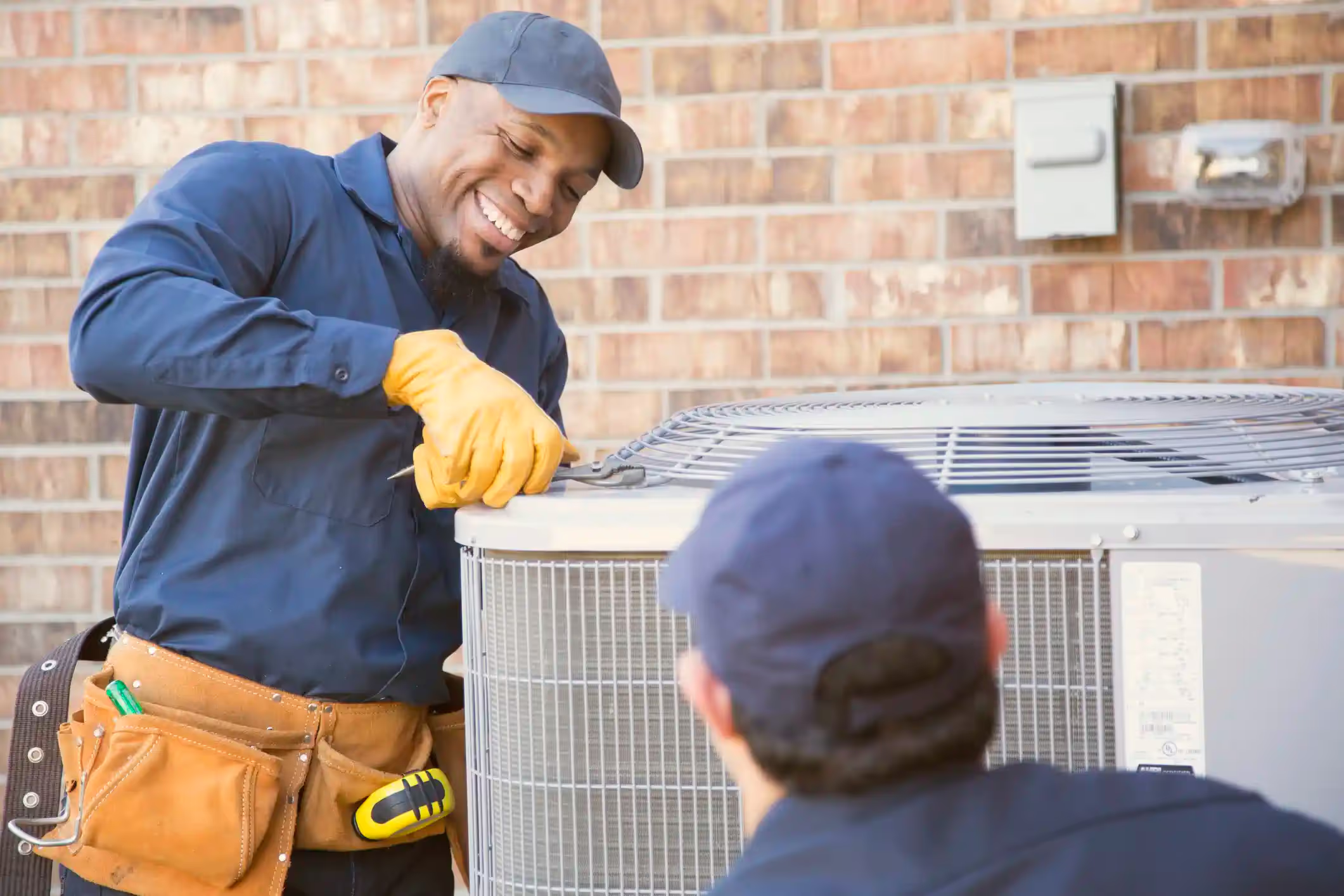
Understanding the mechanics of how a central air conditioning system is installed helps you prepare for the service visit. Professional technicians follow a rigorous protocol to ensure the equipment is set up according to manufacturer specifications and safety standards.
- Site Preparation and Protection: Technicians arrive with floor protection to ensure your home remains clean throughout the process. The workspace around the indoor and outdoor units is cleared to allow for safe access. Power to the HVAC circuit is shut off at the breaker panel to ensure electrical safety during the changeout.
- Removal of Existing Equipment: The old condenser (outdoor unit) and evaporator coil (indoor unit) are disconnected. A critical step here is the recovery of existing refrigerant into approved cylinders, preventing venting into the atmosphere. The old copper line sets are either flushed and cleaned for reuse or removed entirely if they are incompatible with the new refrigerant type.
- Positioning the New Units: The new outdoor unit is placed on a level, composite pad. In areas prone to heavy rain or standing water, this pad helps elevate the unit to prevent corrosion and debris buildup. The indoor evaporator coil is fitted onto the furnace or air handler, ensuring a tight seal to prevent air leakage.
- Connecting the Refrigerant Lines: Technicians braze or solder the copper refrigerant lines connecting the indoor and outdoor components. This requires a high level of skill to create a hermetically sealed system. Nitrogen is often flowed through the lines during brazing to prevent oxidation inside the copper, which could later clog the sensitive valves of the new unit.
- Electrical and Control Wiring: High-voltage wiring is connected to the disconnect box and the unit itself. A new disconnect box and electrical whip are often installed to ensure safety. Low-voltage wiring is connected to the thermostat and the control board, allowing the system to communicate regarding temperature demands and fan speeds.
- Vacuum and Charging: Once the physical connections are made, a vacuum pump is attached to the system. This removes all air and moisture from the refrigerant lines. Removing moisture is non-negotiable; moisture mixed with refrigerant creates acid that eats away at the compressor windings. After a deep vacuum is achieved, the manufacturer-specified amount of refrigerant is released or weighed into the system.
- Commissioning and Testing: The system is powered on and tested. Technicians measure static pressure, airflow, and temperature splits (the difference in temperature between the supply and return air) to verify the unit is cooling effectively. The thermostat is calibrated, and the user interface is explained to the homeowner to ensure you know how to operate their new system efficiently.
Determining When Replacement Beats Repair
Deciding between repairing an aging AC unit and investing in a new installation is a common dilemma for homeowners. While repairs may seem cheaper upfront, there is a tipping point where a replacement becomes the more financially sound decision.
- The 50% Rule: A standard industry benchmark is the 50% rule. If the cost of the necessary repair approaches or exceeds 50% of the value of a new system, replacement is generally the better option. Putting expensive parts into an old system is often a temporary fix that does not address underlying wear and tear.
- Age of the Equipment: Air conditioners typically have a lifespan of 10 to 15 years. If your unit is over 10 years old and requires a major repair—such as a compressor or motor replacement—investing that money into a new unit with a fresh warranty is usually wiser. Older units also utilize outdated refrigerants like R-22, which are no longer manufactured and are prohibitively expensive to source.
- Rising Energy Bills: As AC units age, they lose efficiency. Dirt builds up on coils, motors degrade, and friction increases. If you notice a steady increase in your utility bills despite normal usage, your system is likely working harder to provide the same amount of cooling. Replacing a 10 SEER unit with a modern 16 SEER or higher system can result in significant monthly energy savings that help offset the installation cost over time — view HVAC promotions for savings.
- Frequency of Breakdowns: If you find yourself calling for service multiple times a year, the system has become unreliable. The cumulative cost of service calls, refrigerant top-offs, and minor part replacements adds up quickly. A new installation eliminates these recurring costs and provides peace of mind that the system will run when needed.
- Comfort Issues: An aging system often struggles to maintain consistent temperatures or remove humidity effectively. If some rooms are hot while others are cold, or if the air feels clammy and humid despite the AC running, the unit may have lost compression or airflow capacity. New systems offer superior humidity control and air filtration, which improves indoor air quality.
Navigating Local Climate and Permit Requirements
Installing an air conditioner in Mathews requires specific attention to the local climate and regulatory environment. The region experiences high humidity, significant rainfall, and the potential for tropical storms, all of which influence how an AC system must be selected and installed.
- Humidity Control: The primary challenge in this region is humidity. An air conditioner does not just cool the air; it dehumidifies it. If a unit is oversized, it will cool the room too quickly and shut off before it has had a chance to remove moisture. This leads to a cold but clammy home and can encourage mold growth. Professional installation focuses on sizing the unit correctly to ensure long run cycles that effectively pull moisture from the air.
- Hurricane Preparedness: Given the vulnerability to tropical storms and hurricanes from June to November, mechanical codes require outdoor units to be securely anchored. Installations must include hurricane straps or specific mounting brackets that secure the condenser to the concrete pad. This prevents the unit from shifting or tipping over during high wind events, protecting both the equipment and the home’s exterior.
- Corrosion Protection: Proximity to water and high humidity can accelerate corrosion on the aluminum coils and steel cabinets of outdoor units. Selecting equipment with special coatings or opting for coastal-rated units can extend the life of the system. Technicians ensure that the unit is elevated sufficiently to avoid potential minor flooding or pooling water during heavy rainstorms.
- Permitting and Codes: Local building codes dictate specific requirements for electrical connections, disconnect distances, and breaker sizing. Most jurisdictions in the area require a mechanical permit for HVAC replacements to ensure the work is done safely. Martin's Heating & Air Conditioning handles the permitting process, ensuring that the installation passes all necessary inspections. This includes verifying that the refrigerant lines are properly insulated and that the electrical whip is weatherproof. Compliance with these codes is not just a legal formality; it ensures the safety of your family and the validity of your home insurance policy.
Why Professional Installation Matters for Long-Term Performance
The longevity and efficiency of your air conditioning system are determined on the day it is installed. Even the most expensive, top-of-the-line equipment will fail prematurely if it is installed incorrectly. The nuances of airflow, charge, and duct integration require specialized training and tools.
- Factory-Backed Warranties: Manufacturers require proof of professional installation to honor their warranties. DIY or unlicensed installations typically void these warranties immediately. By hiring a certified professional, you ensure that if a part fails within the warranty period (often 10 years for parts), you are covered.
- Safety Assurance: AC installation involves high-voltage electricity and high-pressure refrigerant gas. Improper handling can lead to electrical fires, equipment damage, or personal injury. Professionals are trained to handle these hazards safely and possess the necessary liability insurance to protect your property during the work.
- System Optimization: A professional sets the system up for peak performance. This includes adjusting the blower speed to match the ductwork static pressure and fine-tuning the refrigerant charge (subcooling and superheat) to the exact manufacturer specs. These micro-adjustments make the difference between a system that lasts 15 years and one that fails in 7.
- Advanced Features: Modern systems often come with variable-speed motors and smart thermostats. Integrating these complex electronics requires an understanding of communication protocols and low-voltage wiring. Professionals ensure that all smart features—such as Wi-Fi connectivity and zoning controls—are fully functional before leaving the job site.
When you are ready to upgrade your home’s cooling capabilities, rely on a team that prioritizes technical precision and customer satisfaction. Secure your comfort against the heat and humidity today—contact us now to schedule your AC installation estimate.
Schedule Your AC Installation Today
Restore cool, dependable comfort to your home with a professionally installed AC system from Martin’s Heating & Air Conditioning. Whether your unit is failing, inefficient, or unable to keep up with Louisiana’s heat and humidity, our certified technicians deliver fast, same-day replacement, precise installation, and long-lasting performance. Don’t wait for a breakdown to leave you sweating—contact us today to schedule your AC installation estimate and explore flexible financing options tailored to your budget.
Talk to a Local HVAC Expert
.avif)