Is Your Heating System Failing When You Need It Most?
Experiencing inconsistent heating in your Mathews home can be frustrating, especially during unexpected cold spells or when humidity levels spike. You need a solution that restores warmth immediately without the hassle of repeated, ineffective repairs. Contact us today to schedule a comprehensive assessment and secure your home comfort.
Martin’s Heating & Air Conditioning provides rapid, reliable installations to ensure your comfort is restored without delay. We understand that when a heating unit fails, the replacement process needs to be seamless, compliant, and technically sound.
- Get your heating system installed quickly with our same-day service availability.
- Experience peace of mind with our certified and experienced technicians who understand local climate nuances.
- Enjoy our competitive pricing and transparent cost estimates before work begins.
All installations are fully licensed, ensuring compliance with local standards and laws.
Comprehensive Heating Installation Services
When you commission a heating installation, you are purchasing more than just a piece of hardware; you are investing in a complete environmental control system for your property. The goal is to establish a thermal barrier that keeps the damp chill of a Mathews winter at bay while maintaining energy efficiency. Our service covers the entire lifecycle of the installation, ensuring that every component functions in unison.
Upon arrival, the focus shifts immediately to evaluating the specific heating load requirements of your structure. This ensures the unit selected is neither undersized, which leads to constant running and burnout, nor oversized, which causes short-cycling and humidity issues. You receive a full scope of work that details the removal of the old unit, the integration of the new system, and the calibration of all controls.
Included in Your Installation
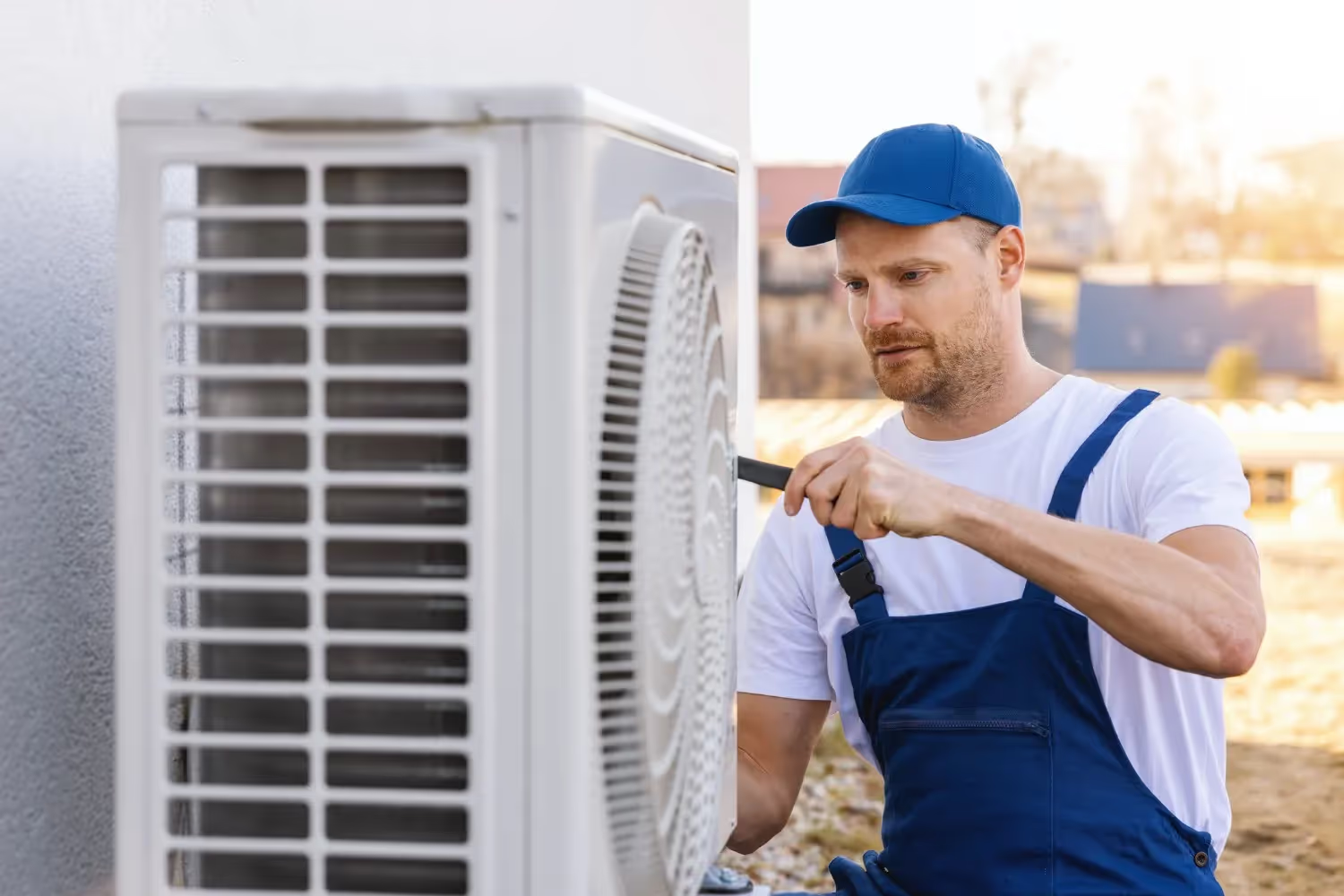
- Complete System Removal: We disconnect and safely remove your existing furnace or heat pump, ensuring all environmentally hazardous materials are disposed of according to EPA regulations.
- Site Preparation: The installation area is inspected and prepped. This includes checking the pad for stability, inspecting the plenum for leaks, and ensuring gas or electrical connections meet current safety codes.
- Ductwork Inspection: A high-efficiency unit cannot perform well with compromised ductwork. We verify that your air distribution system is sealed and sized correctly to handle the airflow of the new equipment.
- Thermostat Calibration: New systems often require modern control interfaces. We install and calibrate smart or programmable thermostats to maximize the efficiency of your new heater.
- Post-Installation Testing: The job is not complete until the system runs through a full cycle. We test airflow, temperature rise, and safety switches to verify optimal performance.
How The Installation Process Works
A professional installation follows a strict technical protocol. Skipping steps or relying on "rules of thumb" rather than precise calculations leads to inefficiency and premature system failure. We adhere to a rigorous process to ensure your heating system operates at peak manufacturer specifications from day one.
Technical Assessment and Sizing
The process begins with a Manual J load calculation. This calculation factors in the square footage of your home, insulation levels, window types, and the specific orientation of the building. In Mathews, where humidity is a factor even in cooler months, correct sizing is critical for moisture control.
- Technicians measure the total volume of air required to heat the home.
- Insulation values in the attic and walls are assessed to determine heat loss.
- Existing ductwork is measured to ensure it can support the Cubic Feet per Minute (CFM) airflow of the new unit.
Equipment Selection and Site Prep
Once the load calculation is complete, we select a unit that matches your specific needs. Whether it is a gas furnace or an electric heat pump, the equipment is chosen for durability and efficiency ratings (AFUE or HSPF).
- Protective coverings are placed on floors and pathways to prevent damage to your home during the transition.
- Power and fuel sources are shut off safely.
- The old refrigerant is recovered if replacing a heat pump, preventing environmental contamination.
System Integration
The new unit is moved into place and leveled. This is a critical step; an unlevel unit can cause drainage issues and premature wear on motor bearings.
- The supply and return plenums are connected and sealed with mastic to prevent air leakage.
- Gas lines (for furnaces) or electrical whips (for heat pumps) are connected and tested for continuity and pressure.
- For heat pumps, the refrigerant lines are brazed, vacuumed to remove moisture, and charged to the precise level required by the manufacturer.
- Condensate drains are installed with proper traps to ensure moisture flows away from the unit and the home foundation.
Final Commissioning
Simply turning the unit on is not enough. We perform a commissioning sequence to benchmark the system’s performance.
- Static pressure is measured to ensure the blower motor is not overworking.
- Temperature rise (the difference between supply and return air temperature) is checked to confirm it falls within the manufacturer’s specified range.
- All safety limits and sensors are tested to ensure the unit shuts down properly in the event of an issue.
When Replacement Beats Repair
Deciding between repairing an aging system and investing in a new installation is a financial and logical decision. While repairs can extend the life of a unit, there is a point of diminishing returns where a new installation becomes the more improved economic choice.
The 50% Investment Rule
A widely accepted metric in the HVAC industry is the 50% rule. If the cost of the repair approaches or exceeds 50% of the value of the system (or the cost of a new system), replacement is the smarter financial move. Continuing to pour money into a depreciating asset often leads to higher cumulative costs over time.
System Age and Efficiency
Heating systems generally have a lifespan of 10 to 15 years. As systems age, their internal components wear down, leading to a natural decrease in efficiency.
- If your heat pump or furnace is over 12 years old, parts may be obsolete or difficult to source, increasing repair downtime.
- Older units often operate at lower efficiency standards. upgrading from a unit with a low AFUE or HSPF rating to a modern system can result in significant monthly energy savings, effectively subsidizing the cost of the new unit over time.
Frequency of Breakdowns
Reliability is a key factor. If you have required multiple repairs in the last two years, the system has likely entered its failure phase.
- Recurring issues with blower motors, compressors, or heat exchangers signal systemic wear.
- "Band-aid" fixes often lead to a catastrophic failure, potentially leaving you without heat during a critical weather event.
Safety Concerns
For gas furnaces, safety is paramount. An aging heat exchanger can develop cracks, leading to the risk of carbon monoxide leaking into the living space.
- If a heat exchanger is cracked, immediate replacement is the only safe option.
- Older electrical connections in heat pumps can become fire hazards if insulation has degraded over time.
Local Considerations for Mathews Residents
Operating a heating system in Mathews, LA, presents unique challenges compared to other regions. The local climate and regulatory environment dictate specific requirements for installation and equipment selection.
Climate and Humidity
While winters in this region are generally mild, they are often damp. This humidity makes the cold feel more penetrating.
- Heat pumps are a popular choice locally because they handle both heating and cooling. However, they must be equipped with proper defrost controls to handle occasional frost accumulation on outdoor coils.
- Proper sizing is essential to ensure the unit runs long enough to dehumidify the air, rather than just heating it quickly and shutting off (short-cycling).
Permitting and Licensing
Compliance with local regulations is not optional. In Louisiana, specific licensing requirements exist for HVAC work, particularly for projects exceeding certain dollar thresholds.
- Projects exceeding $10,000 in labor and materials generally require a specialized license.
- Adhering to these regulations ensures that your installation is recognized by insurance companies and future home inspectors.
- Permits protect the homeowner by ensuring that independent inspectors verify the safety and quality of the installation.
Infrastructure and Utilities
The choice between gas and electric heating often depends on the specific infrastructure available in your neighborhood.
- We assess the capacity of your electrical panel to ensure it can support modern high-efficiency heat pumps or electric furnaces.
- For gas installations, we verify that existing gas lines are sized correctly for the BTU output of the new furnace.
Why Professional Execution Matters
The difference between a system that lasts 15 years and one that fails in five often comes down to the quality of the installation. Martin’s Heating & Air Conditioning focuses on the technical details that ensure longevity and efficiency.
We do not cut corners on the materials used for installation. From the gauge of the wiring to the quality of the brazing rods and the thickness of the duct insulation, every component is selected to withstand the operational demands of the system.
- Certified Expertise: Our team maintains current certifications, ensuring they are up-to-date on the latest building codes and manufacturer technologies.
- Warranty Protection: Professional installation is often a requirement for maintaining manufacturer warranties. DIY or uncertified work can void these warranties instantly.
- Safety First: Dealing with high-voltage electricity and combustible gases requires strict adherence to safety protocols to protect your property and family.
Your home comfort relies on a heating system that performs efficiently and safely when you need it most. Do not leave your installation to chance or rely on temporary fixes that drain your wallet. Secure a reliable, high-performance heating solution today. Call us now to schedule your heating installation consultation.
Schedule Your Heating Installation Today
Restore dependable warmth to your Mathews home with a professionally installed, high-efficiency heating system from Martin’s Heating & Air Conditioning. Whether your current unit is aging, inefficient, or failing altogether, our certified technicians deliver fast, compliant, and precision-engineered installations that keep your family comfortable year-round. Don’t wait for another cold, damp morning—schedule your heating installation consultation today and secure long-lasting comfort and peace of mind.
Talk to a Local HVAC Expert

.avif)