Restoring Comfort When Your HVAC System Quits Unexpectedly
In the sticky heat of Mathews, a malfunctioning AC isn’t just uncomfortable—it is often unbearable and potentially dangerous for vulnerable family members. When humidity levels rise and the temperature spikes, you need a solution that goes beyond a temporary patch. Martin's Heating & Air Conditioning offers rapid, reliable repairs to restore your comfort fast, so contact us immediately to schedule a diagnostic visit or inquire about available financing options.
Our approach focuses on resolving the root cause of the breakdown rather than just treating the symptom. We understand that a broken cooling system disrupts your entire day, which is why we prioritize efficiency and technical accuracy.
- Immediate dispatch and same-day service to address urgent repairs.
- Expert technicians with over 10 years of local experience.
- Transparent pricing with no hidden fees or surprise charges.
All services are backed by a comprehensive warranty and clear permitting assistance to ensure your system remains compliant and operational.
What to Expect From Professional HVAC Repair Services
When your cooling system fails, the immediate goal is to diagnose the issue accurately and implement a fix that lasts. A professional service call involves more than a quick glance at the thermostat. It requires a systematic evaluation of the mechanical, electrical, and airflow components of your HVAC unit. In Mathews, where systems run continuously for months at a time, wear and tear can manifest in complex ways.
A comprehensive repair service begins with a thorough assessment of the system's vital signs. Technicians examine the refrigerant levels, ensuring they meet the manufacturer's specifications. Incorrect refrigerant charges, whether too low due to a leak or too high due to amateur tampering, can severely damage the compressor. The electrical connections are tightened and inspected for signs of corrosion or overheating, which are common issues in humid environments.
The scope of repair often includes the following critical components:
- Capacitor Replacement: The run capacitor is responsible for providing the energy jolt needed to start the compressor and fan motors. When this small component fails, the entire system can seize up.
- Contactor Replacement: This switch controls the flow of electricity to the unit. Pitted or burned contactors can cause the compressor to run intermittently or fail to start altogether.
- Evaporator Coil Cleaning and Repair: Dirty coils restrict airflow and reduce the system’s ability to absorb heat. If the coils are frozen, it usually indicates an airflow blockage or a refrigerant leak that must be addressed immediately.
- Condensate Drain Clearing: In high-humidity areas, the AC removes gallons of water from the air daily. If the drain line clogs with algae or debris, it can trigger safety switches that shut the unit down to prevent water damage.
Technicians arrive in fully stocked trucks, carrying common parts for major brands. This preparation minimizes the need for follow-up visits and ensures that most repairs are completed on the very first trip.
The Step-by-Step Diagnostic and Repair Process
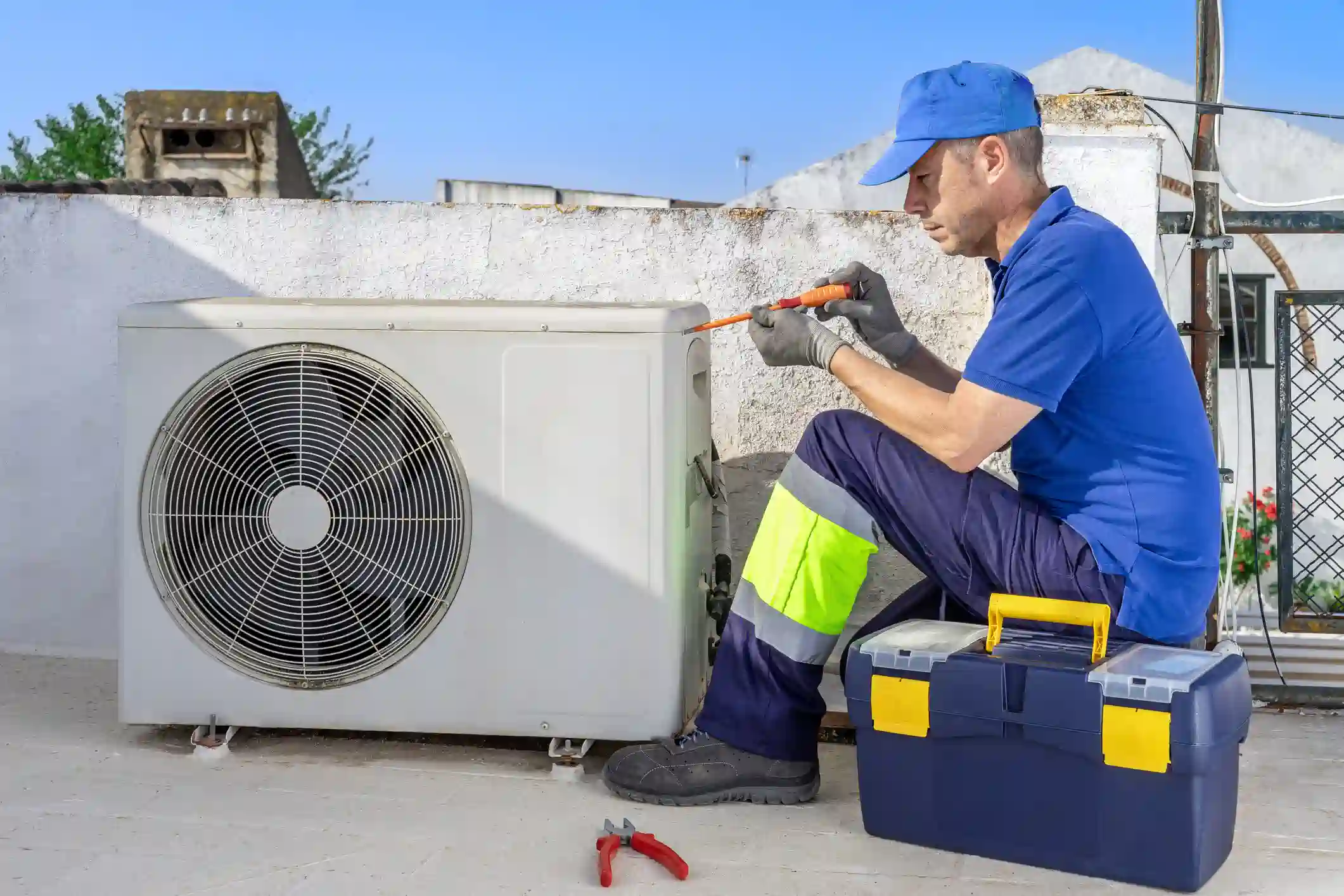
Understanding the repair workflow helps homeowners feel more in control of the situation. A professional HVAC repair follows a logical sequence designed to isolate variables and identify the exact point of failure. This structured approach prevents misdiagnosis, which can lead to unnecessary parts replacement and wasted money.
- Initial System Assessment: The technician begins by asking specific questions about the system's recent performance. Sounds, smells, and cycle lengths provide clues. The thermostat is checked to verify it is communicating correctly with the furnace and condenser.
- Safety and Electrical Inspection: Before touching mechanical parts, power is cut to ensure safety. The technician tests the voltage and amperage of the motors. High amp draws often signal that a motor is struggling and near failure.
- Airflow and Static Pressure Test: Proper airflow is the lifeblood of an HVAC system. Static pressure tests measure the resistance within the ductwork. High static pressure can suffocate the blower motor and reduce cooling efficiency.
- Component Isolation and Testing: Using multimeters and gauges, specific components like the compressor windings, fan blades, and limit switches are tested individually. This isolates the faulty part.
- Quotation and Authorization: Once the problem is identified, you receive a clear, written quote detailing the necessary repairs. No work proceeds without your explicit approval.
- Execution of Repair: The faulty part is removed and replaced with an OEM (Original Equipment Manufacturer) or high-quality equivalent part.
- System Validation: After the repair, the system is restarted and monitored. The technician checks the "delta T" (the temperature difference between the supply and return air) to ensure the unit is cooling effectively.
When to Replace vs. Repair Your HVAC System
One of the most difficult decisions a homeowner faces is determining whether to pour more money into an aging unit or invest in a new system. While repairs are often the most cost-effective immediate solution, there is a tipping point where replacement becomes the smarter financial move. This decision usually relies on three main factors: the age of the unit, the cost of the repair, and the frequency of breakdowns.
Making the right choice depends on analyzing the long-term value. A repair gets the air running today, but a replacement ensures reliability for the next decade.
- The 50% Rule: If the cost of the repair approaches 50% of the value of the system (or the cost of a new unit), replacement is generally recommended. Spending half the cost of a new system on an old one that may break again soon is rarely a good investment.
- Age of the Equipment: The average lifespan of an air conditioner in a hot climate is 10 to 15 years. If your unit is over 12 years old and requires a major repair, such as a compressor replacement, it is usually time to upgrade.
- Refrigerant Type: Older systems utilize R-22 (Freon),
- Energy Efficiency: Modern HVAC systems are significantly more efficient than those manufactured just a decade ago. Replacing a 10 SEER unit with a 16 SEER unit can result in substantial monthly energy savings, which helps offset the installation cost over time — view current promotions today.
- Frequency of Repairs: If you have called for service more than twice in the last year, the system is likely entering the end of its reliable service life. Continuing to patch a failing system often costs more in the long run than a planned replacement.
Navigating Local Climate Challenges and Requirements
Operating an HVAC system in Mathews, LA, presents unique challenges compared to drier or cooler climates. The extreme humidity levels place a heavy latent load on cooling equipment. This means the air conditioner must work harder to remove moisture from the air before it can effectively lower the temperature. Systems that are slightly undersized or struggling with dirty coils will fail to dehumidify, leaving the home feeling clammy and cold rather than comfortable.
Furthermore, the long cooling season means that systems accumulate run hours much faster than the national average. A five-year-old system in this region may have the wear and tear of a ten-year-old system in the north. Regular maintenance and prompt repairs are essential to counteract this intense usage.
- Permitting and Regulations: Significant HVAC work, particularly full system replacements or major modifications to ductwork, often requires local permits. Compliance with these regulations ensures that the installation meets safety codes regarding electrical connections and gas lines. Professional providers handle the permitting process to ensure the homeowner is not liable for code violations.
- Electrical Infrastructure: Summer storms can cause power surges and brownouts. These fluctuations can damage sensitive electronic control boards within modern HVAC units. Installing surge protectors specifically for the AC unit is a recommended precaution in this region.
- Drainage Management: The high volume of condensate water produced requires robust drainage solutions. Drain lines must be properly pitched and trapped to prevent water from backing up into the home or causing ceiling damage.
Why Technical Expertise Matters in Repairs
The difference between a lasting repair and a recurring problem often comes down to the skill level of the technician. Modern HVAC systems are sophisticated pieces of machinery involving complex electronics and high-pressure thermodynamics. Martin's Heating & Air Conditioning employs technicians who are trained to analyze the system as a whole, rather than just swapping parts until the unit turns on.
Correct diagnostics prevent "parts cannon" repair strategies, where technicians guess at the problem at the homeowner's expense. A skilled technician understands superheat and subcooling calculations, which are essential for properly charging a system. They know how to identify airflow restrictions that might be causing a component to fail repeatedly. For instance, a burnt-out blower motor might be the result of undersized return ducts. Simply replacing the motor without addressing the ductwork ensures the new motor will fail prematurely as well.
This level of detail extends to the tools used. Advanced diagnostic tools, such as digital manifolds and thermal imaging cameras, allow for a precision that ensures the system is running at peak efficiency when the truck drives away.
Ensuring Long-Term System Reliability
Ultimately, the goal of any service call is to restore safety and comfort to the home. Ignoring minor noises, short cycling, or weak airflow can lead to catastrophic system failure during the hottest days of the year. By addressing issues early with professional repair services, homeowners in Mathews can extend the life of their equipment and maintain consistent energy bills.
Reliable cooling is not a luxury; it is a necessity for health and home preservation. Trusting your system to experienced professionals ensures that when the repair is done, it is done right. Martin's Heating & Air Conditioning is committed to providing the swift, accurate service required to keep your home cool and your system running efficiently for years to come. Don't wait for a total system breakdown—contact us today to schedule your repair service.
Talk to a Local HVAC Expert
.avif)