
Feeling Overwhelmed by Heat Pump Performance Issues?
Struggling with a heat pump that fails to handle the intense humidity and heat common to the Mathews area leaves your home uncomfortable and your energy bills erratic. You need a reliable, permanent solution that ensures consistent cooling during the long summers and efficient heating during the mild winters. Contact us today to schedule a comprehensive evaluation of your current HVAC system.
- Same-day service availability ensures you are not left waiting in uncomfortable temperatures.
- High-efficiency system options significantly reduce monthly electricity usage and utility costs.
- Expert technical diagnostics ensure the root cause is identified and the installation is performed correctly the first time.
All installations are fully licensed and code-compliant, with flexible financing options available to fit your budget.
Comprehensive Heat Pump Installation and Replacement Solutions
When you invest in a new heat pump, you are purchasing more than just a piece of equipment; you are securing the thermal envelope of your home. A proper installation involves a complete assessment of your property’s heating and cooling load to ensure the selected unit is neither undersized, which leads to constant running and burnout, nor oversized, which causes short-cycling and poor humidity control. Residents in Mathews, LA require systems that can specifically handle high latent heat loads due to the regional humidity.
Our service covers the entire scope of the project from initial load calculation to the final safety check. This includes the safe recovery of refrigerant from your existing unit, the physical removal and disposal of old equipment, and the precise modification of ductwork to accommodate the new air handler. We focus on airflow dynamics. Even the highest-rated heat pump will fail to perform if the ductwork restricts air movement. We verify that your return and supply plenums are sized correctly to maintain static pressure within the manufacturer’s specifications.
Modern heat pumps operate differently than older models. We provide access to variable-speed and dual-stage systems. Unlike single-stage units that run at full capacity or not at all, these advanced systems adjust their output in small increments. This allows the system to run longer at lower speeds, which is the most effective way to remove moisture from the air—a critical requirement for comfort in Louisiana. By maintaining a steady temperature rather than blasting cold air and then shutting off, these systems provide superior comfort and lower energy consumption. Martin's Heating & Air Conditioning ensures that every component, from the outdoor condenser to the indoor evaporator coil, is matched perfectly for optimal efficiency ratings.
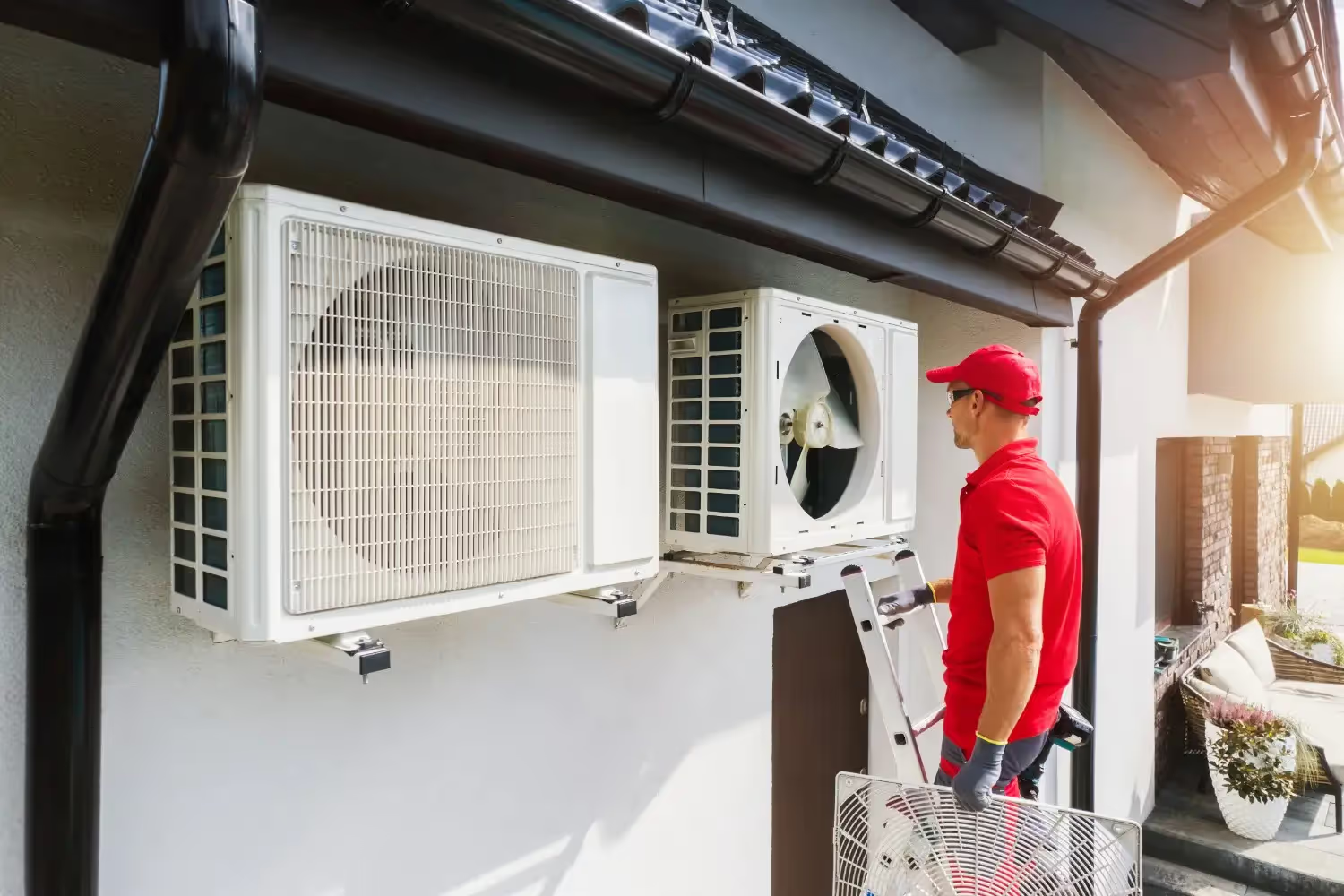
The Installation Process Step-by-Step
A professional installation follows a rigorous, standardized procedure to ensure longevity and performance. We do not skip steps or cut corners. The process is designed to minimize disruption to your home while maximizing the technical accuracy of the setup.
- Site Evaluation and Load Calculation: The process begins with a Manual J load calculation. This determines the exact heating and cooling requirements of your home based on square footage, insulation levels, window types, and orientation. We check the electrical panel to ensure it can support the amperage requirements of the new heat pump and heater kit.
- Safe Removal of Existing Equipment: Technicians shut off power to the unit and connect a recovery machine to the refrigerant lines. EPA regulations strictly govern the handling of refrigerant to prevent environmental contamination. Once the lines are clear, we disconnect the electrical wiring and the copper line set. The old condenser and air handler are removed from the property.
- Positioning and Leveling: The new outdoor unit is placed on a composite pad to dampen vibration and keep it off the ground, protecting it from standing water and debris. We ensure the unit is perfectly level; if a compressor runs on a slant, the internal oil lubrication fails, leading to premature mechanical failure. Inside, the air handler is positioned to align with the existing plenum, ensuring an airtight seal.
- Line Set and Electrical Connection: We install new copper refrigerant lines or thoroughly flush existing lines to remove contaminants. The lines are brazed using nitrogen to prevent oxidation inside the pipes. Electrical connections are tightened to specific torque settings, and a new disconnect box and whip are often installed to ensure safety compliance.
- Vacuum and Charge: Before releasing refrigerant, we pull a deep vacuum on the system (down to 500 microns or lower). This removes all moisture and non-condensable gases from the lines. Moisture inside a heat pump line leads to acid formation, which eats away at the compressor windings. Once the vacuum holds, the refrigerant is released or weighed in according to the line set length.
- System Testing and Calibration: The final step involves firing up the system and testing it in both heating and cooling modes. We measure the temperature drop across the coil, check static pressure, and verify that the thermostat is communicating correctly with the equipment.
Critical Decision Guide: When to Replace vs. Repair
Homeowners often struggle with the decision to repair an aging unit or invest in a replacement. Making the right financial choice requires analyzing the age of the system, the cost of the repair, and the efficiency of the current unit compared to modern standards.
- The 50% Rule: If the cost of the repair approaches 50% of the value of the system, replacement is generally the smarter financial move. For example, replacing a compressor on a 12-year-old unit is rarely cost-effective because other components, such as the fan motor or capacitor, are likely to fail soon after.
- Frequency of Breakdowns: A system that requires multiple service calls in a single year signals that it has reached the end of its reliable lifespan. "Band-aid" repairs often accumulate to exceed the cost of monthly payments on a new, warrantied system.
- Efficiency Ratings (SEER2 and HSPF2): Heat pump technology has advanced rapidly. A unit installed 15 years ago likely has a SEER (Seasonal Energy Efficiency Ratio) rating of 10 or 12. Modern standards require higher efficiency, often starting at SEER2 14.3 or higher. Upgrading from a SEER 10 to a SEER 16 or 18 system can reduce cooling costs by 30% to 50%. In a climate like Mathews, where the AC runs for the majority of the year, these savings offset the installation cost over time — check current promotions today.
- Refrigerant Type: Older systems utilize R-22 (Freon), which has been phased out and is prohibitively expensive to restock. If your R-22 system develops a leak, replacement is the only viable long-term option. New systems use environmentally compliant refrigerants that are readily available and more efficient at heat transfer.
- Comfort and Humidity Issues: If your current unit runs but fails to dehumidify the home, it may be oversized or suffering from compressor inefficiency. A properly sized replacement specifically addresses the "clammy" feeling often experienced in Louisiana homes during the summer months. Martin's Heating & Air Conditioning helps you evaluate these factors to make a data-driven decision.
Local Installation Factors: Permits, Codes, and Utilities
Installing a heat pump in Mathews, LA involves adherence to specific local building codes and an understanding of the regional infrastructure. This is not a plug-and-play appliance; it is a major construction modification to the home.
Permitting and Inspections:
Most system replacements require a mechanical permit from the local municipality. This ensures that the installation meets safety standards regarding electrical connections, gas lines (if dual fuel), and structural integrity. Failure to pull permits can result in fines and complications when selling the home in the future. We handle the administrative work of pulling permits and scheduling required inspections.
Electrical Infrastructure:
Heat pumps, particularly those with electric resistance backup heating strips, place a significant load on your home’s electrical panel. In older homes in the area, the panel may not have the capacity to handle a modern heat pump with a 10kW or 15kW backup heater. We assess your breaker panel and service entrance to determine if an upgrade is necessary to operate the system safely without tripping breakers.
Condensate Management:
Given the high humidity in the region, heat pumps generate a substantial amount of condensate water during the cooling cycle. Local codes dictate how this water must be drained to prevent property damage. We install primary drain lines with cleanouts and secondary safety switches. If the primary drain clogs with algae—a common issue in the South—the safety switch shuts the unit down before water overflows into your ceiling or floors.
Corrosion Protection:
For properties located near water or in areas with high salt content in the air, standard coils can corrode quickly. We recommend systems with epoxy-coated coils or all-aluminum evaporator coils that resist oxidation and leaks, extending the life of the unit in the local environment.
Why Professional Installation Affects System Longevity
The quality of the installation is more important than the brand of the equipment. Industry studies consistently show that improper installation reduces system efficiency by up to 30% and is the leading cause of premature compressor failure.
- Warranty Protection: Manufacturers require proof of professional installation to honor warranties. If a system is installed by an unlicensed individual, the 10-year parts warranty is often voided immediately. We ensure all warranty registration paperwork is filed correctly so you are protected.
- Ductwork Integrity: A new heat pump cannot overcome leaky ductwork. Professional installation includes inspecting the ducts for leaks and disconnects. Sealing the ducts ensures that the conditioned air you are paying for actually reaches the living spaces rather than leaking into the attic or crawlspace.
- Proper Refrigerant Charge: An undercharged unit freezes over; an overcharged unit destroys the compressor. We use digital gauges and temperature clamps to measure subcooling and superheat, dialing in the refrigerant charge to the exact ounce required for peak performance.
- Safety Assurance: Heat pumps involve high-voltage electricity and high-pressure gases. Professional technicians follow strict lock-out/tag-out procedures and safety protocols to protect your family and your property during the installation process.
Securing Your Home Comfort
Choosing the right partner for your heat pump installation determines the reliability of your heating and cooling for the next decade. A focus on technical precision, code compliance, and proper sizing ensures that your home remains cool during the humid summers and warm during the winter without excessive energy waste. Martin's Heating & Air Conditioning delivers the expertise required to maximize the lifespan and efficiency of your new system. Take control of your home’s climate today. Contact us to schedule your heat pump consultation.
Talk to a Local HVAC Expert

.avif)