Struggling with Heating Issues in High Humidity?
Battling the Mathews, LA, heat and humidity is difficult enough, but dealing with a malfunctioning heater during a sudden cold snap can be frustrating and uncomfortable. Quick, reliable repair services ensure your home remains comfortable year-round, regardless of how unpredictable the weather becomes; contact us to schedule your diagnostic visit or discuss financing options immediately.
When your heating system fails, you need more than a quick patch; you need a comprehensive solution that addresses the root cause. Martin's Heating & Air Conditioning provides the technical expertise required to diagnose and resolve HVAC issues efficiently.
- Immediate service available—no need to sweat out a longer wait or freeze during a cold front.
- Clear, upfront pricing and detailed diagnostics with each visit so you understand exactly what is broken.
- Efficiency-first repairs to reduce future energy costs and enhance overall system performance.
All services are backed by a warranty, and financing options are available for major repairs or system replacements.
What You Get Today: Quick, Honest HVAC Services
When a heating system goes down, homeowners need a clear path to restoration, not vague promises. The primary goal of a service visit is to return the home to a safe, comfortable temperature as quickly as possible while ensuring the equipment operates safely. In Mathews, where high humidity persists even in cooler months, a heating malfunction often leads to clammy, uncomfortable indoor air quality.
Upon arrival, the focus shifts immediately to identifying the mechanical or electrical failure. You receive a technician equipped with a fully stocked vehicle, ready to handle the majority of common heating repairs on the spot. The service includes a thorough safety check to ensure that gas furnaces are not leaking carbon monoxide and that heat pumps are cycling correctly without straining the electrical grid.
This service prioritizes transparency. Before any wrench is turned or part is replaced, you receive a full explanation of the failure. This includes a breakdown of which component failed, why it failed, and what options exist to fix it. Whether the system is an older gas furnace or a modern high-efficiency heat pump, the objective remains the same: restore heat, verify safety, and improve efficiency.
How Our Repair Services Work: Quick Response, Accurate Diagnostics
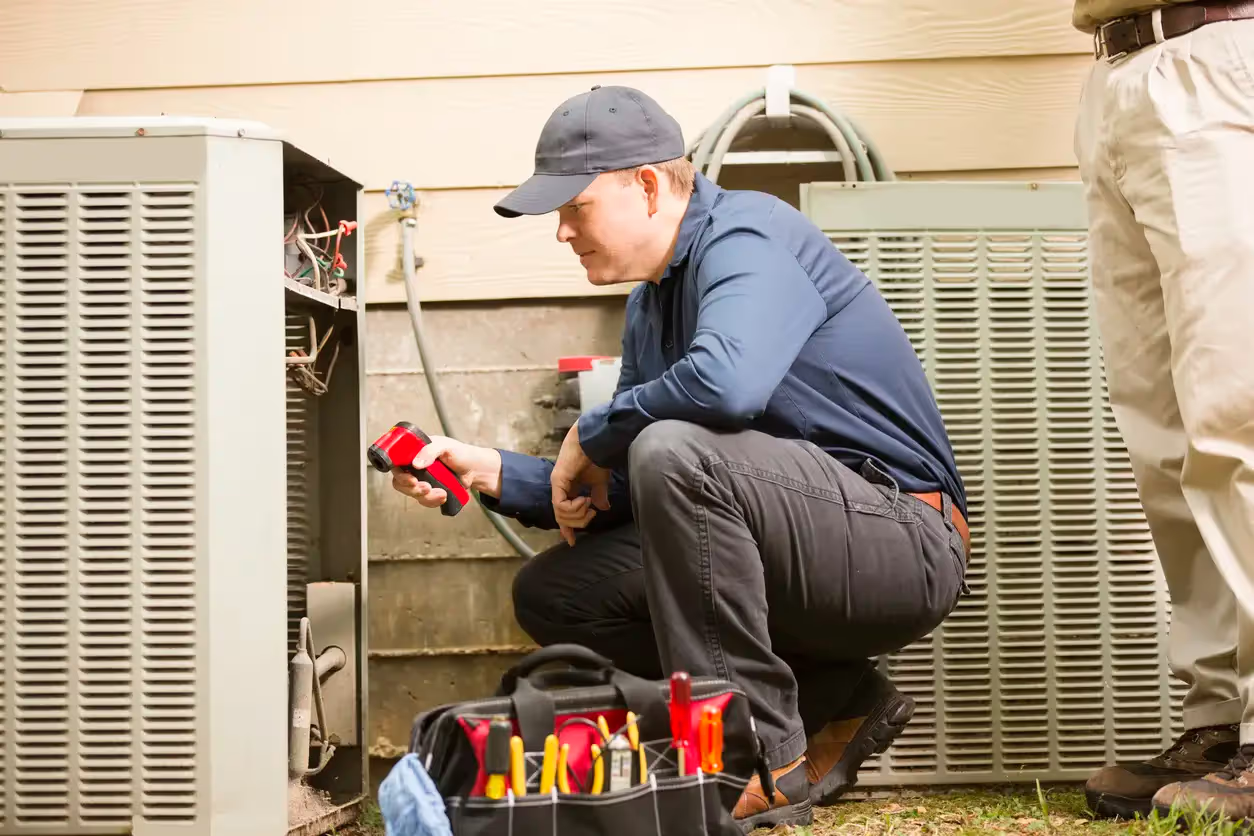
A structured repair process eliminates guesswork and ensures that the fix applied today holds up for the rest of the season. Heating systems are complex machines involving airflow, combustion, and electrical signals. A systematic approach ensures no underlying issues are missed.
- Initial Assessment and Safety Inspection: First, the technician arrives and performs a safety sweep of the unit. This involves checking for gas leaks, inspecting electrical connections for signs of overheating, and verifying that the thermostat is communicating correctly with the furnace or air handler. Safety is the priority before testing performance.
- System Diagnostics and Troubleshooting: Next, advanced diagnostic tools are used to pinpoint the failure. This is not just about finding a broken part; it is about finding the cause. For example, if a blower motor has failed, the technician checks the static pressure in the ductwork to see if airflow restrictions caused the motor to burn out. This step often involves using multimeters to check voltage and amperage, as well as manometers to measure gas pressure.
- Review of Findings and Repair Execution: Once the issue is isolated, the findings are presented clearly. You are shown the failed component and given a straightforward explanation of the necessary repair. With approval, the technician proceeds to replace the part using high-quality components designed to meet or exceed OEM specifications.
- Performance Validation and Calibration: Finally, after the repair is complete, the system is not just turned on; it is calibrated. The technician measures the temperature rise—the difference between the air entering the return and the air leaving the supply vents—to ensure the unit is heating within the manufacturer’s specified range. The cycle is monitored to ensure the unit starts, runs, and shuts down smoothly.
Diagnosing Common Heating Failures
Understanding why heating systems fail helps in making informed decisions about care and maintenance. In the specific climate of Mathews, distinct environmental factors contribute to equipment wear and tear.
Ignition Control Malfunctions
Modern furnaces rely on electronic ignition systems rather than standing pilot lights. These igniters can crack or burn out over time. Similarly, flame sensors, which act as a safety device to confirm a fire is present, can become coated in carbon or oxidation. When this happens, the furnace may turn on for a few seconds and then immediately shut down as a safety precaution.
Airflow Restrictions and Humidity
High humidity levels can cause dust and debris to stick to filters and evaporator coils more stubbornly than in dry climates. If a filter becomes clogged, the furnace must work harder to pull air through the system. This restriction can cause the heat exchanger to overheat, triggering a "high limit switch" that shuts the system down to prevent a fire.
Thermostat and Control Board Issues
The thermostat acts as the brain of the HVAC system. If the thermostat loses its calibration or if the wiring connecting it to the main control board degrades, the heater will not receive the signal to turn on. Control boards can also suffer from solder joint failures due to vibration and thermal expansion and contraction over years of use.
Heat Pump Reversing Valve Failures
For homes utilizing heat pumps, the reversing valve is a critical component that switches the unit from cooling mode to heating mode. If this valve gets stuck, the system may blow cold air even when the thermostat is set to heat. This is a common issue in regions where the AC runs for the majority of the year, causing the valve to stick in the cooling position.
When Replacement Beats Repair: Utilizing the $5000 Rule
Deciding between repairing an aging unit and investing in a new system is a financial calculation. To remove emotion and guesswork from this decision, industry professionals often recommend utilizing the "$5000 Rule."
This rule provides a mathematical baseline for the decision. You simply multiply the age of the equipment by the estimated cost of the repair. If the total exceeds $5,000, replacement is generally the more financially sound investment. If the total is less than $5,000, repairing the unit is typically the better option.
Scenario A: Repair is Viable
If a furnace is 5 years old and requires a $600 repair, the calculation is 5 x 600 = 3,000. Since $3,000 is less than the $5,000 threshold, repairing the unit makes sense. The system likely has many years of service life remaining.
Scenario B: Replacement is Recommended
If a heat pump is 12 years old and the compressor fails, costing $1,500 to replace, the calculation is 12 x 1,500 = 18,000. This far exceeds the threshold. In this case, putting money into a repair is likely throwing good money after bad, as other components are liable to fail soon.
Beyond this rule, consider energy efficiency. Older units typically have lower AFUE (Annual Fuel Utilization Efficiency) or HSPF (Heating Seasonal Performance Factor) ratings. Replacing a 15-year-old unit with a modern, high-efficiency model can result in significant monthly savings on utility bills, which factors into the long-term ROI of replacement — view our HVAC promotions today.
Local Notes on Heating Services in Mathews, LA
Operating heating equipment in Mathews presents unique challenges due to the regional climate. The area experiences hot, humid summers and mild winters with occasional sharp cold spells. This fluctuation creates specific stressors for HVAC systems that differ from those in dryer or colder climates.
Humidity Management is Critical
Even in winter, humidity levels can remain high. A properly functioning heating system should help moderate indoor humidity. However, if ductwork in unconditioned spaces (like attics or crawlspaces) is not properly insulated, condensation can form. This leads to moisture damage and potential biological growth within the system. Technicians check ductwork integrity during repairs to prevent this.
The "Short Cycling" Phenomenon
Because winters are mild, heating systems may not run for long durations. Oversized units are a common problem in this region; if a furnace is too powerful for the home, it will heat the space too quickly and shut off. This "short cycling" causes excessive wear on the ignition system and blower motor. Repairs often involve adjusting blower speeds or gas pressure to allow for longer, more efficient run times.
Permitting and Code Compliance
Local building codes dictate specific requirements for HVAC repairs and replacements, particularly concerning gas lines and electrical connections. While minor repairs typically do not require permits, major component replacements or system change-outs do. Professional service providers handle the permitting process to ensure all work complies with local safety standards, protecting the homeowner from liability and ensuring insurance compliance.
Why Choose Us? Experience the Difference with Proven Local Expertise
Selecting a service provider for heating repair requires finding a team that combines technical proficiency with a deep understanding of local infrastructure. Martin's Heating & Air Conditioning employs technicians who are rigorously trained to handle the specific equipment brands and configurations found in this region.
- Comprehensive Diagnostics: The service provided goes beyond simply swapping parts. The team utilizes advanced diagnostic equipment to read error codes, measure system pressures, and analyze electrical loads. This scientific approach ensures that the root cause of the problem is solved, preventing recurring breakdowns.
- Truck Stock and Availability: Time is of the essence when the heat goes out. Service vehicles are stocked with a wide inventory of universal parts, control boards, sensors, and motors. This logistical preparation maximizes the chances of completing the repair in a single visit, restoring comfort without unnecessary delays for parts ordering.
- Respect for Property and Safety: Technicians treat your home with the utmost care. This includes using drop cloths to protect flooring, wearing shoe covers, and ensuring the work area is left cleaner than it was found. Furthermore, strict adherence to safety protocols regarding gas and electricity ensures the well-being of the household during and after the repair.
- No-Nonsense Communication: You receive direct answers. There is no technical jargon used to confuse the situation. The condition of your system, the nature of the failure, and the cost of the repair are communicated clearly. This allows you to make decisions with confidence, knowing you have all the facts at hand.
Don't let a heating failure compromise your comfort or safety. Secure a professional assessment and get your system running efficiently again. Schedule your heating repair service now.
Get Expert Heating Repair Today
Restore comfort quickly with fast, accurate heating repair from Martin’s Heating & Air Conditioning. Whether your system is short-cycling, blowing cold air, or refusing to start during a sudden Mathews cold snap, our certified technicians deliver precise diagnostics, transparent pricing, and reliable same-day solutions to keep your home safe and comfortable. Don’t wait for a minor issue to turn into a costly breakdown—schedule your heating repair service today and get your system running smoothly again.
Talk to a Local HVAC Expert
.avif)