
House Rewiring in Lockport, LA
House rewiring in Lockport to improve safety, reliability, and code compliance. Contact Martin's Heating & Air for expert service and fast scheduling.
Solving Your Home's Electrical Infrastructure Concerns
Outdated wiring creates significant safety hazards, leads to frequent breaker trips, and results in frustratingly high utility bills due to inefficient electrical distribution in older properties. Contact us today or inquire about our flexible financing options to secure your home’s electrical future.
Martin's Heating & Air Conditioning provides expert house rewiring services designed to modernize your infrastructure while prioritizing safety and energy efficiency. Homeowners in Lockport often face the challenge of adapting modern appliances to electrical systems installed decades ago. We bridge that gap with professional service that addresses the root cause of electrical instability rather than offering temporary patches.
- Comprehensive cost estimates provided swiftly to help you plan your budget accurately.
- Licensed professionals handle every aspect of the rewiring process, utilizing techniques that guarantee minimal drywall disruption.
- Immediate service slots are available to address urgent safety concerns or insurance mandates.
All work performed is fully licensed, compliant with local codes, and backed by a satisfaction guarantee to give you total peace of mind.
Detailed Service Overview: What to Expect and When
Rewiring a home is a substantial investment in safety and property value, but it is also a complex project that requires clear expectations regarding scope and timeline. When you commit to a house rewiring project, you are not simply swapping out old cables for new ones; you are upgrading the central nervous system of your home. This process involves replacing the electrical panel, grounding the system properly, and running new, code-compliant wire to every outlet, switch, and fixture.
Modern households demand much more power than homes built thirty or forty years ago. Today, a standard rewiring service includes the installation of dedicated circuits for high-demand appliances. This ensures that your HVAC system, kitchen appliances, and laundry units operate on stable currents without overloading the system. Furthermore, the service includes the installation of hardwired smoke and carbon monoxide detectors, bringing the property up to current safety standards.
The timeline for a complete house rewire varies based on the size of the property and the accessibility of the wiring routes. Generally, a full rewire can take anywhere from three days to a full week. However, the goal is always to restore power to essential areas of the home at the end of each workday so that the home remains habitable. Most projects are executed in phases to ensure that you are never left completely without power for an extended period.
Homeowners often worry about the mess associated with electrical work. A professional approach focuses on surgical precision. Rather than tearing down entire walls, technicians utilize crawlspaces, attics, and basements to fish wires through wall cavities. This method significantly reduces the need for patching and repainting after the electrical work is complete. You receive a fully modernized system with a focus on preserving the aesthetic integrity of your interior.
Your Rewiring Process: Step-by-Step Guide
Understanding the sequence of events helps reduce anxiety during a major home improvement project. The rewiring process is methodical, ensuring that every connection is secure and every circuit is balanced.
Initial Assessment and Load Calculation
The process begins with a detailed inspection of the existing system. Technicians calculate the electrical load requirements of your specific household to determine the correct size for the new electrical panel and the gauge of wire needed for various circuits.
Permitting and Preparation
Before any physical work begins, the necessary electrical permits are secured from local authorities. This ensures that all work will be inspected and certified as code-compliant. The team then prepares the work area, laying down floor protection and covering furniture to prevent dust accumulation.
Removal and Isolation
The old system must be safely disconnected. In some cases, old wiring is removed completely. In instances where removal would cause excessive damage to the structure, the old wiring is disconnected at both ends and rendered inert, leaving it buried safely in the walls while new wiring takes its place.
Circuit Rough-In
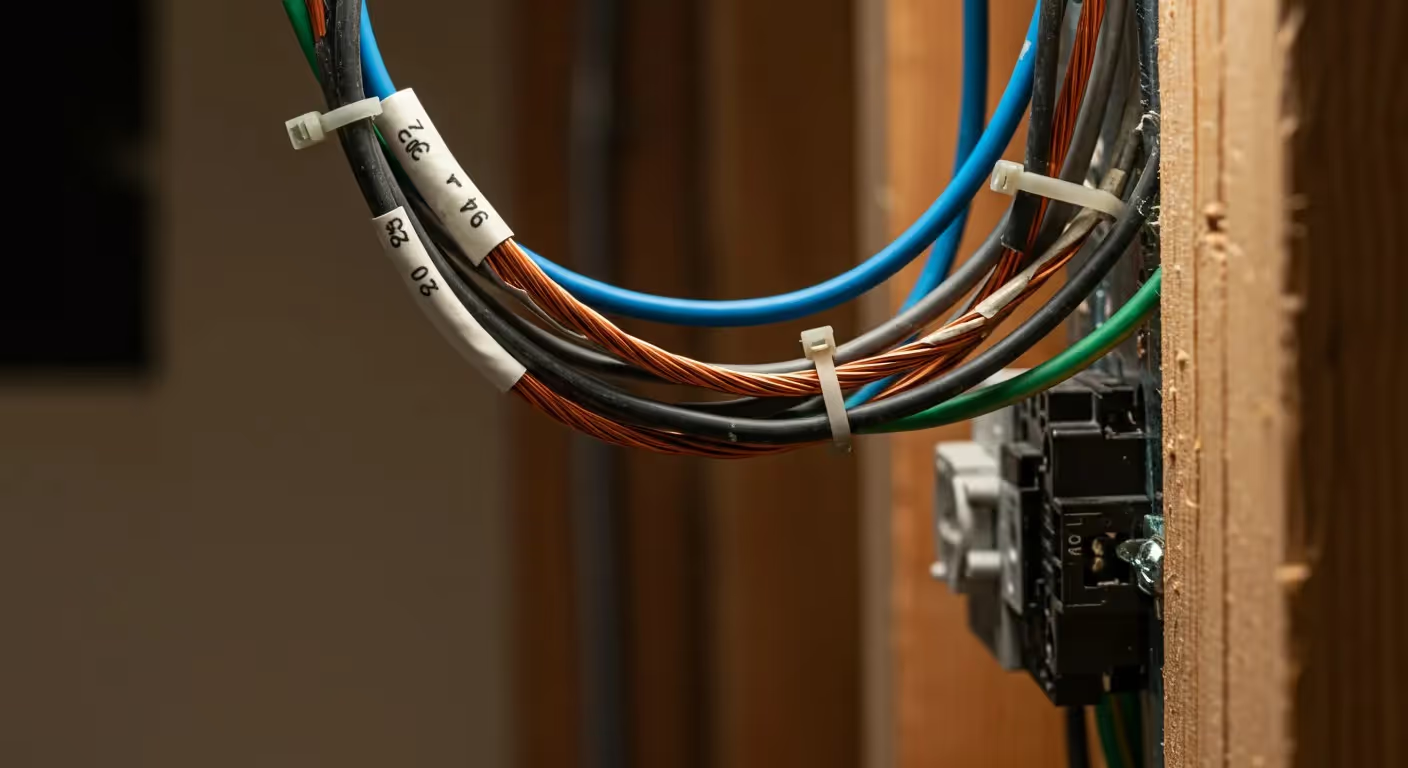
Technicians begin running new non-metallic (NM) cable, commonly known as Romex, throughout the home. This involves drilling small access holes where necessary and fishing wires through studs, ceilings, and floor joists. New device boxes are installed for outlets and switches.
Panel Installation and Termination
The main service panel is upgraded to handle the modern amperage requirements, typically 200 amps for a standard family home. Wires are routed into the panel, stripping and connecting them to the appropriate breakers. Grounding rods are driven into the earth to ensure the entire system is properly grounded.
Device Installation and Trim-Out
Once the wiring is in place, receptacles (outlets), switches, and light fixtures are connected. This phase includes the installation of GFCI outlets in wet areas like kitchens and bathrooms, and AFCI breakers to prevent electrical fires caused by arcing.
Testing and Inspection
Every circuit is tested for continuity and proper voltage. Polarity checks ensure that hot and neutral wires are not reversed. Finally, a municipal inspector reviews the work to close out the permit, verifying that the home meets all safety regulations.
Patching and Cleanup
Any small access holes created to run wire are patched. The workspace is cleaned thoroughly, removing wire clippings and dust, leaving the home ready for normal use.
Deciding Between Repair and Complete Rewiring
Determining whether to repair a specific electrical issue or invest in a full rewire is a critical decision for homeowners. While repairs are suitable for isolated incidents, they often fail to address systemic issues inherent in aging infrastructure.
A complete rewire is necessary when the existing wiring insulation has degraded. In older properties, you may find cloth-covered wiring or knob-and-tube systems. These outdated materials lack the grounding necessary for modern safety and are prone to overheating. If the insulation crumbles when touched, repair is not a viable option; the system must be replaced to prevent fire hazards.
Aluminum wiring, common in homes built during the mid-20th century, presents another specific trigger for replacement. Aluminum expands and contracts with heat more than copper, leading to loose connections and a high risk of arcing. While pigtailing repairs can temporarily mitigate this, Martin's Heating & Air Conditioning recommends replacement for long-term safety and insurance compliance.
If you find yourself relying on extension cords and power strips because there are not enough outlets, or if you are unable to run a microwave and a vacuum cleaner simultaneously without tripping a breaker, the issue is capacity. Adding a single circuit is a repair; however, if the main panel is full and the service entrance cable is undersized, a full upgrade is required.
Renovation projects offer the ideal time to rewire. If you are planning to remodel a kitchen or bathroom, it is cost-effective to update the wiring while walls are open. Leaving old wiring in place behind new cabinetry or tile creates a weak link that could require destructive access later.
Finally, consider the resale value and insurance implications. Many insurance carriers will deny coverage or charge exorbitant premiums for homes with known active knob-and-tube or ungrounded systems. A certificate of electrical compliance following a rewire can lower premiums and significantly increase the marketability of the home.
Local Regulations and Seasonal Advice for Effective Rewiring
Operating in Lockport requires a specific understanding of the local environment and regulatory landscape. The humid subtropical climate poses unique challenges for electrical components. High humidity levels can accelerate corrosion on panel bus bars and outdoor disconnects. When rewiring homes in this region, it is essential to use weather-rated enclosures and anti-oxidant compounds on connections to prevent premature failure.
Seasonality also dictates the urgency and timing of electrical projects. The Atlantic hurricane season brings the threat of severe storms and extended power outages. A rewiring project is the opportune moment to install a generator interlock kit or a transfer switch. This allows homeowners to safely connect portable generators to their main panel during outages, powering lights, refrigerators, and window AC units without running dangerous extension cords through windows.
Local codes in Lafourche Parish strictly follow the National Electrical Code (NEC), but local amendments may apply regarding elevation for flood zones. Electrical panels and outdoor units must often be mounted above projected flood levels to ensure safety during high water events.
Permitting is a non-negotiable aspect of the work. Unpermitted work can lead to fines and complications when selling the property. Professional services handle the logistics of filing for permits with the local building department, scheduling the rough-in inspection, and coordinating the final power reconnection with the utility provider. This administrative handling ensures that the homeowner is never left navigating bureaucratic red tape.
Why Choose Professional Rewiring Services?
Safety is the paramount reason to choose professional services for whole-house rewiring. Electrical work is not a DIY endeavor; the risks of electrocution and fire are severe. Professional electricians carry the liability insurance and worker’s compensation coverage necessary to protect the homeowner from financial risk during the project.
Beyond safety, professional execution ensures efficiency. An experienced team can map out the most logical routes for wiring, reducing the amount of material used and the time spent on installation. They understand how to balance loads across the two phases of the electrical panel, ensuring that the lights don't dim when the air conditioner kicks on.
Quality of materials is another differentiator. Licensed contractors have access to supply houses that stock professional-grade panels, breakers, and devices that are superior to the consumer-grade products found at big-box retailers. These components are built to last longer and withstand higher thermal stresses.
Furthermore, a professional rewire increases the functional value of the home. Technicians can advise on the placement of outlets to match modern furniture layouts and suggest upgrades like USB-integrated receptacles or whole-home surge protection. This consultative approach transforms the electrical system from a hidden utility into a feature that enhances daily living.
Securing Your Home’s Electrical Future
Upgrading your home’s wiring is one of the most proactive steps you can take to ensure the safety of your family and the longevity of your property. It eliminates the fire risks associated with aging insulation, provides the clean power necessary for sensitive electronics, and ensures your home can handle the electrical demands of the future. Martin's Heating & Air Conditioning is committed to delivering this high level of service with precision and care.
Don’t wait for a flickering light to turn into a system failure. Ensure your home meets modern safety standards and operational efficiency. Contact our team today to schedule your comprehensive electrical assessment and take the first step toward a safer, more reliable home.
Talk to a Local HVAC Expert

.avif)