
Struggling with HVAC Issues in High Humidity?
In Lockport's high humidity, HVAC failures can be frequent and frustrating, often leaving homeowners battling uncomfortable indoor temperatures and excessive moisture buildup. You need a reliable service that responds quickly and effectively to restore your environment; contact us today to schedule your comprehensive maintenance or repair service.
- Get 24-hour emergency HVAC services whenever a breakdown occurs.
- Trust in over 30 years of local expertise to handle complex climate challenges.
- Benefit from comprehensive maintenance to extend your system's life and improve efficiency.
All services are backed by full warranties and competitive pricing to ensure your investment is protected. Martin's Heating & Air Conditioning understands the urgency of climate control in this region and provides the swift, decisive action required to keep your system running optimally.
Reliable HVAC Support When You Need It Most
The primary function of your heating and cooling system extends beyond simple temperature control; it is the first line of defense against the persistent moisture that characterizes the local climate. When a system falters, the indoor air quality degrades rapidly, leading to clammy surfaces, potential mold growth, and an uncomfortable living environment. Reliable support means having access to technicians who understand how specific weather patterns in Lockport impact mechanical components.
Maintenance is not merely a suggestion; it is a mechanical necessity for systems operating in humid subtropical climates. High moisture levels place a significant load on your air conditioner’s latent cooling capacity. If the unit is dirty or undercharged, it struggles to remove water vapor from the air, causing the compressor to work harder and longer. This increased runtime accelerates wear and tear, leading to premature component failure.
Our approach focuses on preventative care that anticipates these failures before they disrupt your day. By addressing the root causes of system stress—such as clogged condensate drains, dirty coils, and electrical variances—we reduce the likelihood of emergency breakdowns. However, when immediate intervention is required, 24-hour availability ensures that you are never left without climate control for extended periods.
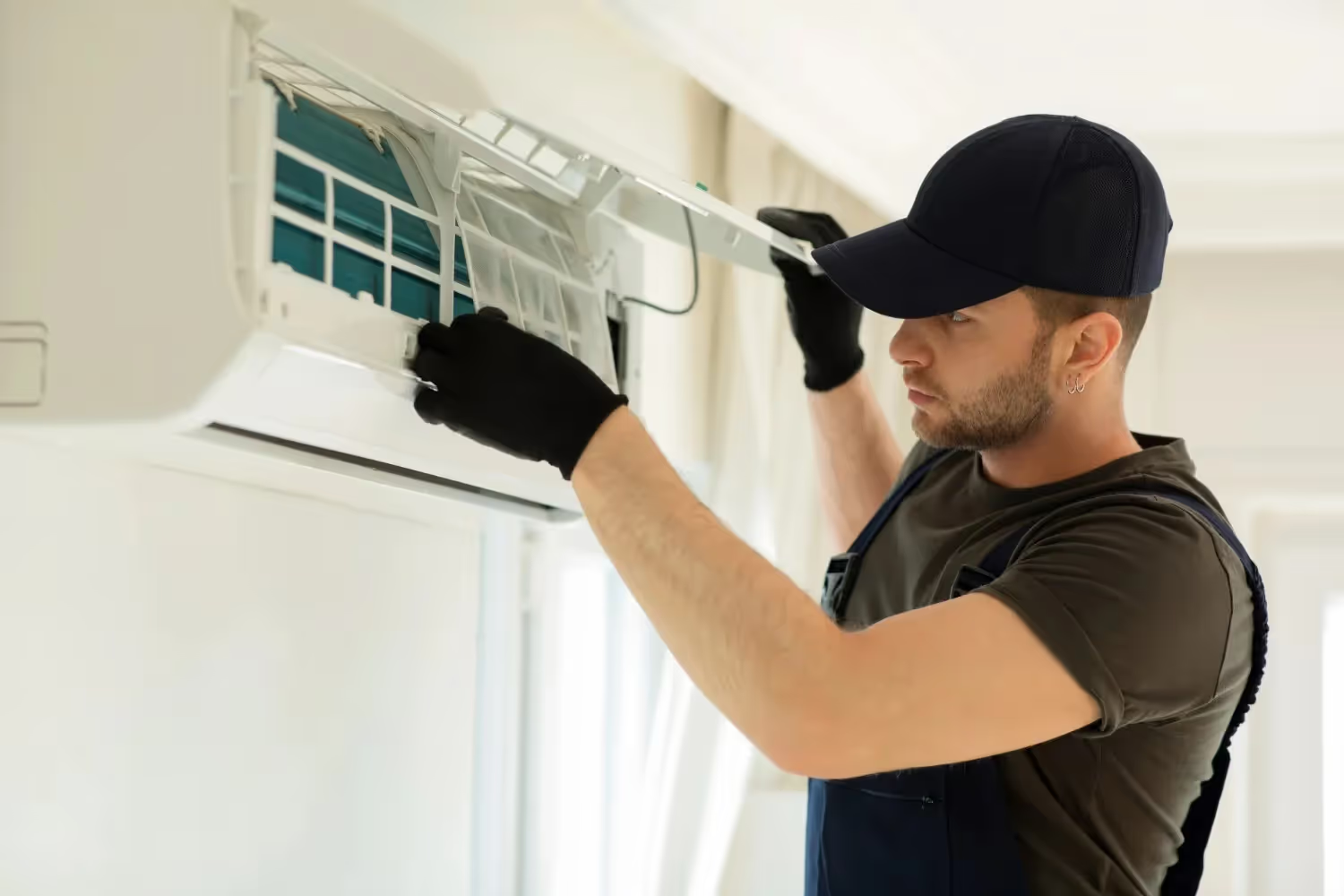
Today's HVAC Services: Scope, Timelines, and Inclusions
When you schedule a maintenance visit or a service call, knowing exactly what occurs helps you understand the value provided. A professional tune-up is a rigorous inspection and calibration process designed to bring your system back to factory specifications. This process typically takes between one to two hours, depending on the complexity of the system and the accessibility of the units.
During a standard maintenance visit, technicians perform a comprehensive checklist of tasks:
- Evaporator and Condenser Coil Inspection: Technicians clean these coils to ensure maximum heat transfer. Dirty coils act as insulators, preventing the system from cooling effectively and driving up energy costs.
- Refrigerant Level Check: Proper refrigerant charge is critical. Technicians measure pressures and temperatures to detect leaks or improper charging, which can damage the compressor.
- Electrical Component Testing: Capacitors, relays, and contactors are tested for proper voltage and amperage. Loose connections are tightened to prevent arcing and electrical fires.
- Condensate Drain Cleaning: In high-humidity areas, algae and sludge can block drain lines. Technicians flush these lines to prevent water damage and overflow.
- Thermostat Calibration: Ensuring the thermostat reads temperature accurately prevents short-cycling and uneven cooling.
- Air Filter Replacement: While simple, changing the filter is vital for airflow. Technicians assess if the current filter type is appropriate for the system’s static pressure capabilities.
- Lubrication of Moving Parts: Motors and bearings are lubricated to reduce friction and eliminate grinding noises.
Following the service, you receive a detailed report of the system’s status. This includes any immediate repairs needed, potential future issues to watch, and an assessment of the overall efficiency. This transparency allows you to make informed decisions about your property’s mechanical needs without pressure.
Your Guide to HVAC Installation and Replacement
There comes a point where maintenance can no longer compensate for an aging or failing system. Installation and replacement are significant capital improvements that require precise planning and execution. The process begins with a technical assessment, not just a quote. A system that is too large will short-cycle and fail to dehumidify, while a system that is too small will run continuously without reaching the set temperature.
The installation process follows a structured timeline to ensure minimal disruption:
- Load Calculation: Technicians perform a Manual J load calculation. This accounts for square footage, insulation levels, window orientation, and local climate data to determine the exact BTU capacity required.
- Ductwork Inspection: Before a new unit is installed, existing ductwork is examined for leaks, damage, or sizing issues. Putting a high-efficiency unit on bad ductwork wastes energy.
- System Selection: Options are presented based on efficiency ratings (SEER2), noise levels, and budget. This includes single-stage, two-stage, or variable-speed systems.
- Safe Removal: The old equipment is disconnected and removed. Refrigerant is recovered according to EPA regulations to prevent environmental contamination.
- Installation and Brazing: New equipment is set in place. Refrigerant lines are brazed (welded) using nitrogen purging to prevent internal oxidation.
- Vacuum and Charge: The system is pulled to a deep vacuum to remove moisture and non-condensables before being charged with the precise amount of refrigerant.
- Commissioning: The system is started and tested. Static pressure, temperature split, and airflow are measured to verify the installation meets the manufacturer's performance standards.
This methodical approach ensures that the warranty is valid and that the equipment performs as rated. Improper installation is the leading cause of premature HVAC failure, making professional execution critical.
Deciding Between HVAC Repair and Replacement
Homeowners often struggle with the decision to repair a broken unit or invest in a replacement. This decision should be based on data and financial logic rather than emotion. Several factors come into play, including the age of the unit, the cost of the repair, and the frequency of past breakdowns.
A common industry guideline used to aid this decision is the "$5,000 Rule." Multiply the age of the equipment by the estimated cost of the repair. If the total exceeds $5,000, replacement is generally the more prudent financial choice. For example, if a 12-year-old unit needs a $500 repair (12 x 500 = 6,000), replacement is recommended because the unit is nearing the end of its useful life and will likely suffer another failure soon.
Consider the following decision criteria:
- Age of System: Most heat pumps and air conditioners last between 10 and 15 years in coastal or humid environments. If your system is over 10 years old, major repairs are rarely cost-effective.
- Freon Type: If your system utilizes older R-22 refrigerant, repair costs will be exorbitantly high due to the phase-out of this chemical. upgrading to a system with R-410A or newer refrigerants is advisable.
- Efficiency Gains: Modern systems are significantly more efficient than those manufactured a decade ago. The savings on monthly utility bills can often offset a portion of the monthly financing cost for a new system.
- Comfort Issues: If the current system results in hot spots, high humidity, or excessive noise, a repair will not solve these design or age-related deficiencies.
- Frequency of Repairs: If you have required repairs more than twice in the last two years, the system is becoming a "money pit."
Martin's Heating & Air Conditioning provides honest assessments during these critical decision moments. We outline the realistic lifespan of a repair versus the long-term benefits of a new system, allowing you to choose the path that fits your budget and future plans for the home.
Lockport's Climate and Your HVAC Needs
The local climate in Lockport dictates specific requirements for HVAC maintenance and operation. This region experiences a humid subtropical climate, characterized by hot summers and mild winters. However, the defining feature is the high humidity levels present throughout the year, with significant rainfall occurring in spring and late summer.
This moisture load presents unique challenges:
- Dehumidification Priority: Your AC must run long enough to pull moisture out of the air. Oversized units turn off too quickly, cooling the air but leaving the humidity, which results in a cold, clammy feeling.
- Corrosion Risks: High humidity and proximity to water can accelerate rust and corrosion on the outdoor condenser coils and internal electrical components.
- Drainage Issues: During wet periods, the ground may be saturated. It is vital to ensure that the condensate drain line flows freely and moves water away from the foundation, as natural evaporation is slower during rainy seasons.
- Mold Prevention: Biological growth thrives in dark, damp environments like ductwork and evaporator coils. Regular cleaning and the use of UV lights or improved filtration are often necessary to maintain indoor air quality.
Understanding these environmental factors helps in selecting the right equipment and maintenance schedule. Systems here require more frequent filter changes and drain line cleanings than those in arid climates. Ignoring the humidity factor often leads to "Dirty Sock Syndrome" (mold on coils) and water damage to ceilings or floors from overflow. The local climate in Lockport dictates that specialized care is often necessary to combat these ongoing moisture issues.
Why Choose Us: Our Track Record and Your Benefits
Selecting a service provider involves looking for indicators of stability, competence, and reliability. You need a partner who is established in the community and has a proven history of solving the specific thermal problems found in this area.
- 24-Hour Availability: HVAC problems rarely happen at convenient times. Access to round-the-clock service means you are protected during weekends, holidays, and late nights.
- Licensing and Insurance: Professional technicians operate under full licensure and insurance. This protects your property and ensures that all work complies with local building codes and safety regulations.
- Comprehensive Diagnostics: We do not guess. We use advanced diagnostic tools to identify the exact source of the problem, ensuring you pay only for necessary repairs.
- Inventory on Hand: Service trucks are stocked with common parts to increase the likelihood of a "one-trip" fix, restoring your comfort faster.
- Transparent Pricing: You receive clear explanations of costs before work begins. There are no hidden fees or surprise charges at the end of the job.
Get Rapid Response HVAC Repair When Your Comfort Can’t Wait
We focus on the technical integrity of your system. Our goal is to ensure that when you turn your thermostat down, the system responds immediately and efficiently. By combining technical proficiency with local climate knowledge, we provide a level of service that secures your comfort for the long term.
Don't let humidity and heat dictate your comfort levels. Take control of your indoor environment today.
Contact Martin's Heating & Air Conditioning now to schedule your service or request an emergency repair.
Talk to a Local HVAC Expert

.avif)