
Restore Peak Efficiency to Your Heating and Cooling System
Is your heat pump not heating or cooling your home as efficiently as it should, or have you noticed a sudden spike in your monthly utility bills? You might be overdue for a professional maintenance check to restore system balance. Contact us today to schedule your service or inquire about available financing options.
Homeowners in Lockport, LA, rely heavily on their heat pumps to manage the intense humidity of summer and the damp chill of winter. When these systems are neglected, performance drops, and the risk of component failure increases significantly. A dedicated maintenance plan addresses these issues before they turn into emergency repairs.
- Ensure efficient operation and lower energy costs with a complete maintenance service.
- Extend the lifespan of your heat pump with regular servicing.
- Experience fewer breakdowns and save on costly repairs with preventative maintenance.
Martin's Heating & Air Conditioning’s licensed professionals are available 24/7 to keep your home comfortable year-round.
Effective Solutions for Your Heat Pump Issues
Heat pumps are mechanical workhorses that run almost year-round in southern Louisiana. Unlike a furnace that only runs in winter or an AC that only runs in summer, a heat pump handles both jobs. This double duty means wear and tear happens twice as fast. You may notice your system running constantly but failing to reach the set temperature, or perhaps the unit makes strange grinding noises during startup. These are clear indicators that the internal components are struggling against friction, dirt, or electrical resistance.
Martin's Heating & Air Conditioning provides comprehensive inspections that identify the root cause of these performance dips. Addressing small issues now prevents catastrophic failure during a heat wave or a freeze. The goal of professional maintenance is not just to fix what is broken today, but to calibrate the system so it runs as designed by the manufacturer.
Common issues that routine service resolves include:
- Frozen Coils: Restricted airflow or low refrigerant can cause ice to build up, halting the heat transfer process.
- Short Cycling: The unit turns on and off rapidly without completing a cycle, putting immense stress on the compressor.
- Stuck Reversing Valves: This component switches the unit between heating and cooling modes; if it sticks, you lose half your system's functionality.
- Auxiliary Heat Lockout: If the heat pump fails, expensive electric heat strips may run continuously, causing massive electric bills.
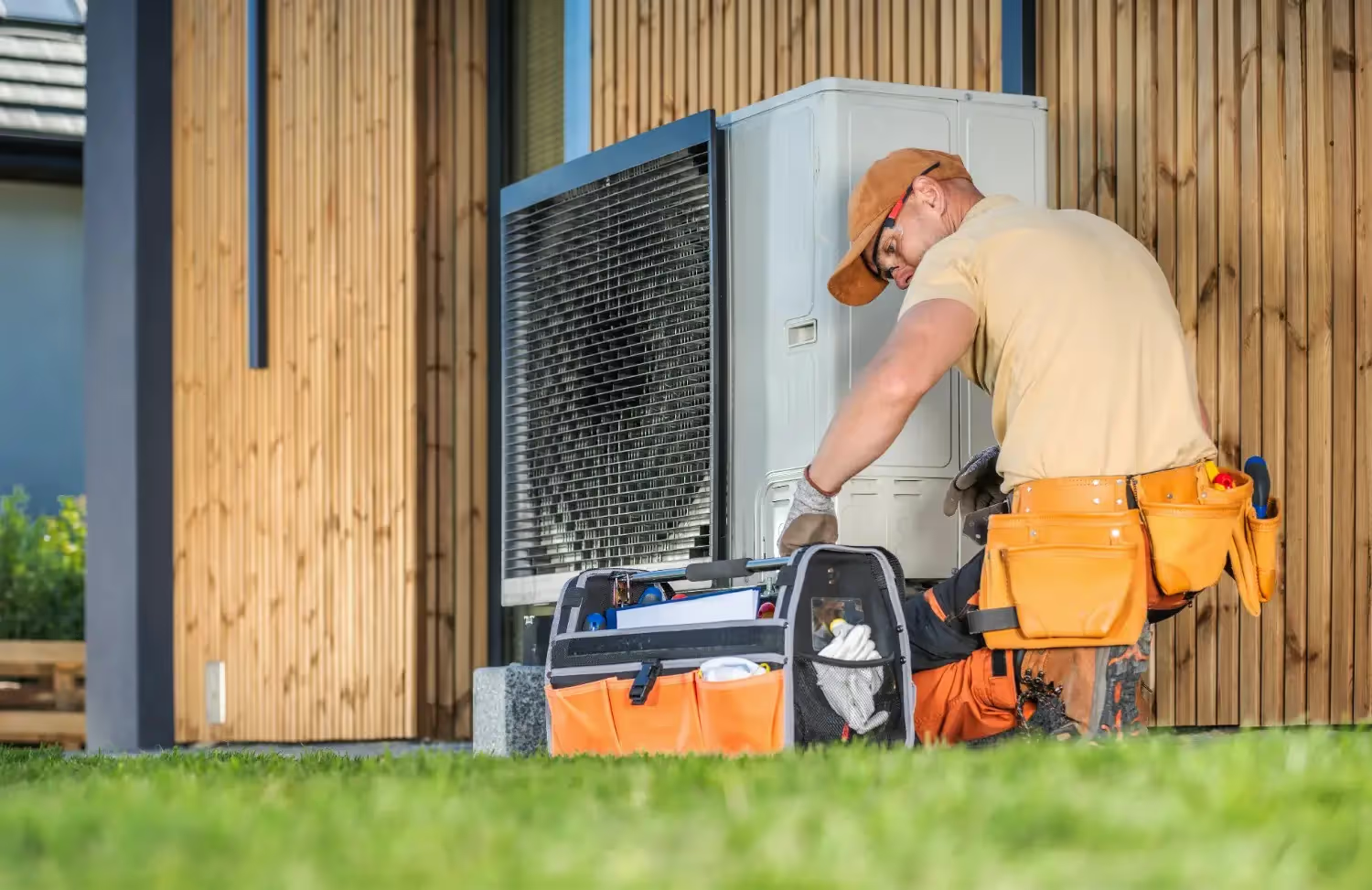
Your Complete Heat Pump Service Guide
A professional tune-up is far more than just changing a filter. It involves a rigorous multi-point inspection and cleaning process designed to optimize the thermodynamic cycle of your equipment. When technicians arrive at your home in Lockport, they follow a strict protocol to ensure every electrical and mechanical component is verified.
Detailed Electrical Analysis
Technicians inspect the electrical connections to ensure safety and efficiency. Loose connections can cause wires to overheat or burn out. The service includes measuring voltage and amperage on all motors to ensure they are drawing the correct amount of power. The capacitor, which helps start the motors, is tested for microfarad rating. If a capacitor is weak, replacing it during maintenance prevents the compressor or fan motor from failing shortly after.
Refrigerant Charge Verification
The heat pump relies on a precise amount of refrigerant to transfer heat effectively. If the level is too low, the system cannot absorb or release heat efficiently, leading to long run times. If it is too high, the compressor runs the risk of damage. Technicians use gauges to measure superheat and subcooling levels, adjusting the refrigerant charge to meet manufacturer specifications.
Coil Cleaning and Airflow Optimization
The evaporator and condenser coils must be clean to transfer heat. Even a thin layer of dust acts as an insulator, reducing efficiency. Maintenance includes chemical cleaning of these coils to remove grime, pollen, and debris. Additionally, the blower wheel is inspected for buildup, which can unbalance the fan and reduce air volume.
Drain Line Maintenance
In a humid climate, heat pumps remove gallons of water from the air daily. This condensate must drain away freely. Over time, algae and sludge can clog the drain line, leading to water damage in your home. Service includes flushing and treating the condensate drain to prevent blockages and testing the safety overflow switch.
What to Expect During Maintenance Visits
Understanding the workflow of a service visit helps homeowners prepare. The process is designed to be thorough yet efficient, minimizing disruption to your day while maximizing the technical benefit to your equipment.
- System Operation Test: The technician begins by operating the system in both heating and cooling modes to establish a baseline of performance and listen for unusual sounds.
- Power Disconnection and Safety Check: Power is safely disconnected to allow for internal inspection. All safety controls are tested to ensure they will shut the system down in an emergency.
- Internal Component Cleaning: Panels are removed to access the interior. Debris is cleared from the bottom of the cabinet, and coils are chemically cleaned.
- Lubrication: Motors with oil ports are lubricated to reduce friction and heat generation, which extends the life of bearings.
- Thermostat Calibration: The thermostat is checked to ensure it reads the temperature accurately. If it is miscalibrated, the system may run longer than necessary.
- Final Performance Report: Once the system is reassembled and powered on, the technician measures the temperature split (the difference between supply and return air) to verify cooling and heating capacity. You receive a detailed report of the findings and any recommendations.
Deciding Between Repairing or Replacing Your Heat Pump
There comes a point in the lifecycle of every HVAC system where maintenance and repairs are no longer cost-effective. Making the decision to replace a unit is significant, but continuing to pour money into a failing system can be more expensive in the long run.
The 50% Rule
A general guideline used in the industry is the 50% rule. If the cost of a necessary repair is 50% or more of the cost of a new system, replacement is usually the better financial decision. This is especially true if the equipment is out of warranty.
Age of the Equipment
Heat pumps generally last between 10 to 15 years. If your unit is over 12 years old and requires a major component replacement, such as a compressor or reversing valve, investing in a new system often makes more sense. Newer units offer higher efficiency standards, which can lower monthly bills immediately.
Frequency of Breakdowns
If you find yourself calling for service multiple times a year, the system is likely nearing the end of its reliable life. Chronic issues suggest that the internal components are wearing out simultaneously. Reliability is a key factor; knowing your heat pump will work when the weather is at its worst is valuable.
Efficiency Ratings (SEER and HSPF)
Older heat pumps often have SEER (Seasonal Energy Efficiency Ratio) ratings of 10 or 12. Modern units start at 14 and go much higher. Upgrading from an old 10 SEER unit to a modern 16 SEER system can reduce energy consumption by a significant margin. If your current energy bills are escalating despite maintenance, efficiency degradation is likely the cause.
Understanding Lockport’s Climate Impact on Your Heat Pump
The local climate in Lafourche Parish presents unique challenges that standard maintenance protocols must address. The environment here is characterized by high humidity, saltier air due to proximity to the coast, and heavy rainfall. These factors accelerate corrosion and biological growth within the system.
Humidity Control
In Lockport, a heat pump is not just a temperature controller; it is a dehumidifier. If the system is not serviced, its ability to pull moisture from the air diminishes. High indoor humidity leads to mold growth and discomfort. Maintenance ensures the evaporator coil gets cold enough to condense water vapor effectively, keeping indoor humidity levels in check.
Corrosion Prevention
The combination of moisture and heat creates an environment ripe for rust and corrosion on electrical contacts and structural components. Technicians pay close attention to the condition of wires and terminals, cleaning off oxidation that could lead to voltage drops or electrical fires.
Storm Season Preparation
Hurricane season brings high winds and flying debris. Part of the maintenance service involves checking the physical stability of the outdoor condenser unit. Ensuring the unit is level and securely anchored to its pad is vital. Technicians also check for loose panels that could be ripped off in high winds.
Vegetation Management
The rapid growth of vegetation in this climate means that shrubs and vines can quickly encroach on the outdoor unit. This restricts airflow and causes the system to overheat. During service, the immediate area around the unit is assessed, and recommendations are made to maintain a clear clearance zone for proper air intake.
Why Choose Our Trusted Service? Expertise and Reliability Highlighted
When selecting a service provider, technical proficiency and operational readiness are the most critical factors. You need a team that arrives with the right tools, the right parts, and the right training to resolve issues on the first visit.
Martin's Heating & Air Conditioning employs technicians who undergo rigorous training on the latest heat pump technologies, including inverter-driven compressors and smart thermostat integration. This expertise ensures that even complex diagnostic challenges are met with accurate solutions.
- Fully Stocked Service Vehicles: Trucks are equipped with a wide inventory of universal parts, including capacitors, contactors, relays, and fan motors. This minimizes the need for follow-up visits and gets your system running faster.
- Transparent Diagnostic Process: Technicians explain the "why" behind every recommendation. You are provided with the data regarding your system’s pressures, temperatures, and electrical readings, allowing you to make informed decisions.
- Comprehensive Documentation: Every service visit is logged, creating a history of your equipment. This helps in tracking performance trends over time and is often required to keep manufacturer warranties valid.
- Respect for Property: Technicians use drop cloths and shoe covers to protect your home. The workspace is left as clean as, or cleaner than, it was found.
Prioritizing maintenance is an investment in home comfort and financial savings. A well-tuned heat pump runs quieter, uses less electricity, and provides consistent temperatures regardless of the weather outside. Don't wait for the system to fail during a heat wave or a cold snap.
Take control of your home’s climate today. Contact Martin's Heating & Air Conditioning to schedule your comprehensive heat pump maintenance.
Talk to a Local HVAC Expert

.avif)