
Dealing with an Inefficient or Broken Heat Pump System?
Experiencing frequent breakdowns or noticing that your home in Lockport just cannot stay comfortable despite the thermostat setting? If your system is failing to combat the Louisiana heat or struggling to switch over during cooler nights, contact us today for an assessment or to discuss financing options. Martin's Heating & Air Conditioning ensures your home remains a sanctuary against the humid subtropical climate through expert, precision-focused heat pump installations.
- Rapid, often same-day installation to minimize downtime and restore your indoor comfort immediately.
- High-efficiency systems designed to tackle high humidity while lowering monthly utility expenses.
- Comprehensive labor warranties and flexible financing plans to ensure your upgrade fits your budget.
We are fully licensed and insured, providing extensive manufacturer warranties and seamless financing options to support your investment.
Today’s Heat Pump Installation: What’s Included and What to Expect
When you commit to a new heat pump installation, you are purchasing more than just a piece of machinery; you are investing in a year-round climate control solution. In Lockport, where humidity levels remain high for a significant portion of the year, a modern heat pump serves a dual purpose. It acts as a high-performance air conditioner during the sweltering summer months and an efficient heater during the milder winters.
Modern installation packages are comprehensive. The service encompasses the removal and environmentally safe disposal of your existing unit, adhering to EPA regulations regarding refrigerant handling. The new installation includes the outdoor condenser unit, the indoor air handler, and often a matched thermostat to communicate effectively with the new technology. Furthermore, critical components such as the refrigerant line set, condensate drain lines, and electrical whip connections are inspected and replaced if they show signs of wear or incompatibility with the new system.
Timelines for these projects are designed to be minimally invasive. For a standard change-out where ductwork remains largely intact, the process is typically completed within a single day. Our goal is to ensure that you are not left without climate control overnight. If extensive ductwork modification or zoning is required to improve airflow, the project timeline will be clearly communicated during the initial evaluation.
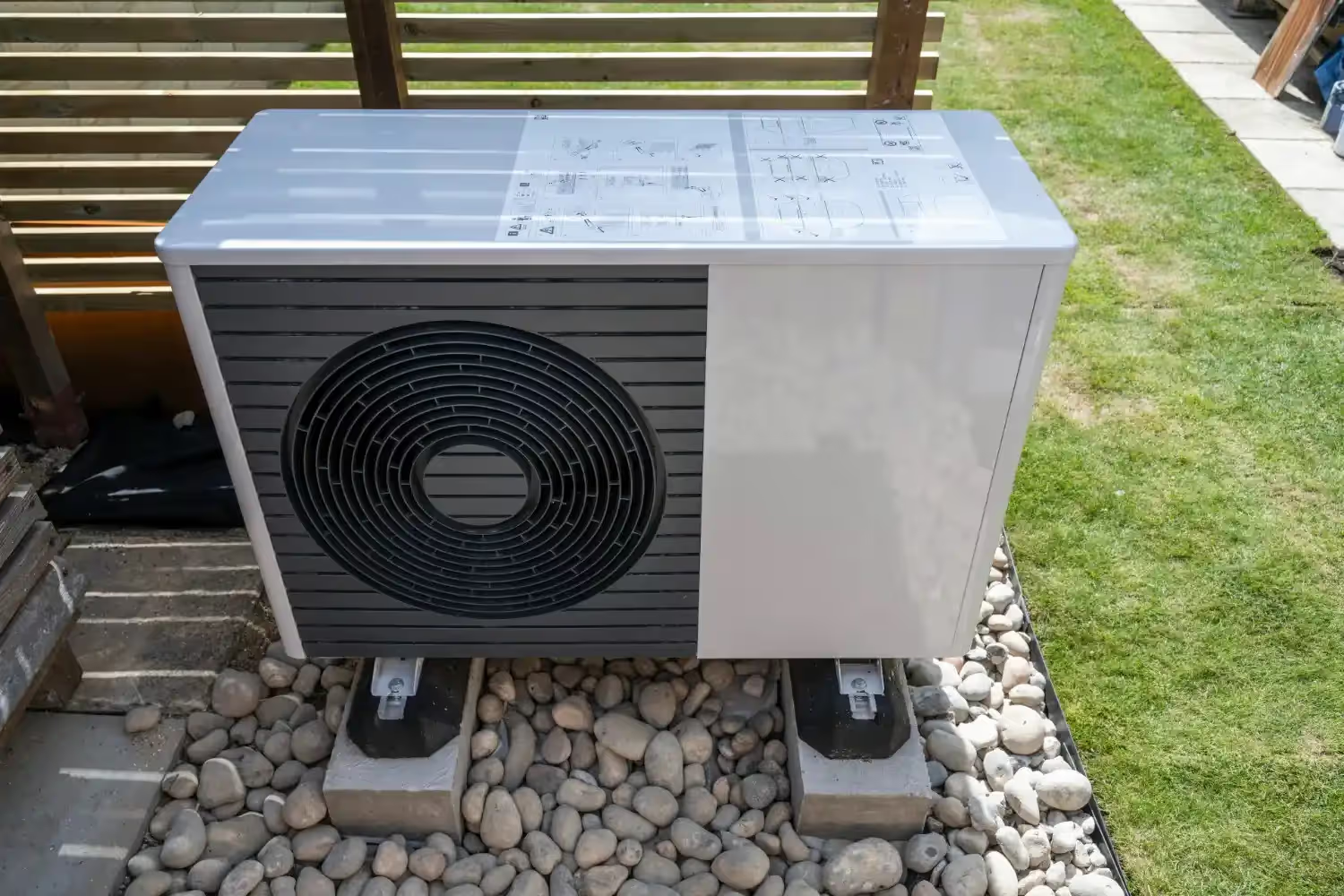
The Role of Variable Speed Technology
One of the most significant upgrades available today is variable-speed or inverter-driven compressor technology. Unlike older single-stage systems that simply blast air at full capacity until the thermostat is satisfied, variable-speed heat pumps adjust their output in tiny increments. This is crucial for homes in our region. By running longer at lower speeds, the system pulls more moisture out of the air, significantly reducing indoor humidity levels without overcooling the space. This results in a home that feels cooler at higher temperatures, saving you money on electricity.
The Installation Process: Steps to Upgrading Your System
A professional installation follows a rigorous, standardized procedure to ensure the longevity of the equipment and the safety of your home. We do not rely on guesswork; every step is calculated to maximize efficiency.
Load Calculation and Sizing
The process begins with a Manual J load calculation. We measure your home’s square footage, window orientation, insulation levels, and air leakage. Installing a unit that is too large will result in "short cycling," where the unit turns on and off rapidly, failing to dehumidify the air and wearing out components prematurely. A unit that is too small will run continuously without ever reaching the desired temperature. Accurate sizing is the foundation of a successful install.
Site Protection and Preparation
Before any work begins, technicians prepare the workspace to protect your property. Drop cloths are laid down to protect flooring, and the electrical power is safely disconnected at the panel. Safety verification is performed to ensure no live currents are present before the old unit is touched.
Refrigerant Recovery and Removal
Technicians attach a recovery machine to your old unit to siphon out the existing refrigerant into a specialized tank. Releasing refrigerant into the atmosphere is illegal and harmful to the environment. Once the system is empty, the old condenser and air handler are disconnected and removed from the property.
Equipment Placement and Connection
The new indoor air handler is positioned and sealed to the existing supply and return plenums. Simultaneously, the outdoor pad is leveled—or a new composite pad is installed—to ensure the condenser sits flat and is elevated above potential standing water. Martin's Heating & Air Conditioning technicians then braze the copper refrigerant lines using nitrogen purging to prevent oxidation inside the pipes, a critical step often skipped by budget installers that prevents future blockages.
Electrical and Drainage Integration
High-voltage wiring is connected to the disconnect box, and low-voltage control wiring is run to the thermostat. A new filter drier is installed to trap moisture and debris. The condensate drain line is flushed and often equipped with a safety float switch, which shuts the system down if the drain clogs to prevent water damage to your ceilings or floors.
Vacuum and Charge
Before releasing the new refrigerant, a vacuum pump is used to pull the system down to 500 microns. This removes all air and moisture from the lines. Once the vacuum holds, the factory-supplied refrigerant is released, and the charge is fine-tuned based on "subcooling" and "superheat" measurements to ensure peak efficiency.
Commissioning and Testing
The system is powered on and tested in both heating and cooling modes. Airflow static pressure is measured to ensure the ductwork can handle the air volume. Finally, the technician walks you through the operation of the new thermostat and maintenance requirements.
Deciding Between Heat Pump Repair or Replacement
Homeowners often face the dilemma of whether to repair a failing unit or invest in a full replacement. While repairs can be a quick fix, they are not always the most strictly financial decision in the long run. There are clear indicators when replacement becomes the necessary path.
The Age of the System
Most heat pumps have a lifespan of 10 to 15 years. If your unit is approaching or has exceeded this age range, major components like the compressor are likely nearing the end of their operational life. Investing heavily in an aging system typically results in diminishing returns.
The 50% Investment Rule
A general guideline used in the industry is the 50% rule. If the cost of a necessary repair approaches 50% of the value of a new system, replacement is the smarter financial move. This is particularly true if the warranty on the existing unit has expired.
Refrigerant Type
If your older system utilizes R-22 (Freon), you are dealing with an obsolete refrigerant that is no longer manufactured. Repairing a leak in an R-22 system is exorbitantly expensive due to the scarcity of the gas. Upgrading to a system that uses R-410A or the newer A2L refrigerants future-proofs your home and lowers service costs.
Frequency of Repairs
If you have required multiple service calls in the last two years, your system has become a financial liability. "Nickel and diming" repairs often add up to the cost of a down payment on a new, more reliable system that comes with a fresh 10-year parts warranty.
Rising Energy Bills
As heat pumps wear out, they lose efficiency. If you notice a steady climb in your kilowatt-hour usage despite normal weather patterns, the internal components are likely working twice as hard to produce the same amount of cooling or heating. A new system with a higher SEER2 rating can immediately reduce these monthly costs — view current promotions.
Local Considerations for Heat Pump Installation in Lockport
Operating HVAC equipment in Lafourche Parish requires specific attention to environmental and regulatory details. A generic installation that does not account for local conditions will likely fail prematurely or run inefficiently.
Humidity Management
The primary battle in Lockport is not just heat; it is moisture. With annual rainfall averaging around 50 inches and high ambient humidity, your heat pump acts as a dehumidifier. We prioritize systems with enhanced moisture removal capabilities. If the humidity is not controlled, your home may feel clammy even when the thermostat reads 72 degrees, leading to mold growth in ducts and on surfaces.
Hurricane Season Preparation
From June through November, the threat of severe weather is real. Installations must account for high winds. Outdoor condensers need to be securely anchored to their pads using hurricane-rated tie-downs. Furthermore, because storm surges and flooding are potential risks, elevating the outdoor unit on a taller stand or a higher composite pad is often recommended to protect the compressor from rising water.
Electrical Surge Protection
Summer thunderstorms frequently cause power surges and brownouts. Modern heat pumps, especially those with inverter boards, are sensitive to dirty power. We strongly recommend and often include whole-home or unit-specific surge protectors to guard the expensive electronic components of your new system against lightning strikes and grid fluctuations.
Permitting and Code Compliance
Installation work involves electrical connections and handling high-pressure gases, which mandates adherence to local building codes. Permits are generally required to ensure the safety of the installation. Professional installers handle the administrative burden of pulling these permits and scheduling the required parish inspections, ensuring that your homeowner's insurance remains valid and your home is up to code.
Why Quality Installation Matters for System Longevity
The most important day in the life of a heat pump is the day it is installed. Industry research suggests that a significant percentage of HVAC efficiency loss is due to improper installation practices rather than equipment failure. Issues such as improper refrigerant charge, mismatched ductwork, and poor brazing techniques can reduce the efficiency of a 20-SEER system down to that of a 13-SEER unit.
We focus on the physics of airflow and thermodynamics. By strictly adhering to manufacturer specifications and utilizing digital gauges for precise measurements, we ensure the equipment performs exactly as rated. This attention to detail results in a system that runs quieter, breaks down less frequently, and lasts longer.
At Martin's Heating & Air Conditioning, our technicians are trained not just in mechanics, but in customer respect. Work areas are kept clean, shoes are covered, and all debris is removed from your property. We believe that a high-quality technical installation must be matched by a high-quality service experience.
When the time comes to upgrade your comfort, do not leave the performance of your system to chance. Secure a solution that addresses the specific climate challenges of the region while providing the energy efficiency your budget demands.
Ready to upgrade your home comfort with a reliable, energy-efficient heat pump? Contact us now to schedule your consultation and secure your installation.
Talk to a Local HVAC Expert

.avif)